How Should a Leather Jacket Fit? Read the Five Points Your Body Grades
How Should a Leather Jacket Fit? Read the Five Points Your Body Grades
Snug. That one word is the whole fit talk most buyers get. The word is true. It also tells you far too little. A jacket can feel snug and still fail at the shoulder, the wrist, and the hip. The rail in the shop lies with a straight face. Your body grades fit the honest way, one point at a time.
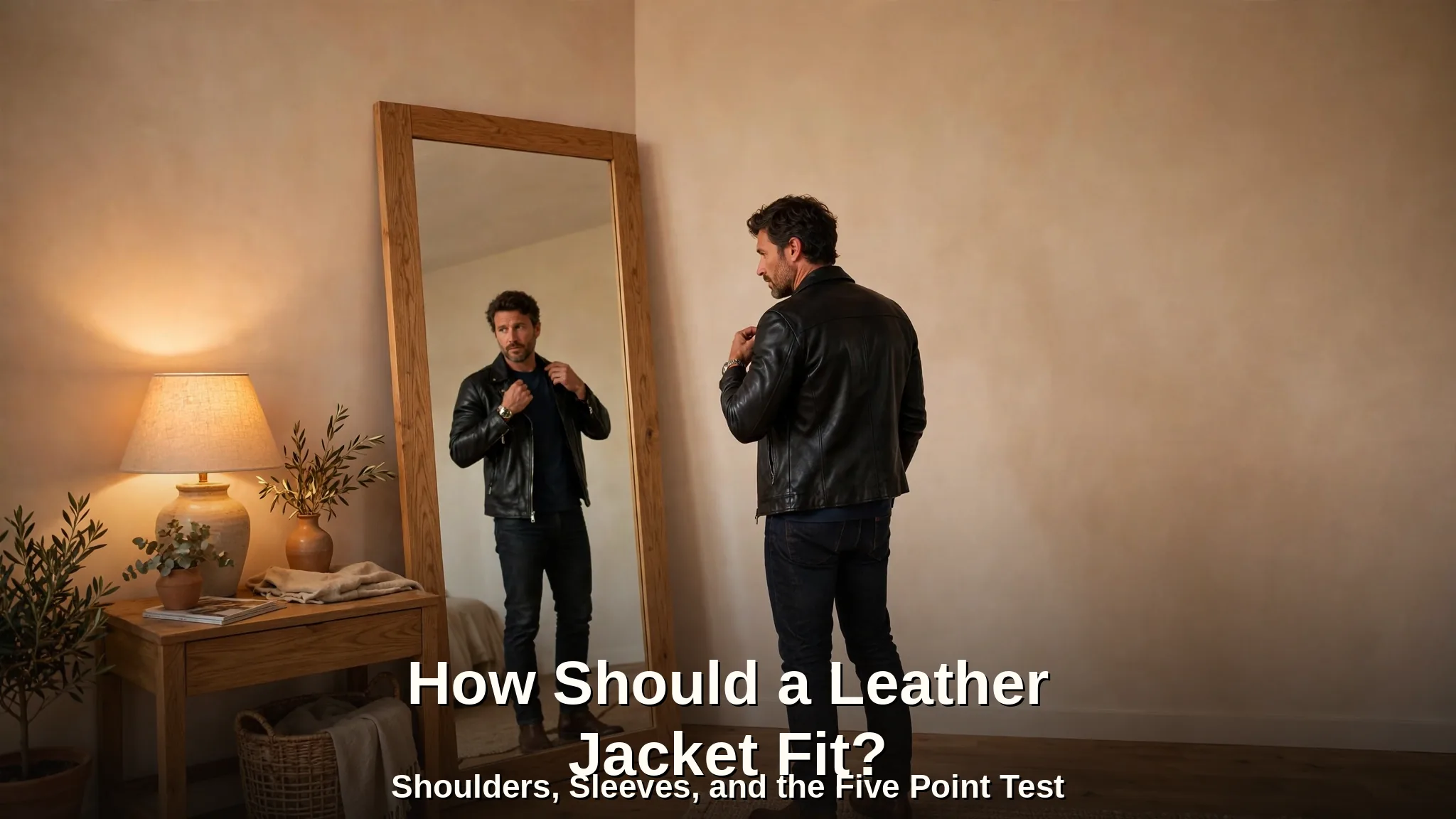
So how should a leather jacket fit? Close to the body, with no strain and no spare cloth. Your shoulder seam should sit on the bone. The zip should close with room for a flat hand. Sleeves should end at your wrist bone. And you should move in the jacket like you mean it. Arms up, arms crossed, seated, and reaching. This page walks each check in plain words. Keep a mirror close by. You will grade your own jacket by the end of it.
The short answer. A leather jacket should sit close to the body, never loose and never strained, with the shoulder seam on the edge of the shoulder bone. Sleeves end at the wrist bone, and the hem lands near the belt line on most cuts. The zip closes with a flat hand of room at the chest, and you lift, reach, and sit in it with ease.
The five point test grades any jacket in two minutes
Fitters judge a jacket at five points. Shoulders, chest, sleeves, length, and movement. Run the five point leather jacket fit test and weak fits show their weak spots fast. A jacket can pass four points and fail at the fifth. The failed point is the one you feel each day you wear it. Sections below take each point apart in plain words. Learn the signs once and you read any jacket in two minutes flat. The test works on a shop rail, at home, and across the men’s leather jackets range alike. This page is one spoke of our full leather jacket fit guide, where the whole sizing cluster sits in one place.
You need three things for an honest test: a mirror with a full view of you, the shoes you wear most days, and the top you plan to wear under the jacket most. Bare feet and a thin undershirt grade a jacket for a life you do not live. Grade it for your real days and the grade holds up all year.

Shoulders decide the fit before the zip ever moves
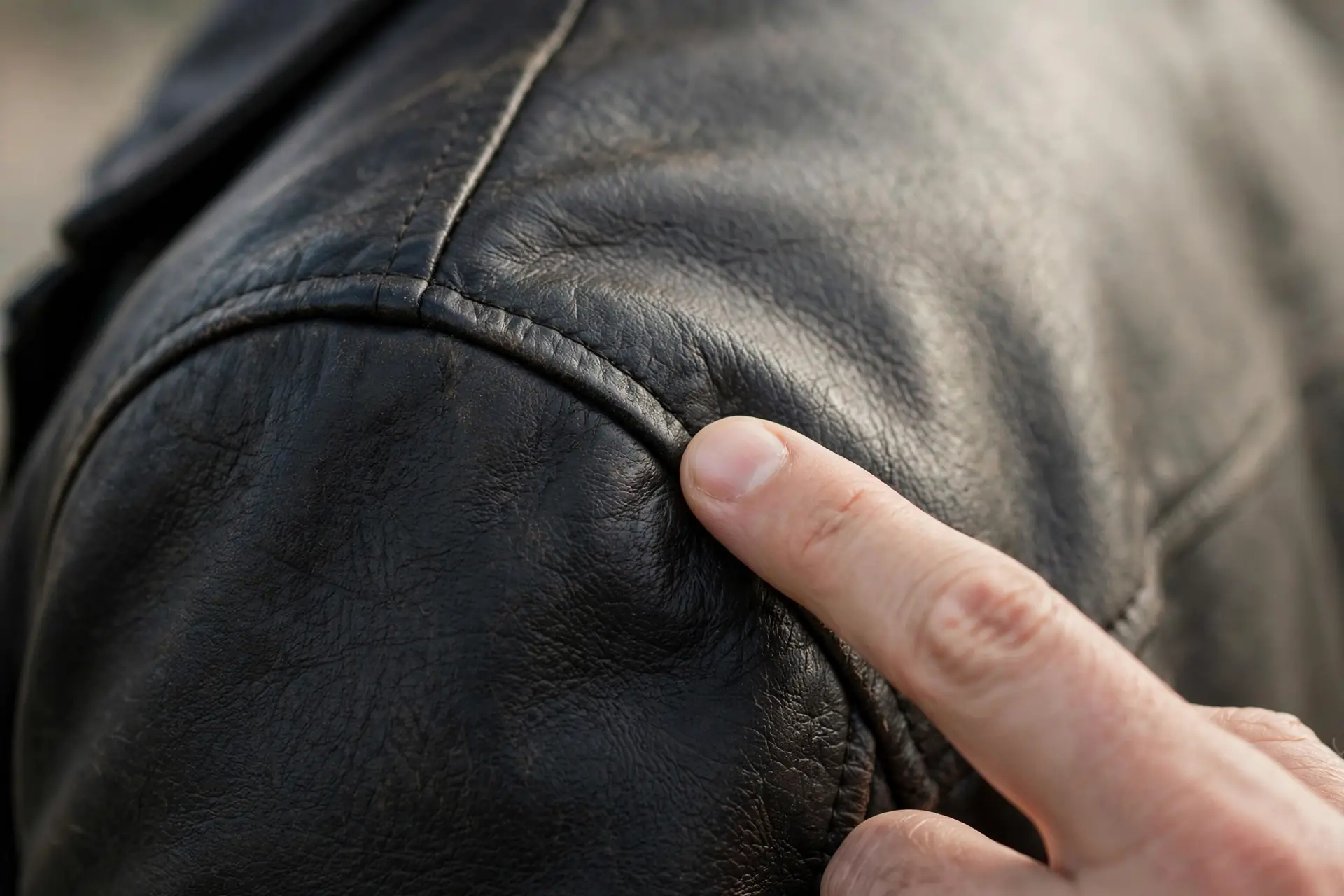
Leather jacket shoulder fit is the one point with no cheap fix. A tailor can take in a waist or shorten a sleeve. No tailor moves a shoulder seam and keeps the jacket right. So the shoulder grades before all the rest, and it grades hard. The seam belongs at the edge of your shoulder bone. That edge is the bony point where your arm starts. Run one finger along the shoulder to find where the bone ends. The seam should sit right there, not past the edge and not short of it.
A seam that drops past the edge tells you the jacket runs too big. The whole top of the jacket sags with it. Chest cloth folds into soft waves. Sleeves hang longer than they should. The look reads borrowed, like a coat off an older brother’s hook. A seam that rides up the slope of your neck tells the other tale. The cut runs too small across the back. Lift your arms and the whole jacket climbs with them. Turning the wheel of a car turns into work in such a jacket. Walk away from both. The shoulder is the one grade that never bends.
The chest passes or fails at the zip
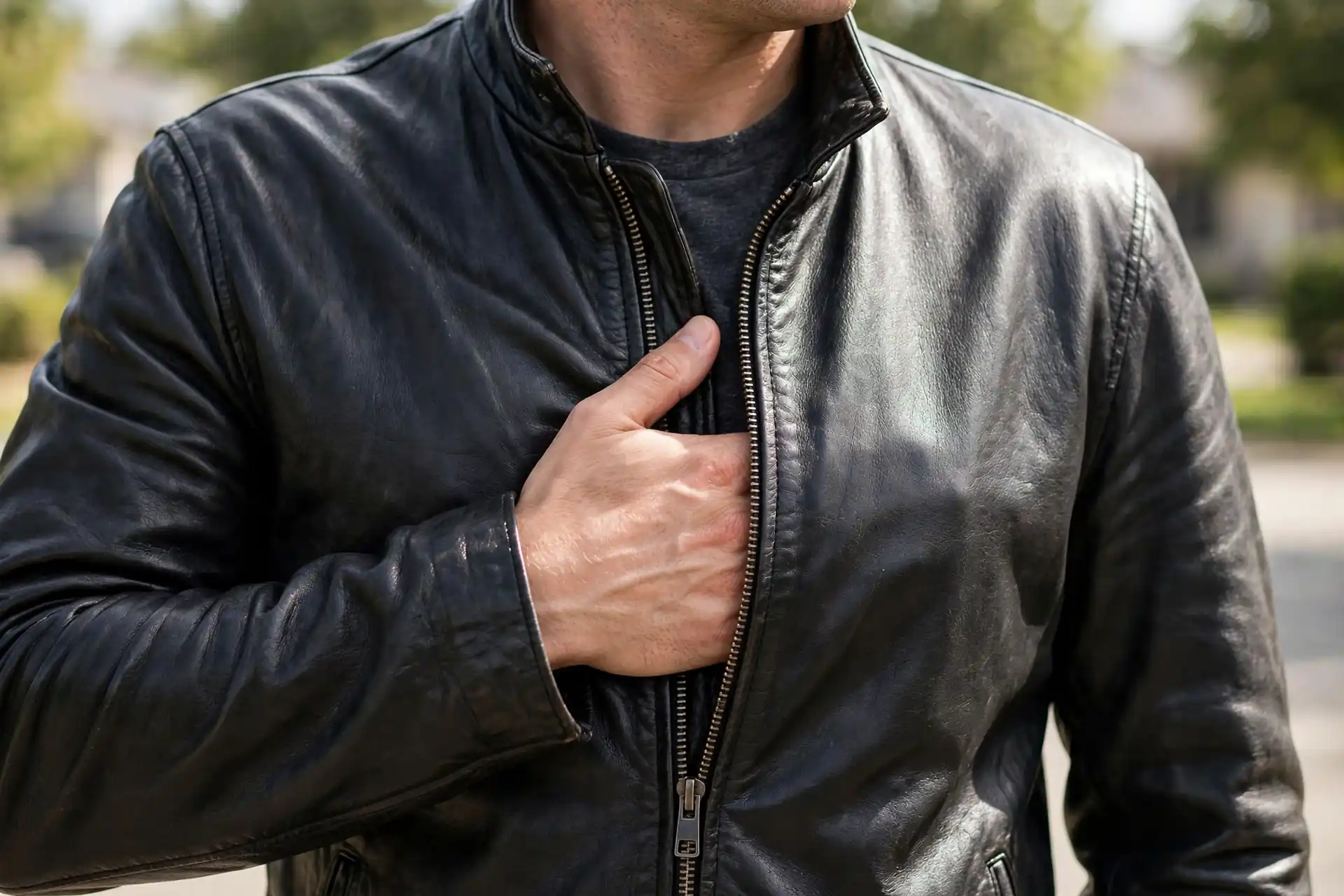
Leather jacket chest fit shows itself the moment the zip closes. Zip the jacket all the way up. Slide one flat hand inside, palm flat on your chest. The hand should fit with a light snug feel and no force. A hand that will not fit says the chest runs too tight. Room to ball a full fist says the chest runs too loose. Read the zip line in the mirror as well. The line should run straight down the body. Hard pull lines across the chest fail the grade on sight.
Judge the jacket shut and open both. Shut, it should hold a clean line from neck to hem. Open, it should hang in line with your body. A jacket that swings wide like a door is too big. Strain at the zip teeth marks one as too small. Take one full breath with the zip shut. The chest should give a touch and settle back. A breath that fights the zip fails the test on the spot. Both poses count, each time, with no short cuts.
Sleeves end at the wrist bone, not at the thumb
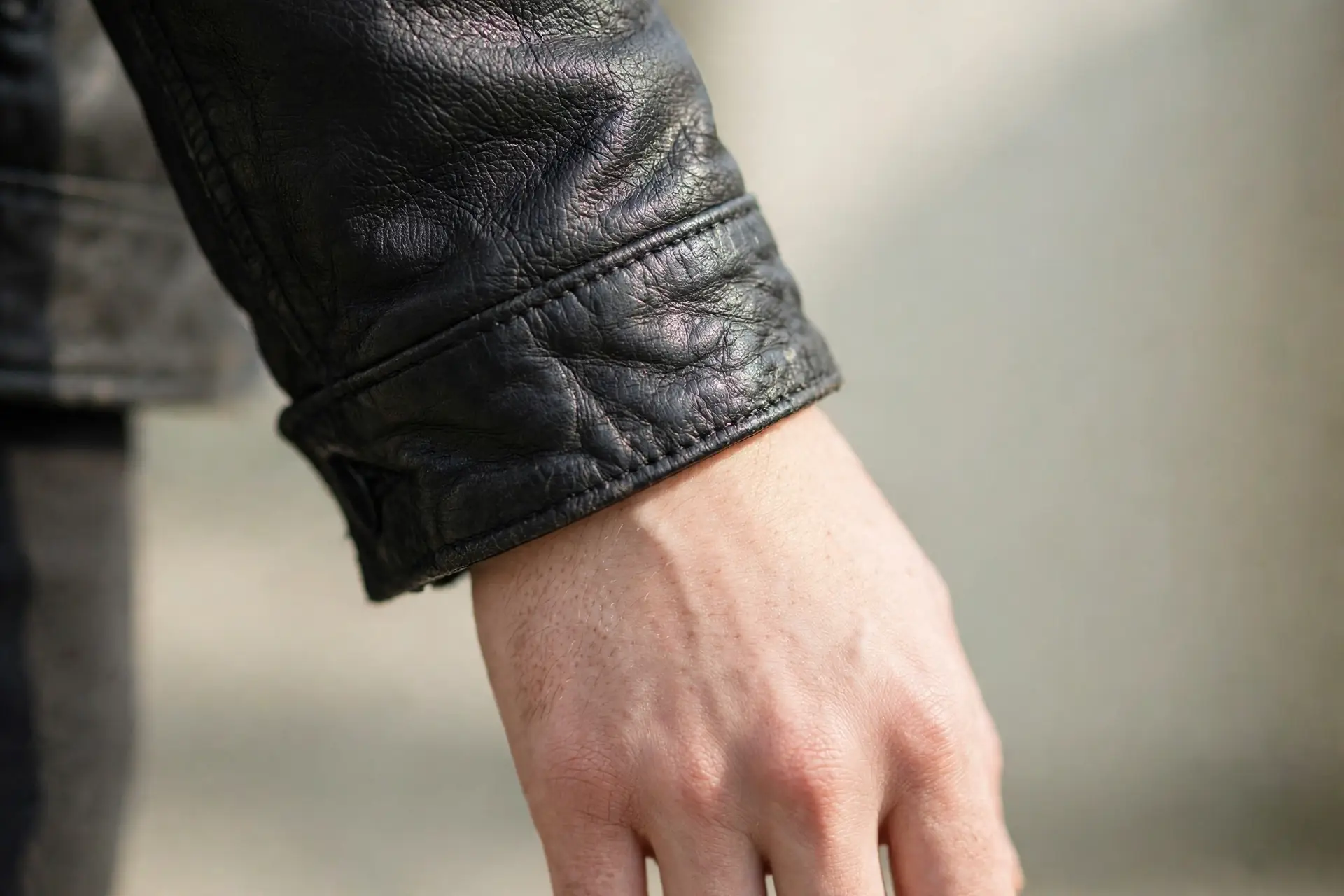
Leather jacket sleeve length has one clear home. The cuff should end at your wrist bone. Find the bump of bone on the outer edge of your wrist. The cuff lands right there with your arm at rest. A cuff that covers half your hand runs too long. Bare wrist in a wide band means the cuff runs too short for most cuts. Shirt cuff rules do not cross over to leather. A leather cuff shows no linen. It ends at the bone and stops.
Riders grade sleeves a second way. Reach both arms out front, as if your hands sat on bars. The cuff pulls back as the arm bends and reaches. A sleeve that felt right at rest shows its true length in the reach. Riders want a touch of extra length for that pull back. The cuff then lands at the wrist in the ride pose, not the shop pose. Our guide to leather jacket sleeves that run too long sorts out the fixes when a sleeve overshoots the mark.
The hem lands at the belt on most cuts
Leather jacket hem length sets the line of the whole outfit. On bikers, bombers, and racers the hem lands at the belt line. It covers your belt and the top of your waistband. How should a leather jacket fit at the waist? Close, with the hem at the belt and no flare of spare cloth at the sides. A hem that drops to mid seat on a short cut adds bulk and years. Stop above the belt and a strip of shirt shows and breaks the line.
Sit down in the jacket before you judge the length. A hem that feels fine standing can bunch hard at the front in a chair. Read the sides in the mirror as well. The hem should hang level, front and back. Long coats and trench cuts play by longer rules. Their length gets its own word in the style section below. For the short cuts most riders and buyers wear, the belt line is the law.

Move in the jacket before you trust the mirror
A mirror grades a statue. Your life grades motion. Run the leather jacket movement test in the shop or at home. Cross your arms in a tight self hug. Reach both hands up to the sky. Then reach out front like you grab a rail on a bus. Close the test seated, with a bend and a twist at the waist. The jacket should let each move through with mild pull at most. Sharp pull at the back or across the chest marks a fail.
Armholes tell half the movement tale. High armholes sit close to the armpit. They let the arm lift with no drag on the body of the jacket. Low armholes sit far down the side seam. Lift an arm in a low armhole cut and the whole jacket rides up with it. Your hem climbs with it. Shoulders shrug on their own. Racers and slim cuts run high armholes for this cause. Soft bomber cuts run lower ones and trade a bit of lift for ease. Both builds have their place. Know which trade you are buying.

Snug is the goal and tight is the warning sign
Should a leather jacket be snug? Yes. Snug is the right start for new leather. Fresh leather sits stiff and close for the early weeks of wear. Then the hide softens and shapes itself to your body. Elbows crease where your arms bend. The chest eases a touch where you breathe and move. Our break in guide walks that early change in full. Snug now turns to a true fit in a month of real wear.
Tight is one step past snug, and leather will not rescue it. A tight jacket strains the zip and pulls lines across the back. Your arms stop short of a full lift. The seams bite at the armhole on each reach. Leather gives a little where it flexes. Give comes at the elbow. A touch of give comes at the chest and the waist. No full size ever comes of it. Length on a sleeve and width on a shoulder never come at all. Buy the fit you need on day one. Let the small give be a bonus, not the plan. The line between snug and tight gets a full page of its own in our guide to how tight a leather jacket should be.

Each style keeps its own fit rules
How a leather jacket should fit by style matters more than most buyers think. A biker, a bomber, and a racer each sit on the body in their own way. Blazer cuts borrow their rules from tailoring. Long coats play a length game of their own. Grade each style by its own rules and the rail gets far less confusing.
The biker wears close and short
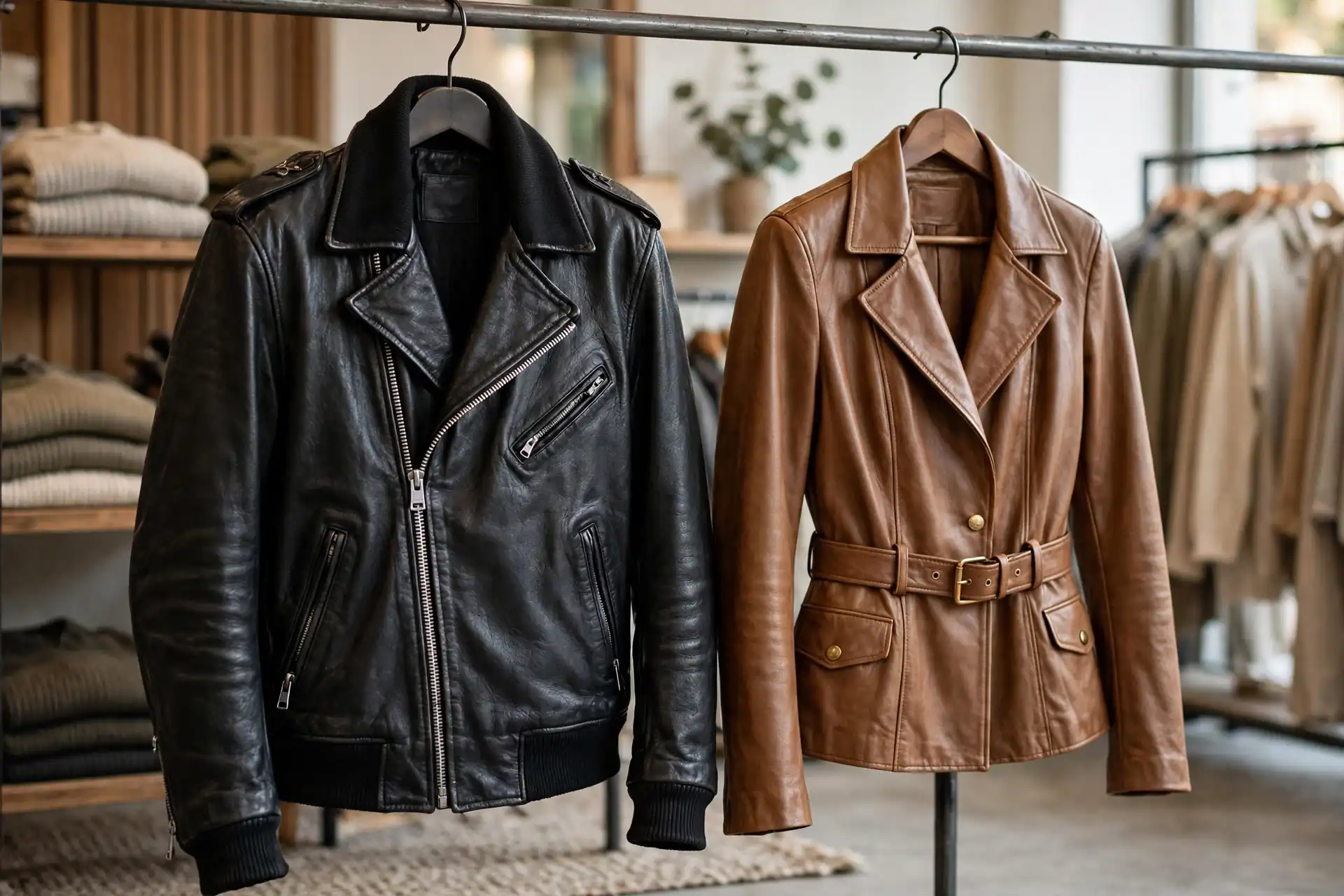
The biker wears close and short. Its hem sits at the belt. Chest room holds a flat hand and no more. The off center zip should lie flat with no ridge of spare cloth. Sleeves run a touch long for the reach to the bars. Read the shape in the men’s leather biker jackets range or the women’s biker leather jackets range and the cut reads clear at a glance.
The bomber wears soft and easy
The bomber wears soft and easy. Its body holds more air than a biker does. A ribbed hem grips the waist and holds the hem at the belt. Shoulders sit a touch softer too. Too much ease turns the bomber into a sack. Keep the shoulder seam honest and the ease stays charm, not slop. The men’s leather bomber jackets range shows the classic line at its best.
The racer wears the slimmest line of all
How should a cafe racer jacket fit? Slimmer than the rest. The racer hugs the torso in one straight line. Its zip runs center and plain. The collar sits low and small. Chest room holds less spare cloth than a biker cut. A racer with folds of cloth at the sides is a size too big, full stop. Grade a racer with less mercy than any other cut.

Blazers and long coats play longer rules
The blazer cut follows suit rules. Seam on the bone. Chest smooth with the front closed. Length past the belt, down near the seat. The long coat trades snug for sweep. It should hold room for a thick knit under it. The belt or the cut should still mark your waist. A long coat with no waist line reads as a robe, not a coat. Length is the point of the coat. Shape is what keeps it sharp.
Men and women read fit off different maps
Leather jacket fit men vs women comes down to shape, not taste. A men’s cut runs straight from chest to hem. The shoulder width leads the size. Waist width holds near the chest width. Any leather jacket fit guide men read should start at the shoulder. Men’s sizes step up by shoulder and chest before all else. The seam, the zip, and the flat hand rule grade the rest.
A women’s cut shapes in at the waist. It holds room at the bust so the zip closes flat. The hem flares a touch to clear the hips. A leather jacket fit guide women use checks three spots men skip. The zip line over the bust, the waist shape at the sides, and the hem as it clears the hips. A women’s jacket that fits the bust and gaps at the waist needs a shaped cut, not a size up. Full charts live in our men’s size guide and our women’s leather jacket size guide. The shaped cuts sit side by side in the women’s leather jackets range, where the lines read clear.
Layers change the size your body needs
A jacket graded over a thin tee grades for tee weather only. Thick knits add real bulk at the chest and arms. Grade your winter jacket over the thickest knit you own. The zip should still close. Flat hand room bends a touch under a knit. It should not break. Our guide to leather jacket sizing for layering maps the room each layer type needs.
Stuck between two sizes? The layer call decides it. A jacket worn over tees all year stays at the snug size. One worn over knits all winter takes the size up. Our page on whether to size up in a leather jacket walks that fence line case by case. Keep the shoulder seam honest in both calls. A size up that drops the seam buys room at the cost of the whole fit.
Too big and too small leave clear signs
Learn the leather jacket too big vs too small signs and returns get rare. Too big shows at the shoulder before the rest. The seam hangs past the bone. Sleeves cover the hand past the wrist. Folds of spare cloth stack at the back and under the arms. The hem drops low and swings as you walk. How do I know if my leather jacket is too big? Count the signs. Two or more at once means the size is wrong.
Too small shows in pull lines. Lines fan out from the zip or the buttons. The back pulls tight when you reach out front. Sleeves ride short in the reach test. Armholes bite when you lift your arms high. One sign alone calls for a second look in the mirror. Two signs at once call for the next size up. Trust the signs over the size letter. Letters lie across brands. Signs never do.
The home mirror check, in one slow pass
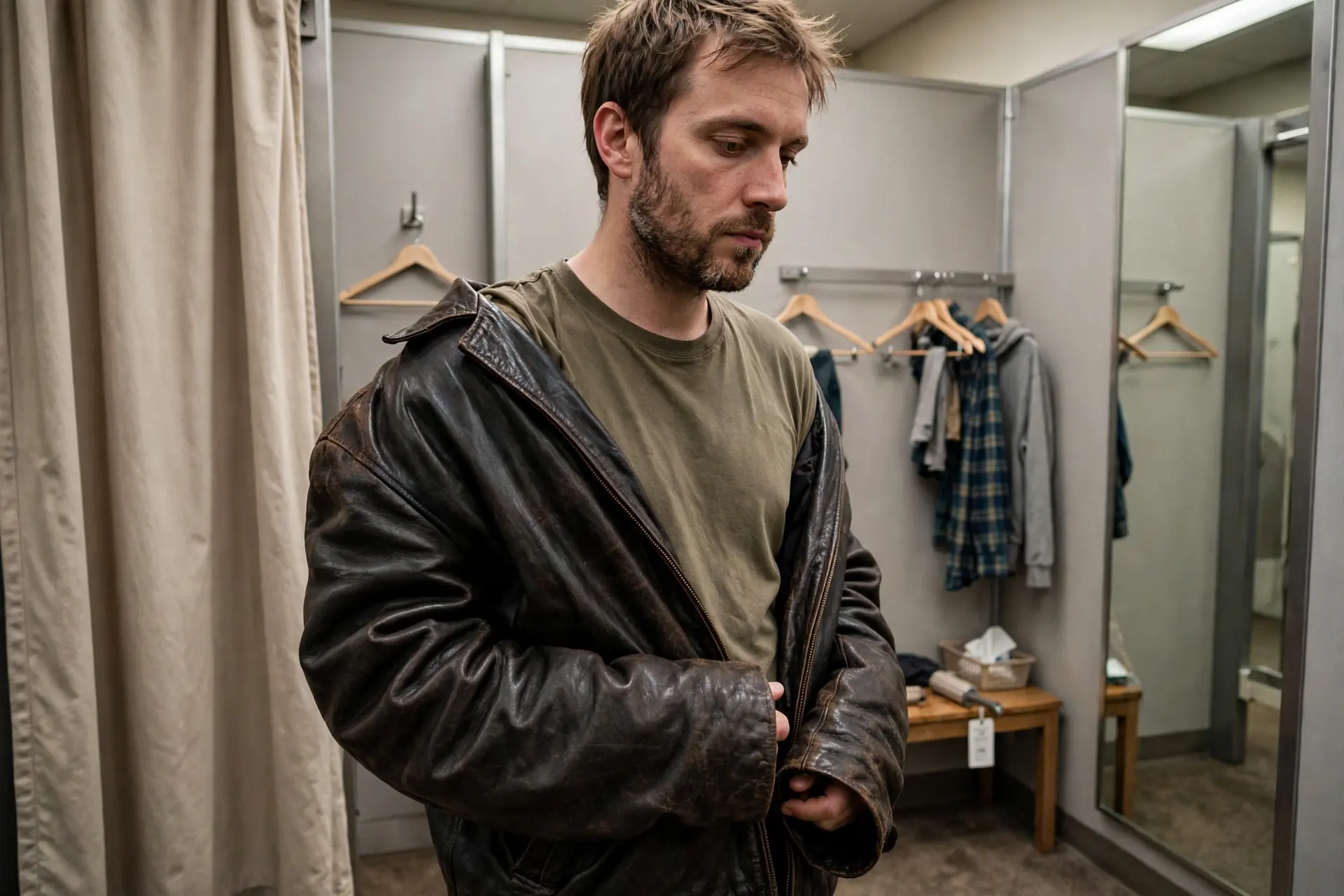
Store mirrors flatter you. Shop lights flatter you even more. Give the jacket one slow pass at home in plain light. Stand front on. Read the seam, the zip line, and the hem. Turn side on. Read the sleeve drop and the line of the back. Turn full back. Look for spare folds at the blades. Then run the moves. Hug, reach, sit, and twist. Keep the tags on till the pass ends. A jacket that passes at home in plain light passes for years.
Fit mistakes that send good jackets back
Leather jacket fit mistakes repeat in the same few shapes. Buyers pick the size they wish they wore. The home mirror tells a crueler truth than the shop glass. Some judge the jacket open and never zip it shut. Others test it over a tee and plan to wear it over knits. Still others forgive a dropped shoulder seam for a low price tag. That seam nags at the eye each day the jacket gets worn. None of these errors needs money to fix. Each one needs ten honest minutes in the mirror.
Size letters lie across brands as well. A large in one brand wears like a medium in the next. Trust the five points, not the letter on the tag. Sleeves bought long in hope never shrink to fit. And a jacket kept for its color while the fit fails gets worn less and less. Fit is the feature you feel all day long. Color is the one you saw once in the shop. Grade fit first in your head and the keep rate soars.
When no rail size fits, the tape measure wins
Some bodies sit between the sizes on any rail: broad shoulders over a slim waist, long arms on a short torso, a chest that steps past the charts at 4XL. Rail sizes are built for the middle of the crowd. Your body owes no one an apology for missing that mark. At Denver Jackets, each design runs from small through 4XL. Each design is also cut made to measure in our own production unit. Our plus size leather jackets guide covers the big and tall fit checks in full.
Made to measure starts with your own numbers. Our guide to how to measure yourself for a leather jacket walks each tape spot in plain steps. Shoulder, chest, waist, sleeve, and length all get cut to your frame. A tailor can tweak a rail jacket at the waist or the sleeve hem. Our page on tailoring a leather jacket marks what a tailor can fix and what stays set. The shoulder and the chest are set at the cut. No needle moves them well. Start from your own size on the custom leather jackets route and the five point test turns into a mere formality.
Fit questions we hear each week
How should a leather jacket fit on a man?
How should a leather jacket fit men? Close, clean, and free to move. The seam sits on the shoulder bone. Its zip closes with a flat hand of room at the chest. Sleeves end at the wrist bone. The hem lands at the belt line. He should hug, reach, and sit in it with no strain at the back.
Where should the shoulder seam sit on a leather jacket?
The seam sits on the edge of the shoulder bone. That edge is the bony point where the arm starts. A seam past the edge means the jacket runs too big. One up the slope of the neck means it runs too small. No tailor fixes a wrong shoulder well.
How long should leather jacket sleeves be?
Sleeves end at the wrist bone with the arm at rest. A cuff at the base of the thumb runs a touch long for street wear. Riders want that touch of extra length for the reach to the bars. A cuff past the thumb base is too long for any cut.
How do I know if my leather jacket is too big?
Read the signs. The seam hangs past the shoulder bone. Sleeves cover the hand past the wrist. Spare cloth folds at the back and under the arms. The hem drops low and swings as you walk. Two signs at once mean the size is wrong.
Should a leather jacket fit differently by style?
Yes. Each style keeps its own rules. A biker wears close and short. Bombers wear easy with a gripped hem. A racer wears the slimmest line of all. Blazers follow suit rules. A long coat holds layer room and marks the waist.
How should a leather jacket fit at the waist?
The waist should sit close with no flare of spare cloth. Its hem lands at the belt line on short cuts. Shaped cuts mark the waist with their seams. Straight cuts hang clean to the belt. A waist that balloons out reads as a size too big.
Should I try a leather jacket zipped and unzipped?
Yes. Try it both ways, each time. The shut pose grades the chest and the zip line. Open, the pose grades the hang and the swing. A jacket that swings wide open is too big. Strain at the teeth marks one as too small.
What is the five point leather jacket fit test?
The test grades a jacket at five points. Shoulders, with the seam on the bone, and chest, with the flat hand rule at the zip. Sleeves end at the wrist bone, and the hem lands at the belt line. Movement runs through a hug, a reach, and a sit. Five passes mean the fit is right.