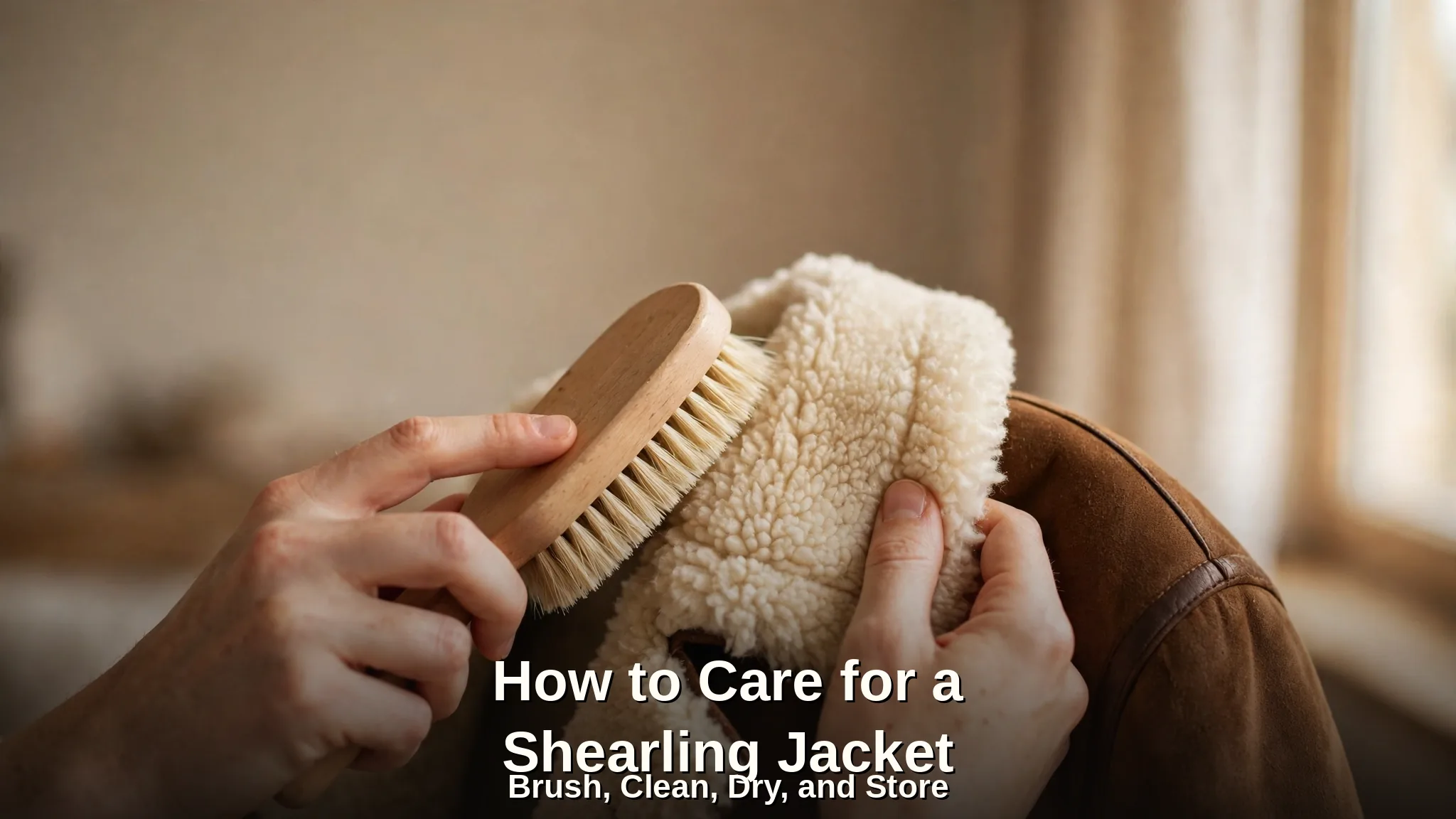
How to Care for a Shearling Jacket
How to Care for a Shearling Jacket
Most owners learn how to care for a shearling jacket after something has already gone wrong. A coat comes out of a wash shrunken and stiff. Wool goes flat after one winter hung too close to a radiator. The harm rarely comes from wear. It comes from kind care done the wrong way. Shearling forgives a lot of weather. It forgives very little guesswork.
Shearling is one skin with two faces. Wool grows on one side, and leather forms the other. Care means giving each face its own treatment, in its own order, and never letting water, heat, or strong soap cross the line between them.
This shearling jacket cleaning guide walks both faces in plain order. Brushing comes first, then spot work, stains, drying, and storage. The page sits inside our wider leather jacket care guide, where plain hide care lives. Shearling breaks half of those plain rules, and this page marks every break.
Two faces, two sets of rules
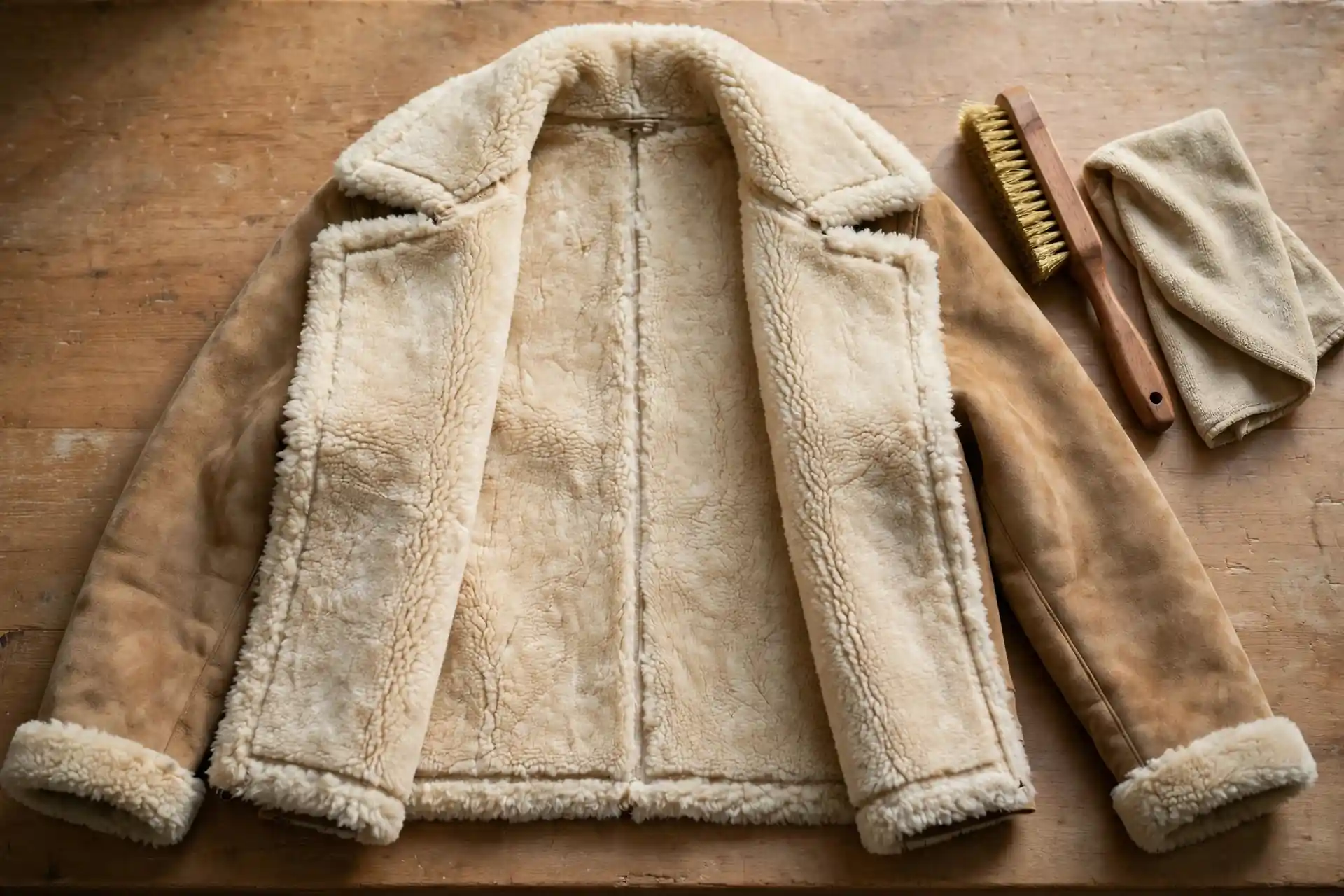
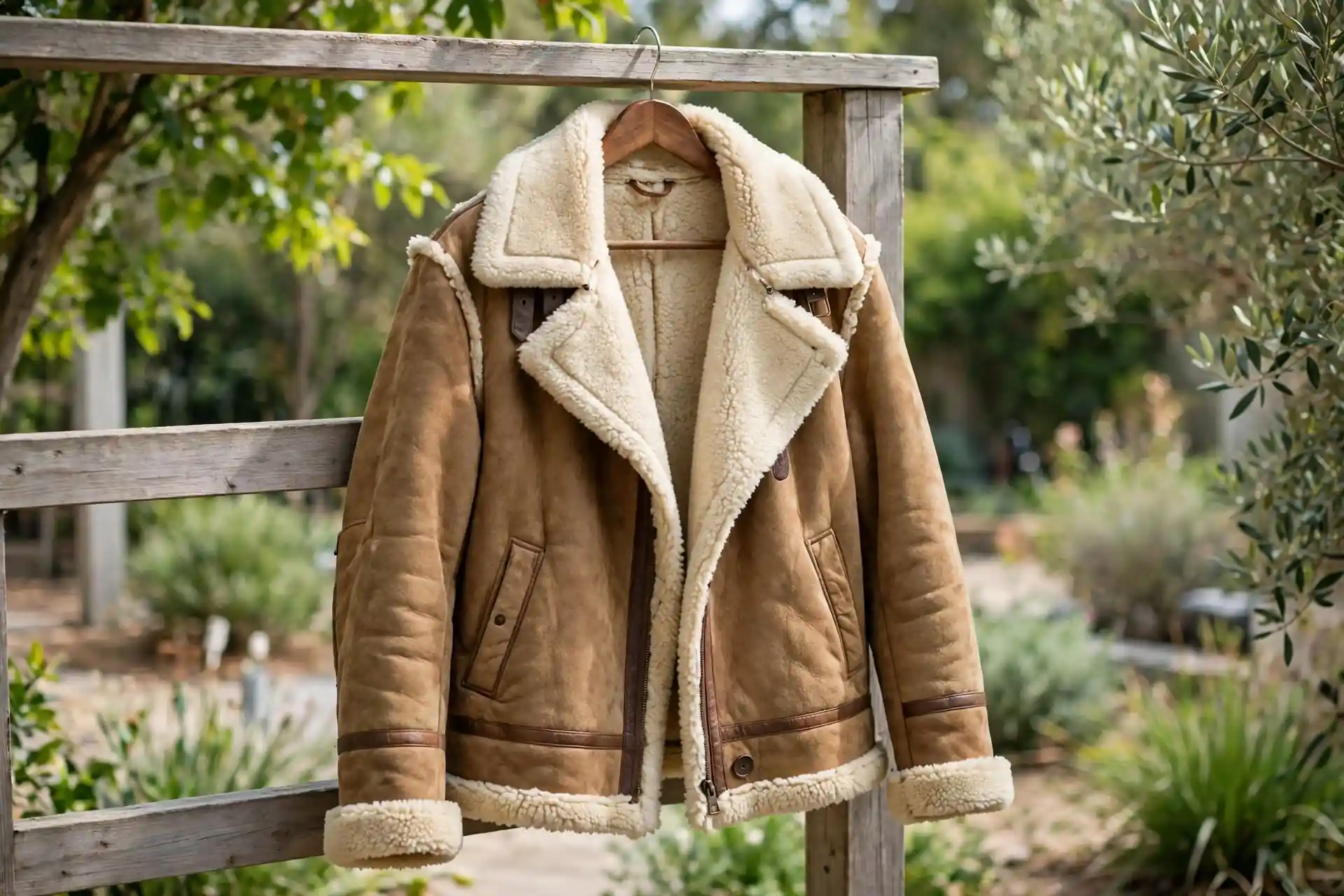
A shearling jacket starts as sheep skin with the wool left on. The wool faces your body. Turn the coat over and the skin side faces the street, smooth on some coats and sueded on others. At Denver Jackets the benches cut sheep skin in our own production unit, in full grain, top grain, and corrected grain. One skin, two surfaces, two tempers. Wool drinks water and holds smells. Leather dries out and cracks when it loses its oils.
The split decides every rule below. Wool wants dry methods, air, and a brush. Leather wants a light touch of moisture and a feed of conditioner now and then. Mix the two up and both sides suffer. Soap meant for the skin side mats the wool. Oil meant for the skin side ruins the pile. Keep the faces apart in your head and the whole routine turns simple.
The rules hold for every cut on the rail. A long coat from the men’s leather jackets range and a short shaped one from the women’s leather jackets range ask for the same care. Color changes nothing. Cut changes nothing. And buying questions, grades, and styles live in our shearling leather jacket guide, not here. This page is care only.
The small kit that does the whole job
Good shearling care needs no shelf of products. A shearling brush and care kit fits in one drawer. The heart of it is a suede brush, stiff bristles on one side and a crepe or rubber edge on the other. Add two soft cloths, a spray bottle, a box of cornstarch, and a soap so mild it barely foams. A wide hanger and a cloth garment bag finish the set.
Each tool maps to one job. The brush lifts the wool and scrubs the sueded face. Cloths carry water and soap in small, controlled amounts. Cornstarch pulls grease out of wool without a drop of water. The spray bottle wets a panel evenly, a little at a time. Nothing on the list costs much. None of it gets swapped for a stronger chemical cousin. Strong cleaners strip the skin and felt the wool, and both harms stay for good.
Brushing is the weekly habit that matters most
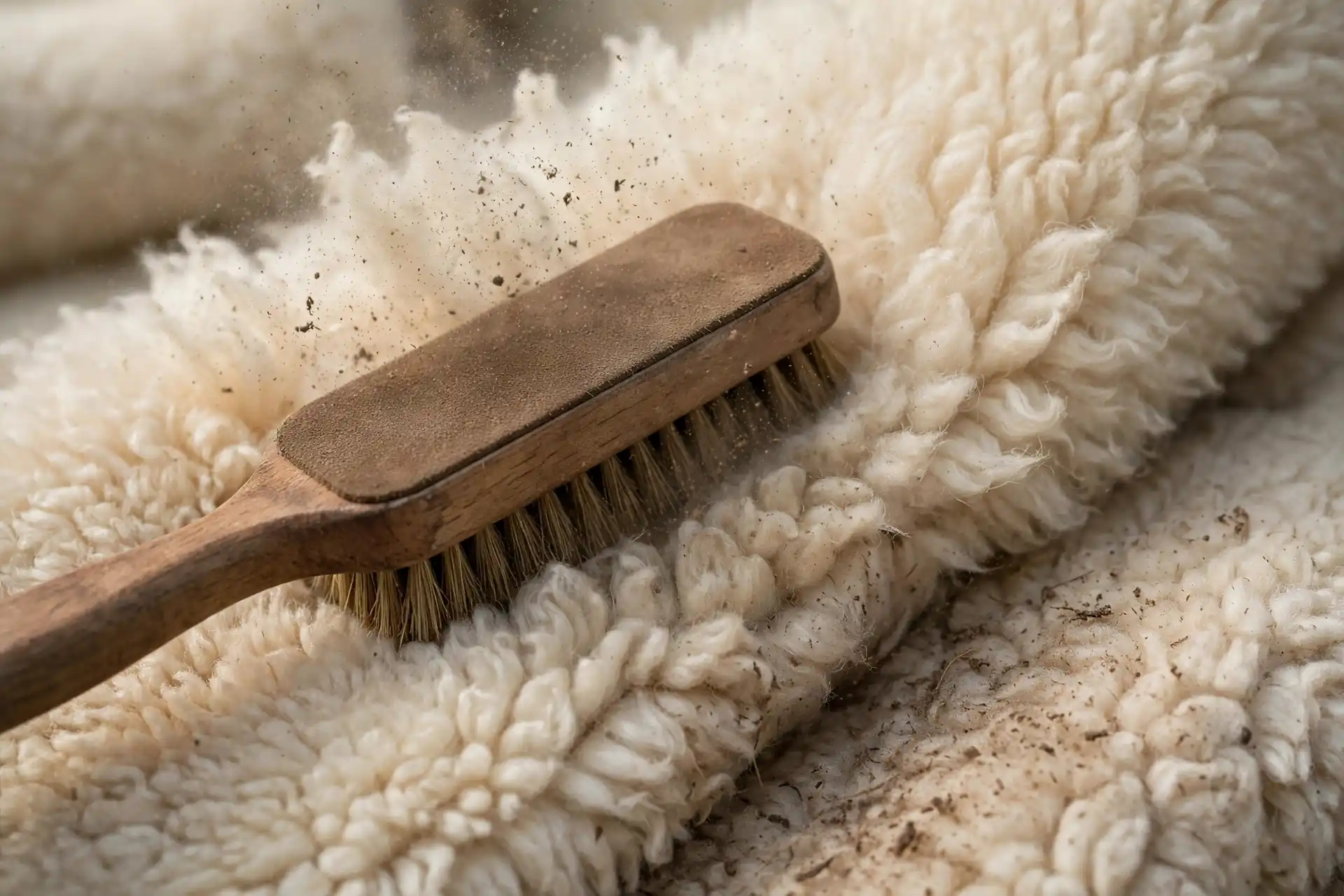
Most shearling jacket maintenance is a brush and five quiet minutes. Hang the jacket up after wear and let it air overnight. The next day, brush the wool with the lay of the pile. Then brush against the pile to lift out dust and road grit. Work the collar and cuffs twice, since skin oil and city dirt settle there first. A suede brush for shearling jacket wool work is the same brush you use on the sueded face, so one tool covers both sides.
Brushing does three jobs at once. It lifts crushed pile back into a soft, even loft. Grit shakes loose before it grinds fibers down over time. And it shows you every new mark while the mark is still small. A grease spot found on day two lifts out with powder. The same spot found in spring has set into the wool. Brush after every few wears, and after any wet or dusty day. That rhythm keeps big cleans rare.
Spot cleaning the skin side
Here is how to clean a shearling jacket at home on the leather face. Lay the jacket flat on a clean table. Mix a few drops of mild soap into a bowl of cool water. Dip a soft cloth in, wring it near dry, and wipe one panel at a time. The cloth should feel damp, never wet. Dirt lifts onto the cloth, so rinse and wring it often. Follow with a second cloth carrying plain water, then pat the panel dry.
Test first, always. Rub the damp cloth on a hidden spot inside the cuff or under the collar. Wait ten minutes and look at the color in daylight. Some dyes sit loose on sueded faces and lift onto cloth. A panel that passes the test takes the wipe safely. Plain hide has its own full routine in our post on how to clean a leather jacket. Shearling adds one hard rule on top of it. Keep the suds off the wool. Wet wool under soap turns rough, and the smell lingers long after the panel dries.
Work small and stop early. Most street dirt on the skin side is surface dirt. It yields to two or three calm passes. Scrubbing adds water, and water is the thing you are rationing. A mark that survives gentle wiping belongs to the stain section below, not to a harder scrub.
Washing the wool without a soak
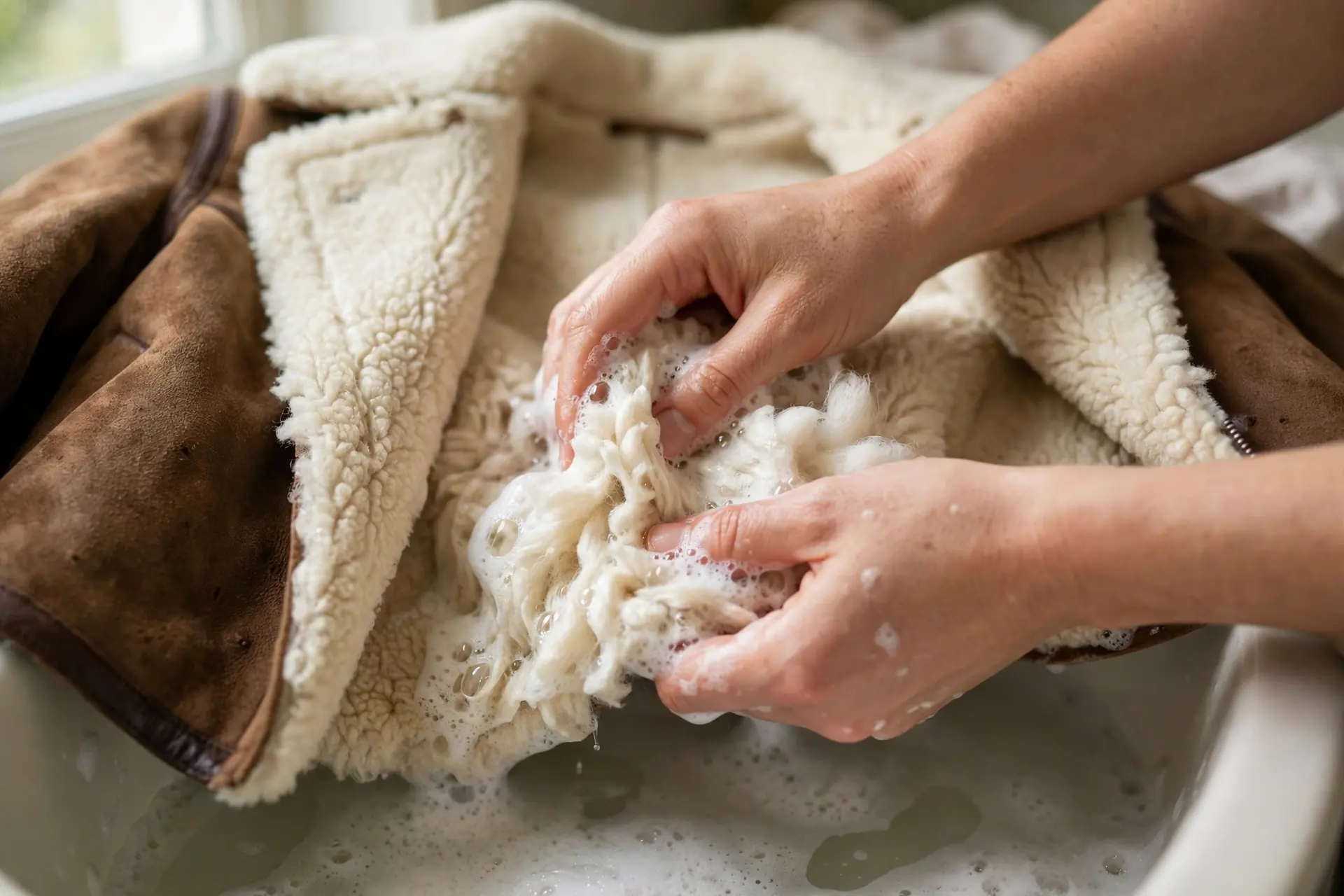
The wool side collects sweat salt and skin oil at the collar, cuffs, and back. Here is how to clean shearling wool lining without drowning it. Brush the wool dry and shake the jacket outside. Fill a basin with cool water and a whisper of mild soap. Dip your fingers, not the jacket, and work the suds into one small patch of wool at a time. Keep the skin side dry. Your fingers do the scrubbing, gently, in small circles.
Lift the soap out with a cloth dampened in plain cool water. Press and blot, patch by patch, until the cloth comes away clean. Hot water is the enemy here. Heat plus rubbing felts wool, and felted wool never lifts again. Cool water and patience keep the pile soft. Let the jacket dry flat or on a wide hanger in moving air, then brush the wool up while it still feels faintly damp. The pile sets soft as it dries.
Smell clings to the collar patch most of all. That patch takes an extra pass with the suds and an extra rinse. Grease at the neck yields to the cornstarch method in the stain section. Do the wool wash once a season for a coat in weekly wear. A coat worn twice a month needs it only when the collar tells you so.
The washing machine question, settled
So can you wash a shearling jacket in a machine? No. Not on gentle, not on cold, not in a mesh bag. A machine soaks the whole skin, twists it, and spins it. The wool felts under the rubbing. Skin shrinks at its own uneven rate. Seams pull, panels warp, and the coat comes out smaller and board stiff. No home trick reverses that trip.
A full soak in a tub fails for the same reasons. The skin drinks water far into its fibers. It dries at uneven speeds and cracks along the folds. Everything in this guide is surface work for a reason. Small water, placed by hand, on one face at a time. Owners who want the whole coat cleaned at once hand it to a shearling specialist. That trade uses controlled moisture and flat drying beds. The pro route gets its own section below.
Rain, snow, and the slow dry
Shearling handles snow well and rain with respect. What happens if a shearling jacket gets wet? The wool soaks up water like a sponge and grows heavy. Its skin side stiffens as it dries. Both recover well when the drying is slow. Shake the coat off at the door. Blot the wool with a dry towel, pressing straight down. Hang it on a wide hanger in open room air.
Heat is the one true danger. Keep the coat away from radiators, fires, and hair dryers. Fast heat cooks the skin while the wool still holds water. The skin cracks, the wool stays damp, and the coat smells for weeks. Room air takes a full day, sometimes two. That pace is the price of a sound coat. Plain hide first aid lives in our guide to what to do if a leather jacket gets wet. Shearling follows the same slow law, with the wool adding a day.
Once the coat feels dry, brush the wool up in every direction. Work the skin side with your hands, flexing it gently. A light feed of conditioner follows in the next section if the face feels papery. Owners in hard winter country wear shearling daily; our post on the leather jacket for extreme cold covers the wearing side. A protector spray made for suede and shearling adds a shield before wet weeks. The product rules sit in our guide to how to waterproof a leather jacket.

Stains, taken one case at a time
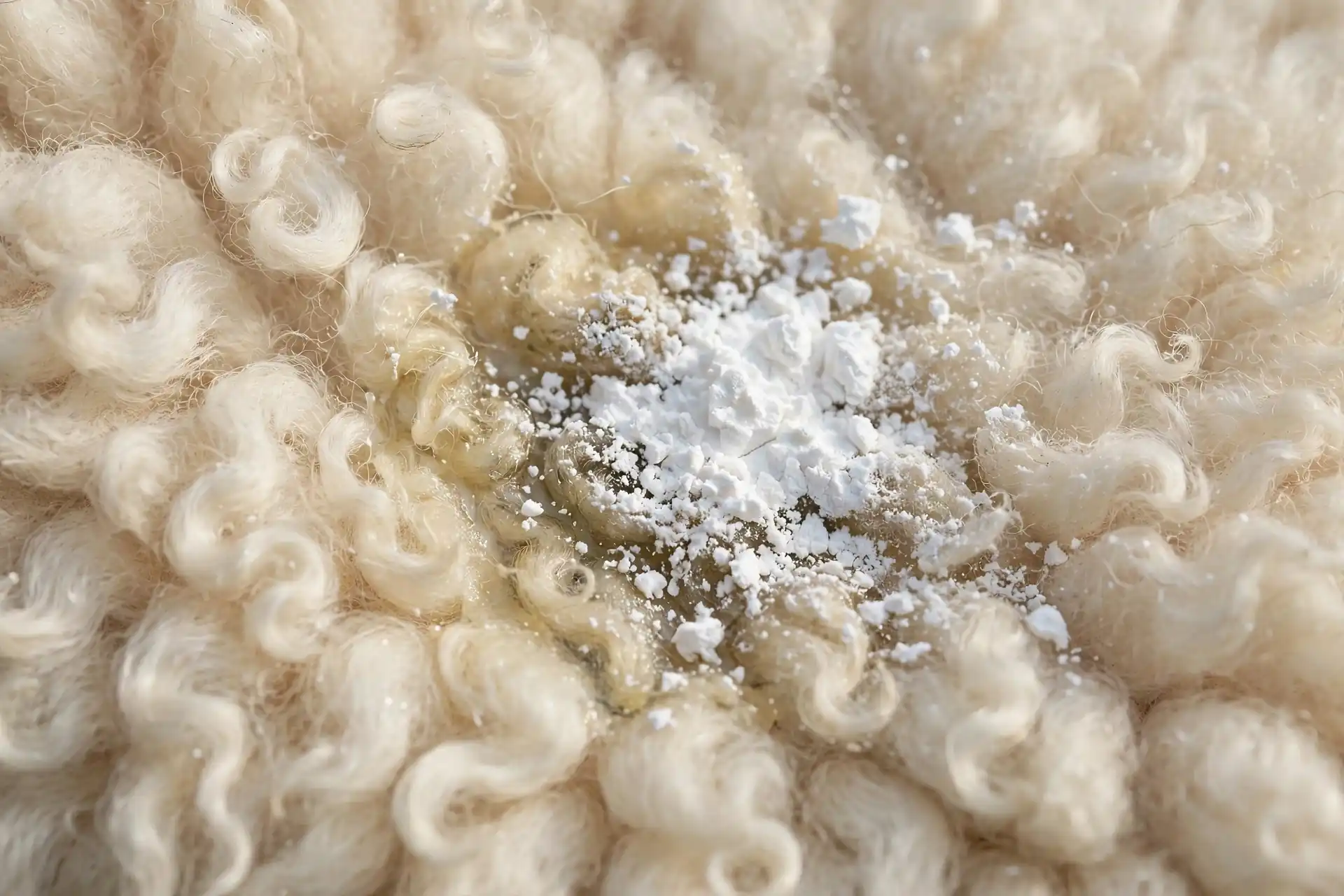
Grease is the stain shearling owners meet most. Burger drips, bike chain flicks, and hand cream all land the same way. Reach for cornstarch for grease stains on shearling before anything wet. Cover the spot with a thick layer of powder. Leave it a full day, two for an old mark. The powder drinks the grease out of the wool and suede. Brush it away outside and check the spot in daylight. Repeat the round for any shadow that stays.
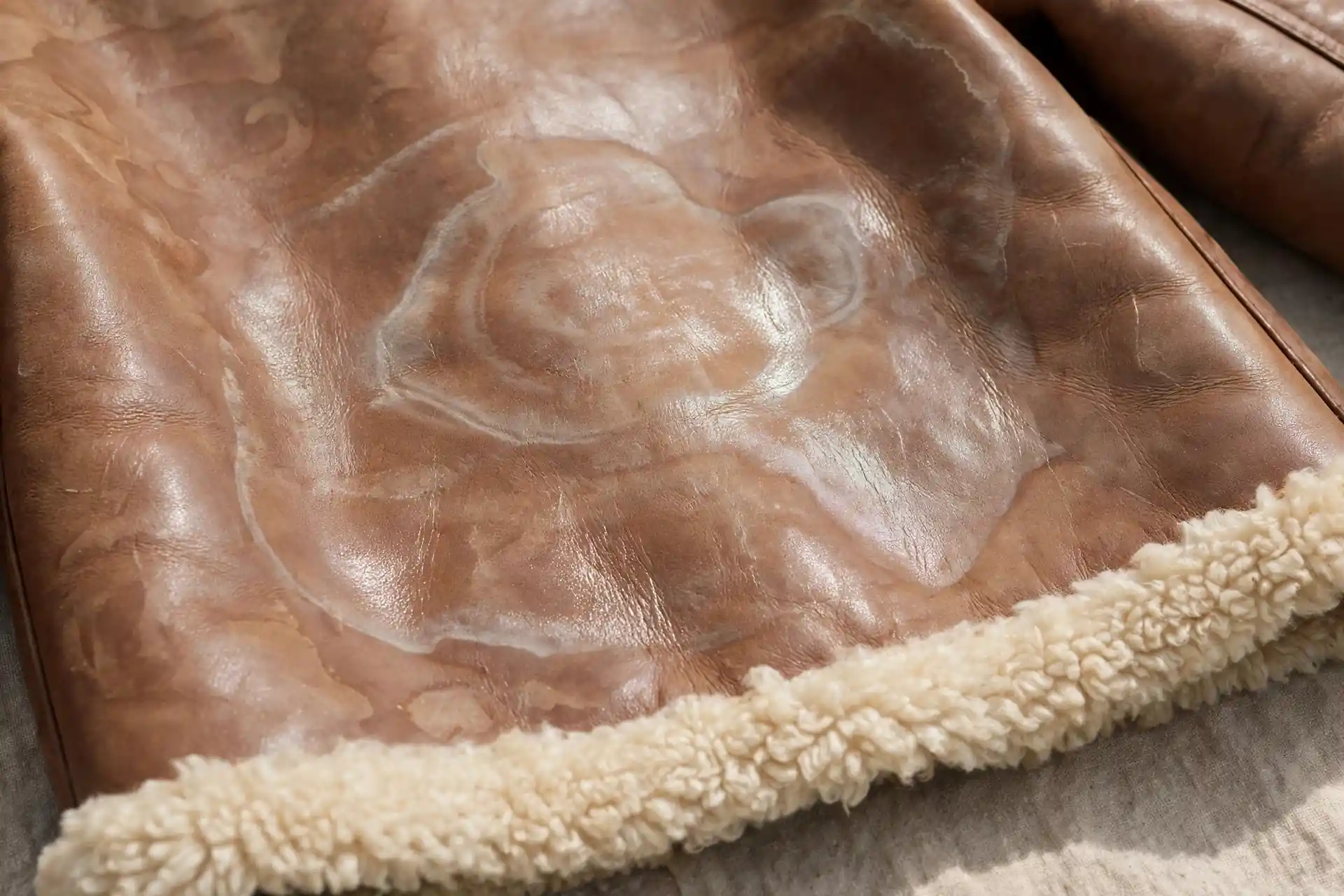
Water leaves its own marks. Shearling jacket water stains show as tide lines on the skin side after a wet day. Even the whole panel out with a cloth that is barely damp. Feather the edge of the damp patch past the line so no new line forms. Dry the panel slow and brush the face once dry. Plain leather stain depth lives in our post on how to remove water stains from a leather jacket. The shearling rule adds one step: keep that damp cloth off the wool edge.
Salt draws white lines along hems and cuffs after slushy streets. A damp cloth lifts most of it. Work the line in short passes and dry the spot in open air. Ink, dye transfer from dark denim, and big food spills are a different class. Home rubbing spreads all three. Blot once, stop, and book the specialist. That line between home care and pro care is the most useful line in this guide.
Feeding the skin side, sparing the wool
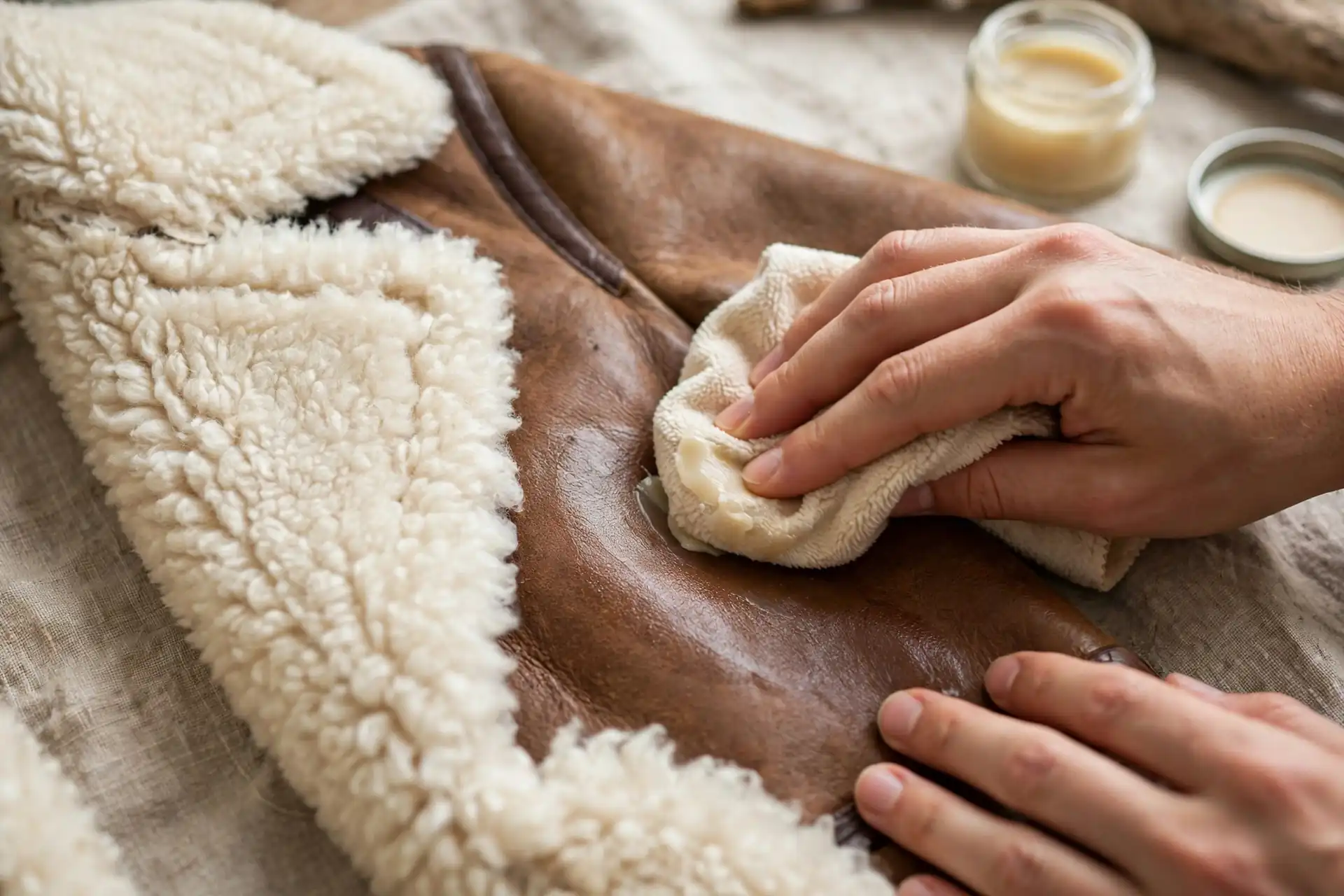
Leather loses its oils month by month, and the skin side of shearling is no exception. Here is how to condition a shearling jacket without hurting the pile. Choose a light balm or cream made for shearling or fine suede. Test it under the collar first. Work a thin coat into the skin side with a soft cloth, one panel at a time. Keep every trace of it off the wool. Oil in the pile mats the fibers and holds dirt like a magnet.
Less is the whole trick. A starved coat drinks the first thin coat fast. Stop there and let it rest overnight. A second coat belongs only to faces that still feel dry the next day. Plain hide takes a richer feed; our post on how to condition a leather jacket covers that routine. Shearling stops earlier because the wool pays for any excess. Once or twice a year keeps the face supple for most owners. A coat that lives in heated rooms dries faster and asks sooner.
Air first: smells, moths, and stale closets
Wool holds smells the way it holds warmth, low in the pile. Shearling jacket odor removal starts with plain air. Hang the coat in open shade with air moving past it, wool side out for part of the day. Most wear smells fade in a day or two. Strong sun is not the shortcut it looks like. Hard sun fades dye and dries the skin side, so keep the airing in shade.
Stubborn smells take the powder round. Dust baking soda through the wool with your fingers. Leave the coat flat overnight, then shake it outside and brush the pile clean. Smoke and food smells often need two rounds. The powder lifts odor without water, and water is what you ration on wool. Perfume sprays only mask the problem and add oils to the pile. Skip them.
Moths hunt the same wool, and they hunt soiled fibers first. Skin oil and food traces in an unbrushed collar are a feast laid out for them. A clean, brushed coat going into storage is the real moth guard. Cedar blocks or lavender bags near the coat add a scent moths avoid. Keep them beside the bag, not pressed on the wool. Smell and moth care meet again in the storage rules below, since both feed on a coat put away dirty.
Storing shearling for the off season
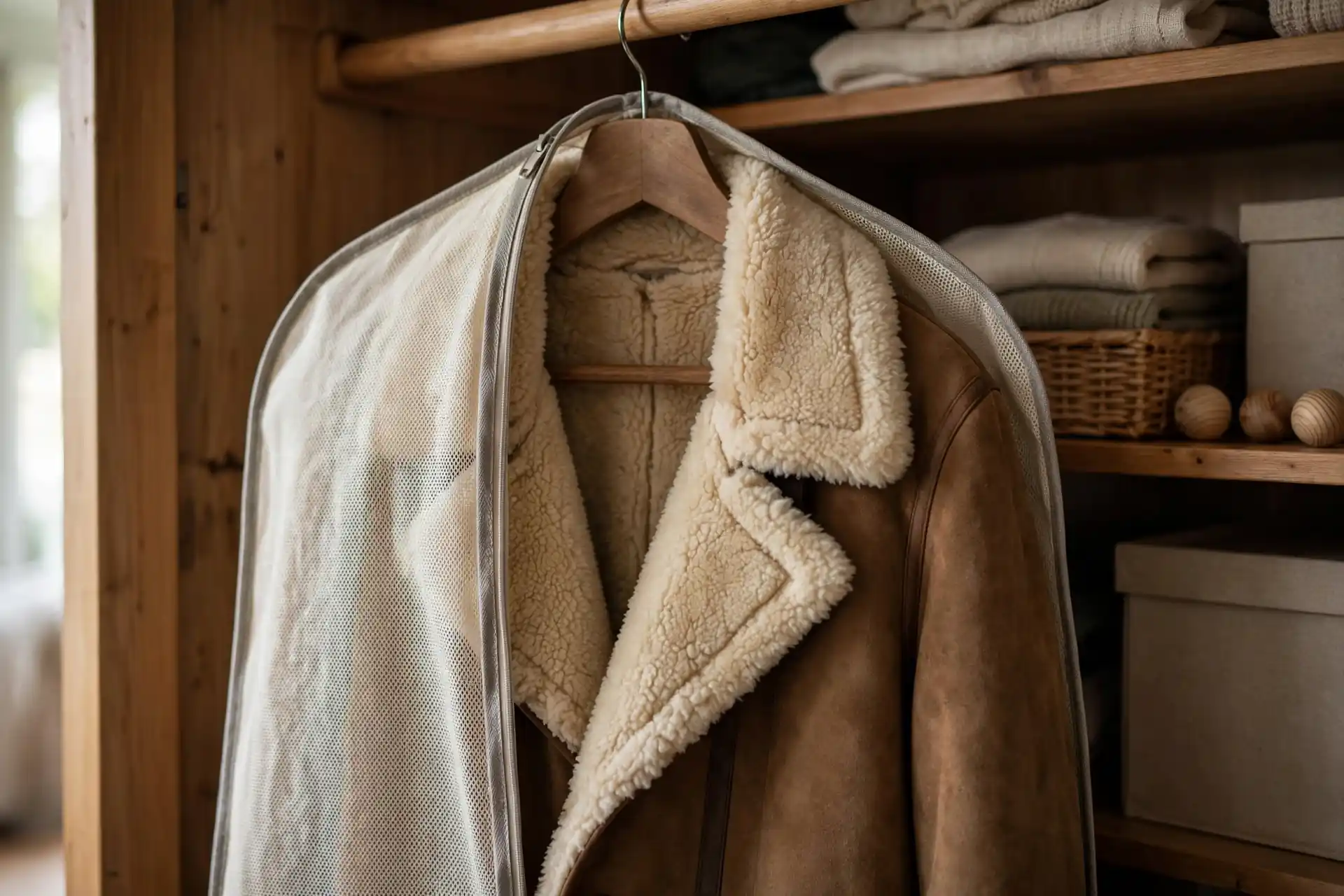
Here is how to store a shearling jacket when the cold months end. Clean both faces first, using the methods above. Let the coat dry fully, a full day past the point where it feels dry. Brush the wool up so the pile rests lofted, not crushed. Hang the coat on a wide hanger that fills the shoulders. Thin hangers cut lines into damp or heavy skin, and shearling is heavy.
Cover it with a breathable cloth bag, never plastic. Plastic traps moisture against the wool and invites mold. The full closet rules for every hide live in our post on how to store a leather jacket. Shearling adds the moth check and one mid season look in. Open the bag once during the summer. Brush the wool, sniff the collar, and check the folds for mold spots. Damp closets grow mold on wool fast. Early spots wipe off with a dry cloth and a day of air. A spread of mold is specialist work; our post on how to remove mold from a leather jacket covers the plain hide version.
Store the coat in the coolest, driest closet you have. Attics bake it and basements dampen it. Keep it away from direct sun through a window. A coat stored clean, dry, lofted, and breathable comes out in fall ready to wear. Put the coat away dirty and it comes out smelling of the closet, with moths at the collar. The twenty minutes of prep decide which coat you get back.
The care calendar and the specialist line
Owners ask how often to clean a shearling jacket as if a date exists. The honest answer is a rhythm, not a date. Brush after every few wears. Air the coat after every wear. Spot clean marks as they land. Wash the wool side once a season in weekly wear. Condition the skin side once or twice a year. Storage prep happens once, at season end. Follow that rhythm and the coat rarely needs more.
Shearling jacket professional cleaning fills the gaps home care leaves. Book a specialist every two or three years for a coat in steady wear. A spill heavy season moves that date up. The pro has flat drying beds, controlled moisture, and dyes to even out faded panels. Ask for a shearling or suede specialist by name, not a general dry cleaner. General solvent cleaning strips the skin and leaves it papery.
Some jobs belong to the pro on sight. Ink and dye transfer, as the stain section said. Tears along a seam. A coat soaked through in a flood or storm drain splash. Mold spread past a few spots. A coat that already shrank in a home wash attempt. Home care keeps a sound coat sound. It does not rebuild a damaged one, and honest care means knowing the border.
Questions owners ask at the bench
How do you clean a shearling jacket at home?
Brush the wool dry and shake out the grit. Spot clean the skin side with a cloth dampened in cool water and a trace of mild soap. Wash the wool side with fingertip suds in cool water, patch by patch. Dry the coat slow in open air. Machine washing and full soaking stay off the list for good.
Can you wash a shearling jacket in a washing machine?
No. The soak, twist, and spin felt the wool and shrink the skin at uneven rates. Panels warp and seams pull. The coat comes out smaller and stiff, and the harm does not reverse. Surface cleaning at home or a shearling specialist are the two safe routes.
How do you remove grease stains from a shearling jacket?
Cover the spot with a thick layer of cornstarch and leave it a full day. The powder pulls the grease out of the wool and suede without water. Brush the powder away outside and check in daylight. Repeat for any shadow left behind. Old, set grease that survives two rounds goes to the specialist.
How do you clean the wool lining of a shearling jacket?
Brush it dry first. Work cool water and a whisper of mild soap into small patches with your fingers, keeping the skin side dry. Lift the soap out with a cloth dampened in plain water. Dry in moving air and brush the pile up while it is still faintly damp. Hot water felts wool, so cool is the rule.
How often should you professionally clean a shearling jacket?
Every two or three years for a coat in steady wear. Go sooner after a season of spills or a salt heavy winter. Choose a shearling or suede specialist, not a general dry cleaner. Solvent cleaning built for suits strips the skin and leaves it dry and papery.
How do you store a shearling jacket?
Clean both faces and let the coat dry a full day. Brush the wool up, hang the coat on a wide hanger, and cover it with a breathable cloth bag. Plastic traps damp and feeds mold, so it never touches shearling. Store it cool, dry, and out of sun, and look in once mid season.
What happens if a shearling jacket gets wet?
The wool soaks up water and the coat grows heavy. Its skin side stiffens as it dries. Blot the wool, hang the coat on a wide hanger, and let room air dry it over a day or two. Heat cracks the skin while the wool still holds water, so radiators and dryers stay off.
How do you get smells out of a shearling jacket?
Air does most of the work. Hang the coat in open shade with air moving past it for a day or two. For stubborn smells, dust baking soda through the wool, rest the coat overnight, then shake and brush it clean outside. Perfume sprays mask odor and oil the pile, so skip them.
Shearling asks for little, but it asks on time. A brush after wear, air after rain, powder on grease the day it lands. Put the coat away clean and it greets you every fall like an old friend. That is the whole secret, and it fits on an index card.