How to Store a Leather Jacket Long Term
How to Store a Leather Jacket Long Term
Most owners learn how to store a leather jacket the hard way. A good jacket goes into the closet in spring. It comes out in fall with bent shoulders, a musty smell, and fine cracks at the folds. None of that harm came from wear. It all came from rest, done wrong. Leather keeps changing while it hangs in the dark. Air, damp, heat, and pressure keep working on the hide. This page gives the full storage routine in plain order. It sits inside our wider leather jacket care guide. Those pages cover the hanger, the cover, the closet, and the air itself.
The short answer: Clean the jacket first. Condition the hide. Hang it on a wide padded hanger. Cover it with a cloth bag, never plastic. Store it in a cool, dry closet with air around it. Look in on it once or twice a season.
The rules cover every cut you own. Heavy jackets from the men’s leather jackets range rest the same way. So do the soft shaped jackets in the women’s leather jackets range. It is the best way to store leather jackets of every hide and build. Weight and hide change a detail or two. The routine itself never changes. Learn it once and every jacket you own stays sound.
Storage starts before the closet
Good storage starts a full day before the jacket goes away. These leather jacket storage tips begin with a clean hide. Dirt left on leather feeds mold in a closed closet. Street grit in the grain works like sandpaper over time. Wipe the jacket down with a soft, damp cloth. Our guide to how to clean a leather jacket walks through the safe wash, panel by panel.
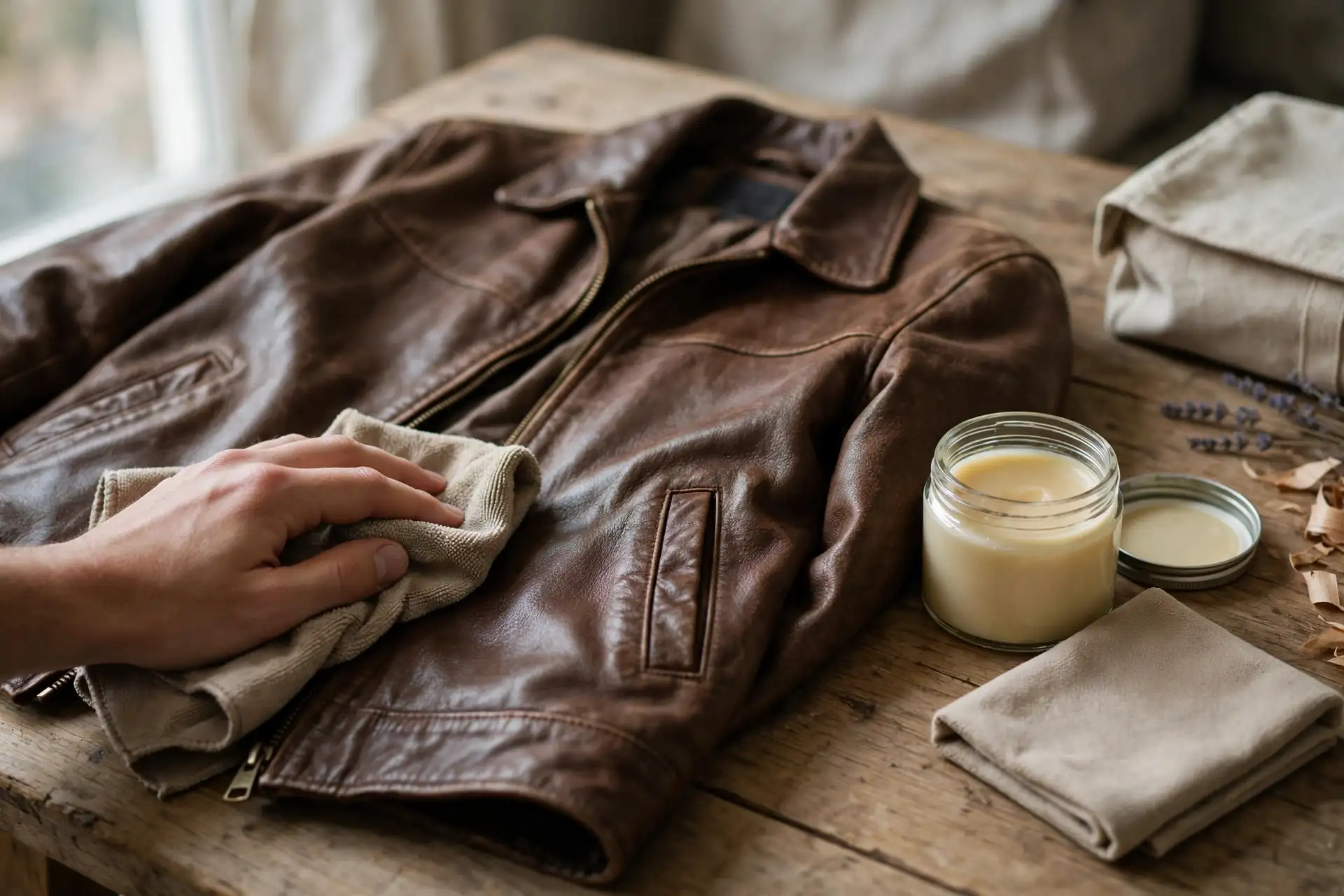
Conditioning comes next, and the order matters. Should you condition a leather jacket before storing it? Yes, every time. Stored leather loses its oils slowly, month after month. A fresh coat of conditioner replaces those oils before the rest begins. Work it in, let it sink overnight, and buff off the extra. The full method sits in our post on how to condition a leather jacket.
A jacket that faces wet commutes earns one more prep step. One sound coat of protection slows rain damage all season long. Our guide to how to waterproof a leather jacket covers the sprays and waxes in full. Do that job before storage too. The hide then rests guarded through the wet months.
Never store a jacket that feels even slightly damp. Damp leather in a dark closet grows mold within weeks. If the jacket got wet, dry it fully first. Our recovery guide for what to do if a leather jacket gets wet covers that job end to end. Then empty every pocket. Zip the jacket up and fasten its belt or straps. A closed jacket holds its shape far better than an open one.
Give the jacket one last look before it rests. Run your eyes over the lining for damp spots. Sweat salt at the collar needs a wipe before storage. Brush crumbs and lint out of every pocket, and check each zip and snap once as well. A jacket stored dirty ages in secret, and dirt keeps working while no one watches.
Hang it or fold it
Owners ask one question more than any other. Should you hang or fold a leather jacket for storage? Hang it. Hanging wins for any rest longer than a few days. The hide keeps the shape of your shoulders. Air reaches every panel. No fold lines press into the grain.
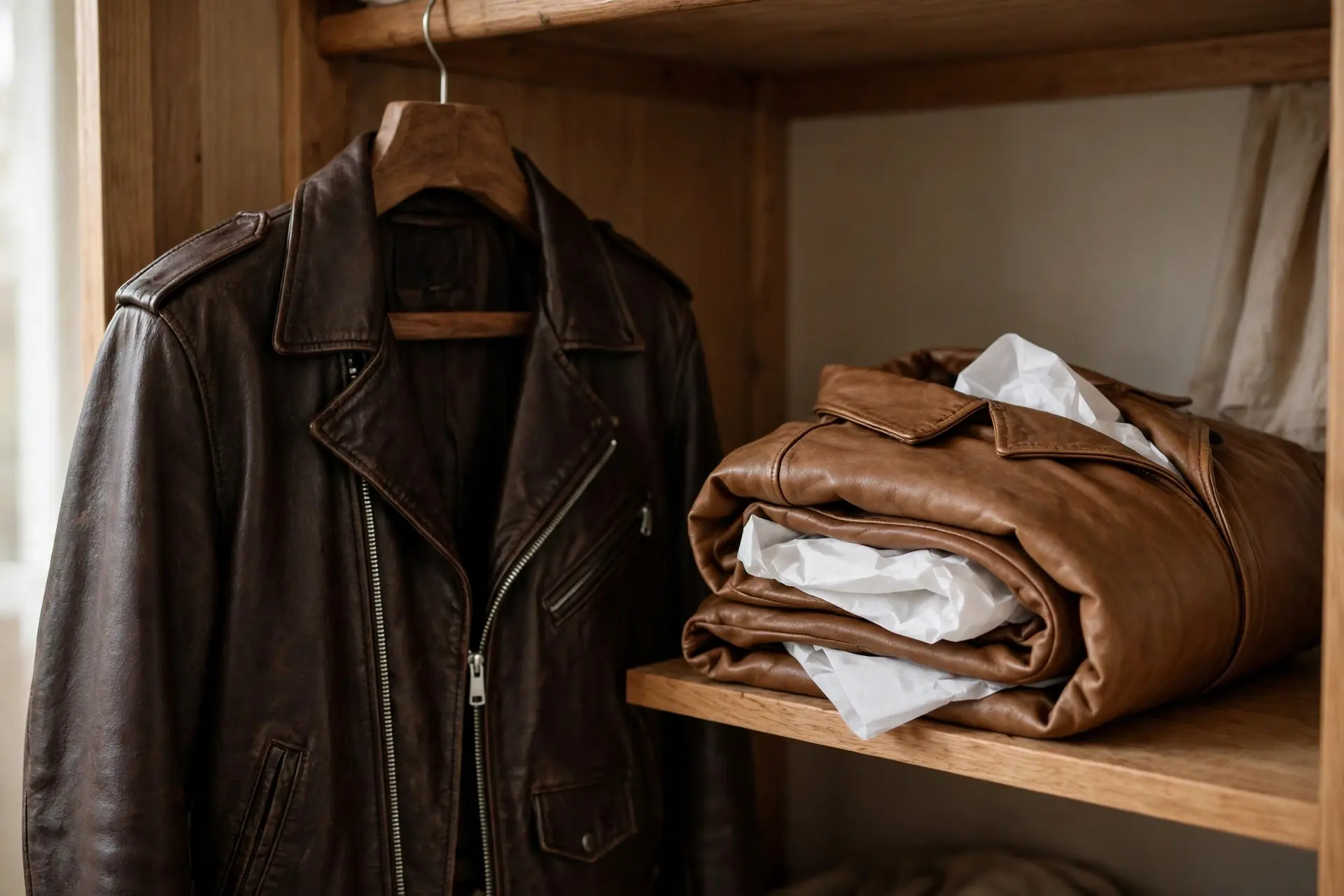
Folding has a narrow place, and it is a short one. A trip or a tight week in a small flat can force a fold. Fold along the seams, never across a panel. Lay soft tissue in each fold to soften the crease. Keep nothing stacked on top of the jacket. Get it back on a hanger within days, not weeks.
Time turns folds into damage. A crease held for months presses the fibers flat. The finish cracks along that line first. Old jackets show this harm more than any other. Their fold lines from one long storage stay visible for life.
The hanger carries the whole jacket
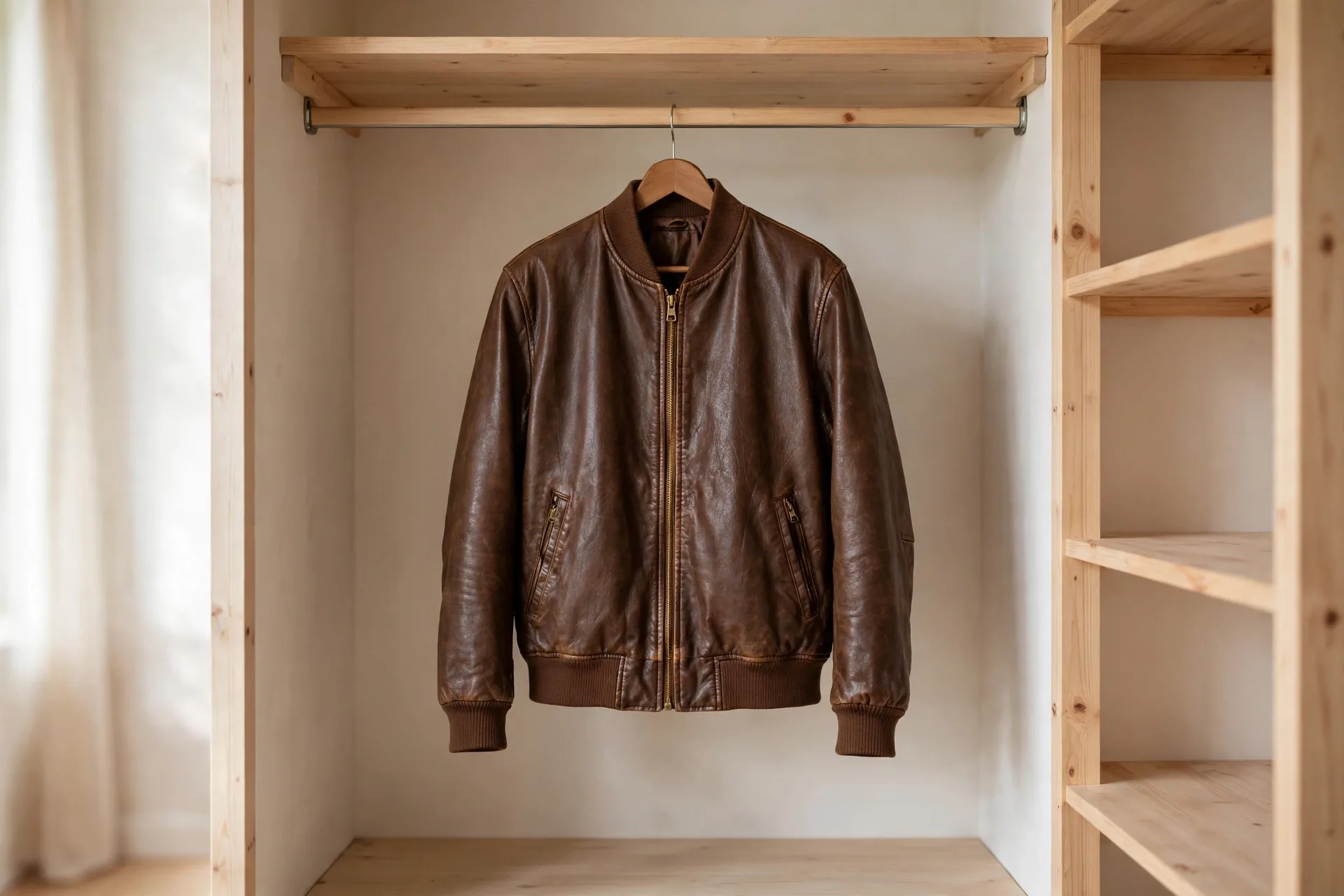
A leather jacket is heavy, and gravity never rests. The best hanger for a leather jacket is wide, padded, and shaped like your own shoulders. Wood hangers with broad ends do the job well. The shoulder of the jacket should sit on the hanger end. It should not droop past it or stop short of it.
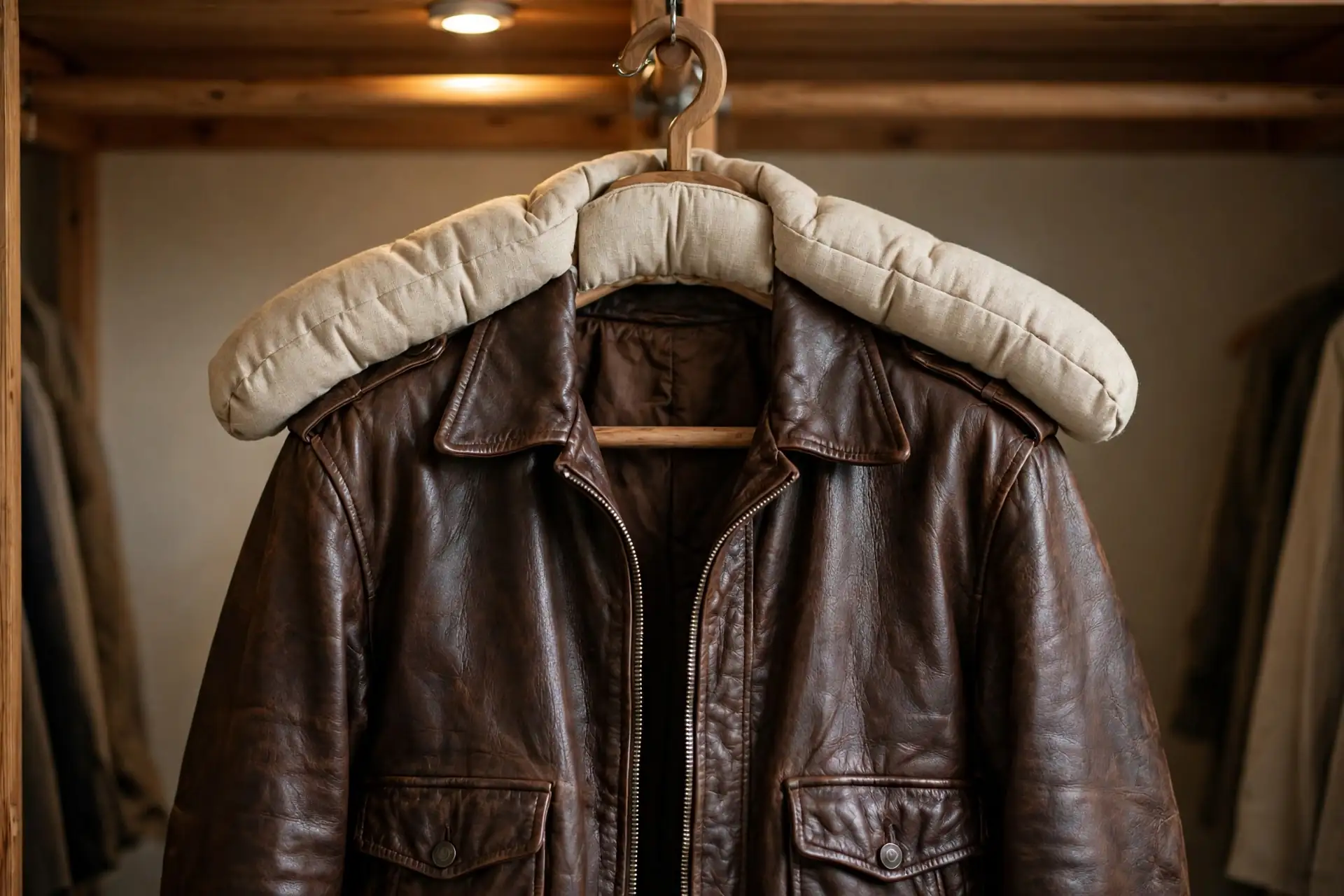
Wire hangers are the worst tool in the closet. Thin wire cuts into the shoulder line under the jacket’s weight. Weeks later, two sharp points push up through the leather. Cheap plastic hangers bend and snap under heavy hides. A thick biker jacket from the men’s leather biker jackets range can weigh as much as a full winter coat. Give it a hanger with real strength.
Match the hanger to the jacket in one more way. The hanger should fill the shoulders fully, edge to edge. A short hanger lets the sleeve heads droop and crease. One that runs long pokes bumps into the upper arms. Test the fit once, with a hand under the shoulder seam. The seam should rest flat on the hanger end.
Cloth breathes and plastic does not
Can you store a leather jacket in a plastic bag? No. Plastic is the one cover leather hates. It seals damp air in against the hide. That trapped damp feeds mildew and leaves a sour smell. Heat makes it worse, since plastic can stick to some finishes. Dry cleaners send jackets home in plastic for the ride only. Take it off the same day.
Reach for a breathable garment bag for leather jacket storage instead. Cloth bags and cotton covers let air drift through. The hide breathes and dries at a slow, safe rate. Leave the bag open at the bottom, or leave the zip part way down. Air needs a path, even a small one. An old clean cotton sheet over the shoulders works too.
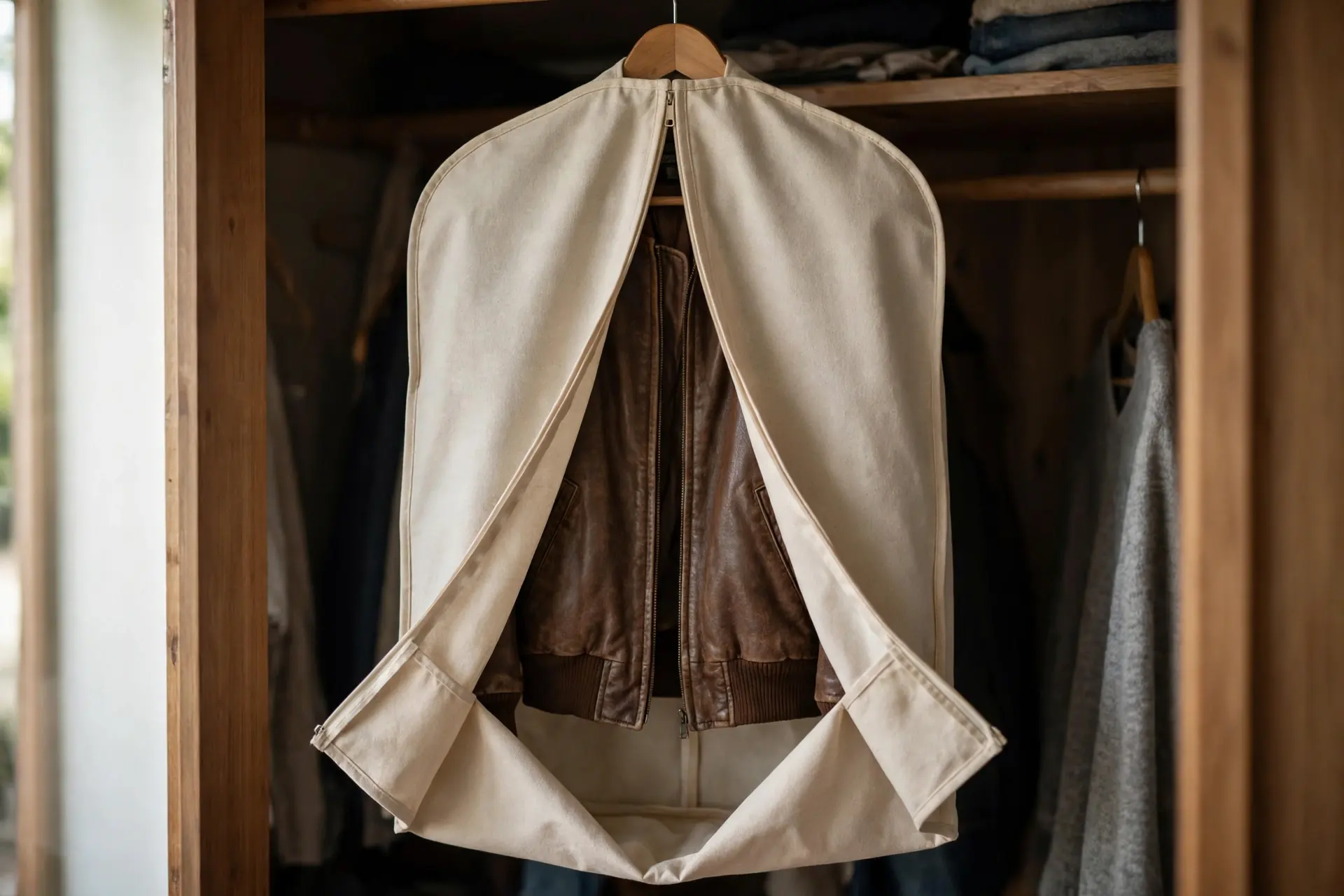
Keep storage covers plain and clean. Scented bags and printed plastic can pass smells and dyes to pale leather. Store light jackets and dark jackets apart for the same reason. Dye moves slowly in the dark, jacket to jacket. It travels where panels touch and rest for months.
The closet sets the terms
Storing a leather jacket in a closet sounds simple, and the room still matters. Pick an inside closet with steady air. Avoid closets on damp outside walls where cold air meets warm air. Condensation forms on those walls, and leather hangs right in its path.
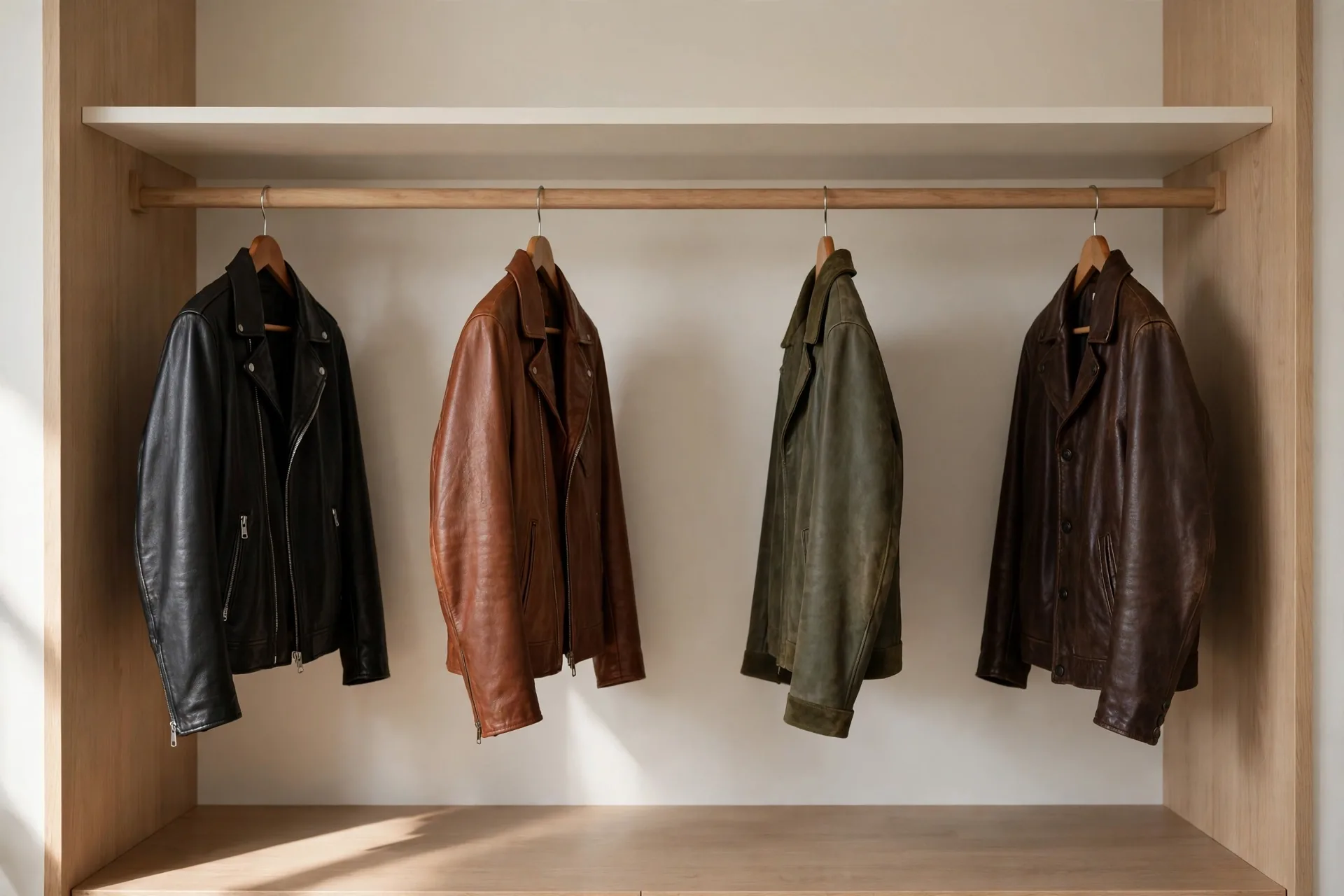
Space is part of the setup. Jackets need a hand of air on each side. A rail packed tight traps damp and presses creases into sleeves. Give your leather its own stretch of rail when you can. Other clothes can crowd, but leather should not.
Skip the attic, the basement, and the garage, since attics bake in summer and freeze in winter. Basements stay damp through the wet months. Garages add fumes, dust, and wild swings of heat. A spare room closet beats all three by a mile. Sunlight counts as heat too. Keep the jacket out of direct sun. Light fades dye and dries the surface over time.
Room warmth is the target through the year. A steady cool room, near 60 to 70 degrees, suits leather best. Heat sources near the closet cause the real harm. Radiators, hot pipes, and sun hit walls all dry the hide. Cold alone hurts leather very little, while swings and steady heat do the damage.
No closet to spare
Small homes force hard choices, and leather still has options. A spare corner with a simple garment rail works well. Keep the jacket covered in cloth and off the floor. A breathable storage box on a shelf works for short rests too. Lay the jacket flat inside with tissue in the folds.
Two spots fail every time. Vacuum bags crush the grain and lock folds in hard. Under bed boxes gather dust and shut out air flow. Both trade a season of space for years of wear marks. A rail in a spare room beats them with ease.
Humidity does the quiet damage
Leather jacket storage humidity sounds like a lab topic. It is just the dampness of the closet air. Aim for the middle band, near half damp and half dry. Around 40 to 50 percent humidity suits leather well. Most homes sit in that band through the year with no help at all.
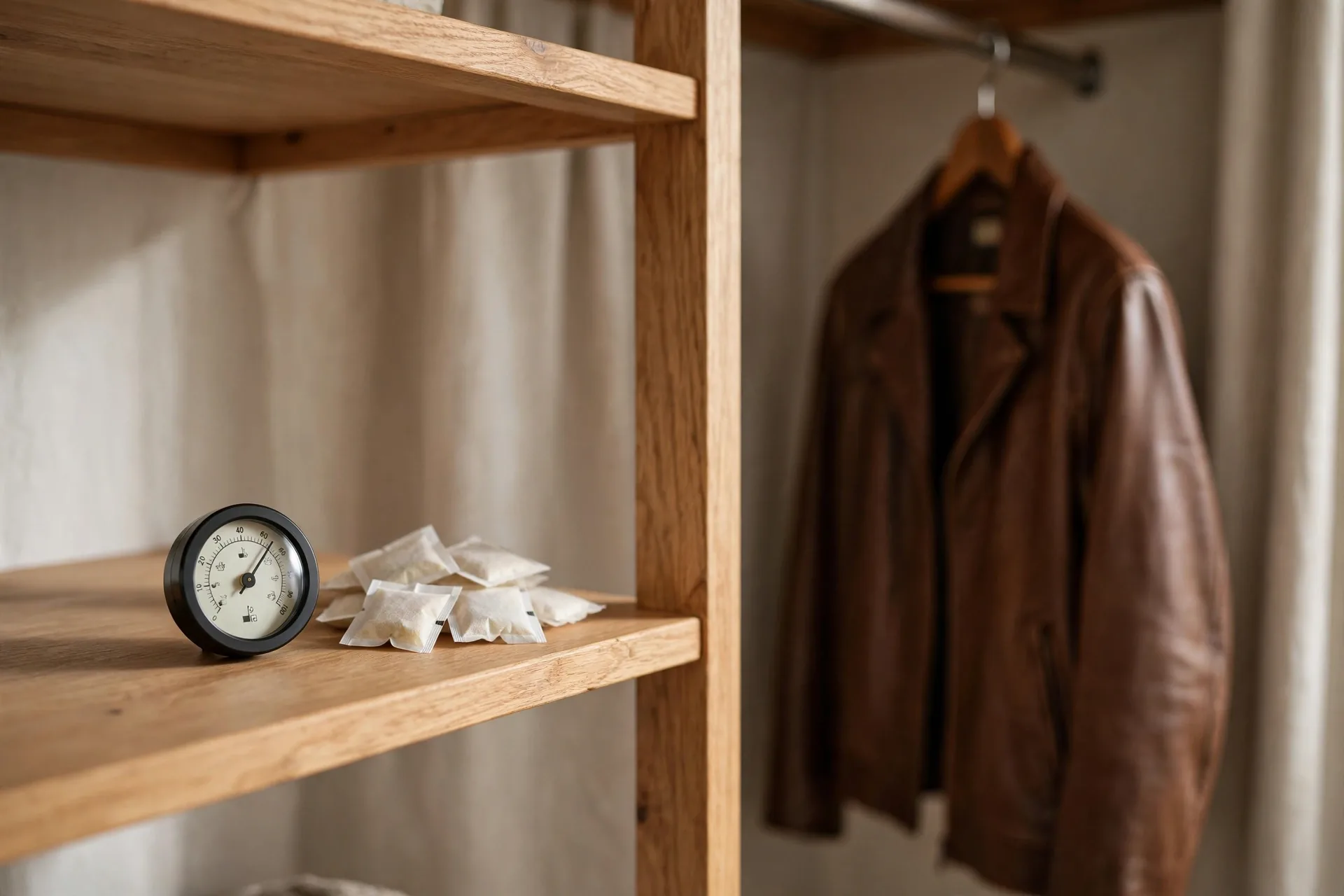
Damp air grows mold, and mold is the storage fear with teeth. How to keep leather jacket from molding starts with air flow and dry leather. Silica gel packs on the closet shelf drink extra damp. Replace them or dry them out each season. A door left open a crack keeps air moving too.
Blocks of cedar help on two fronts at once. Cedar blocks for leather jacket storage freshen the air and keep moths away from wool and hide. Sand each block lightly once a year to wake the scent up. Keep cedar from touching the leather itself, since a cloth wrap or a shelf spot near the jacket does the job. Cedar oil never goes straight onto a hide.
Tissue earns its shelf space as well. Sleeves stuffed with acid free tissue paper leather jacket storage sheets hold their round shape all season. The paper drinks stray damp before the hide can. Stuff the body lightly too when a jacket hangs soft. Shape held in rest is shape kept in wear.
Summer storage is a season of its own
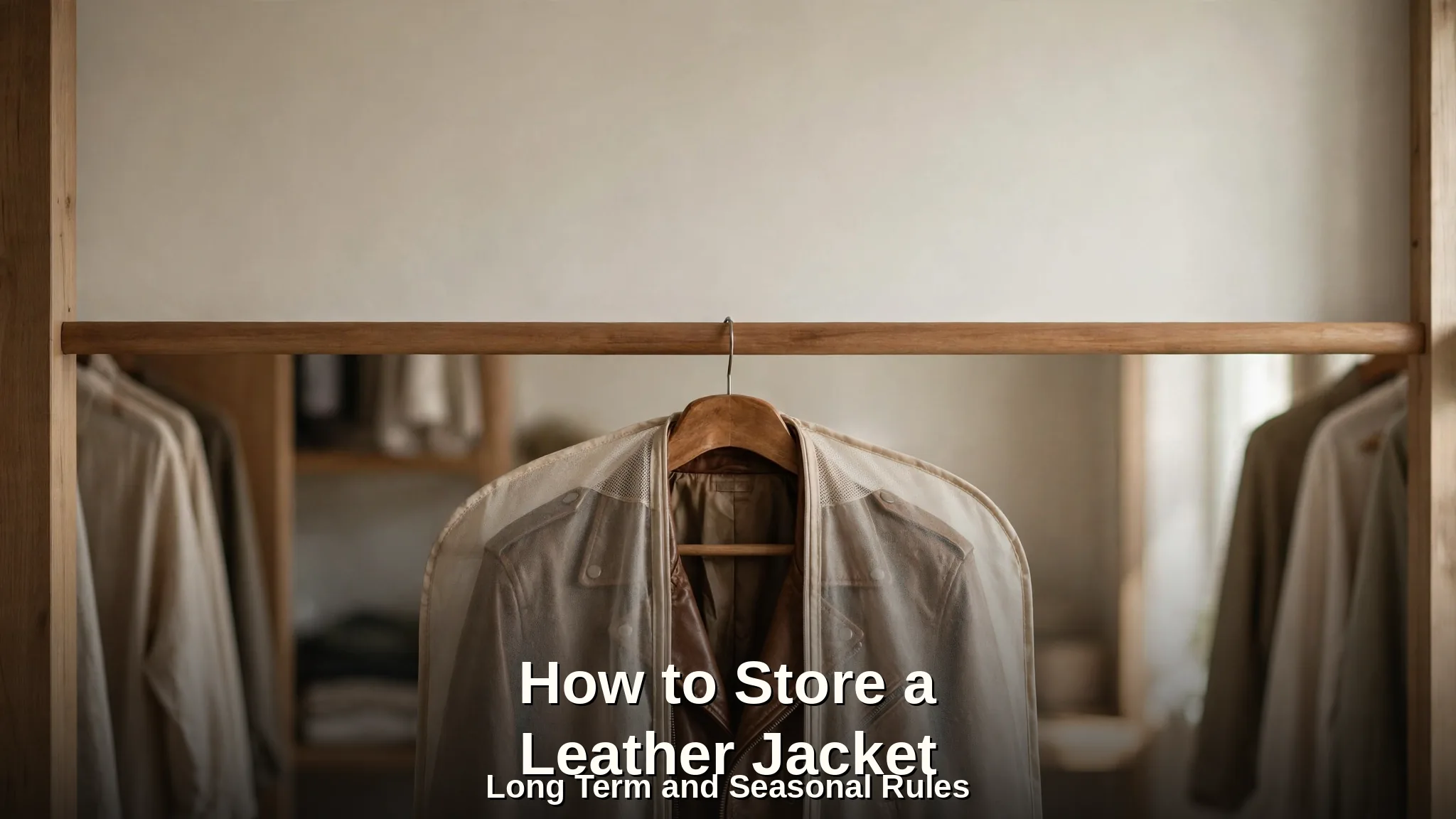
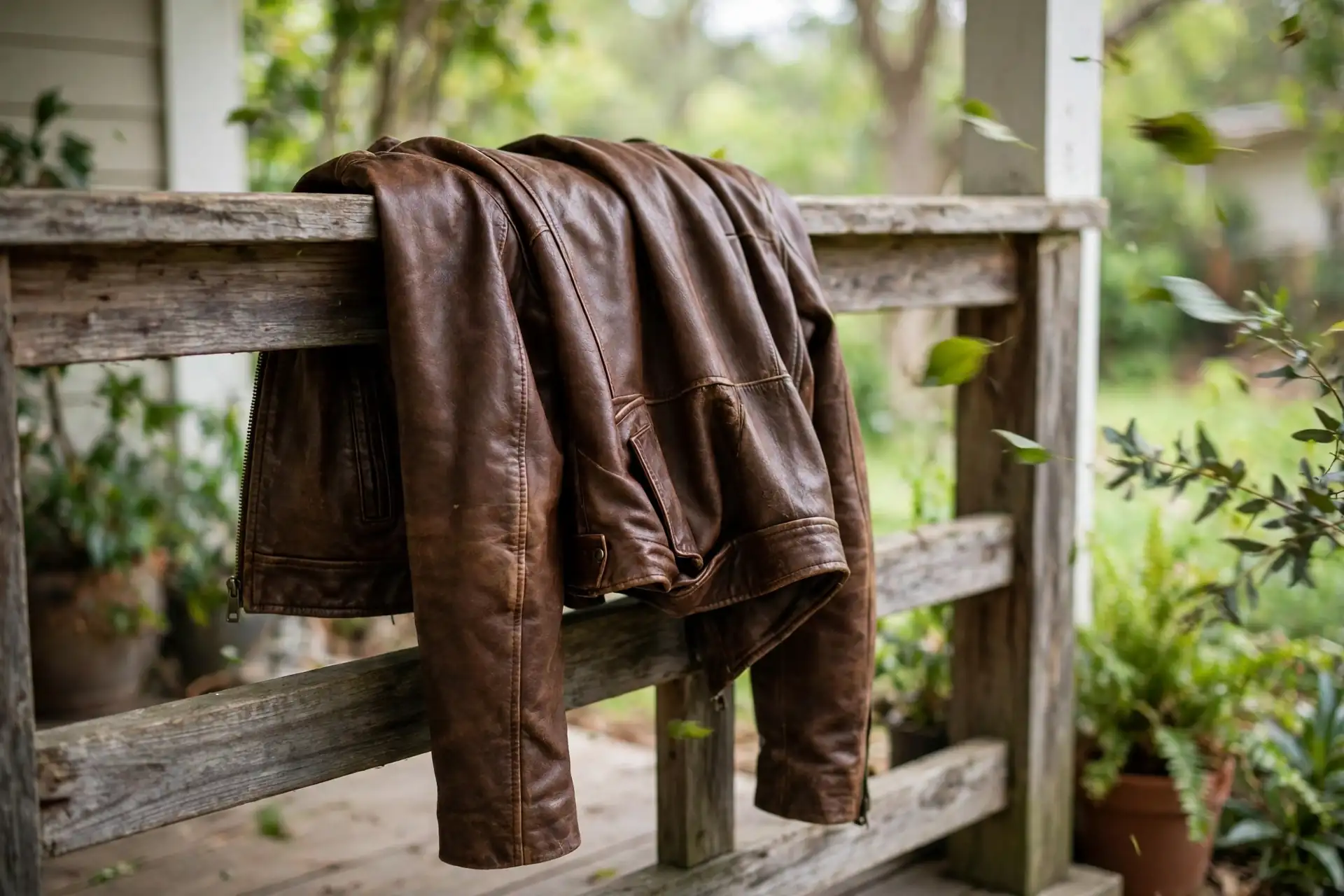
Leather jacket summer storage starts on the last cool day of spring. Run the full prep while the season turns. Clean the hide, condition it, and air it for a day. Then hang it, cover it in cloth, and let it rest. Five quiet steps in April save a rescue job in October.
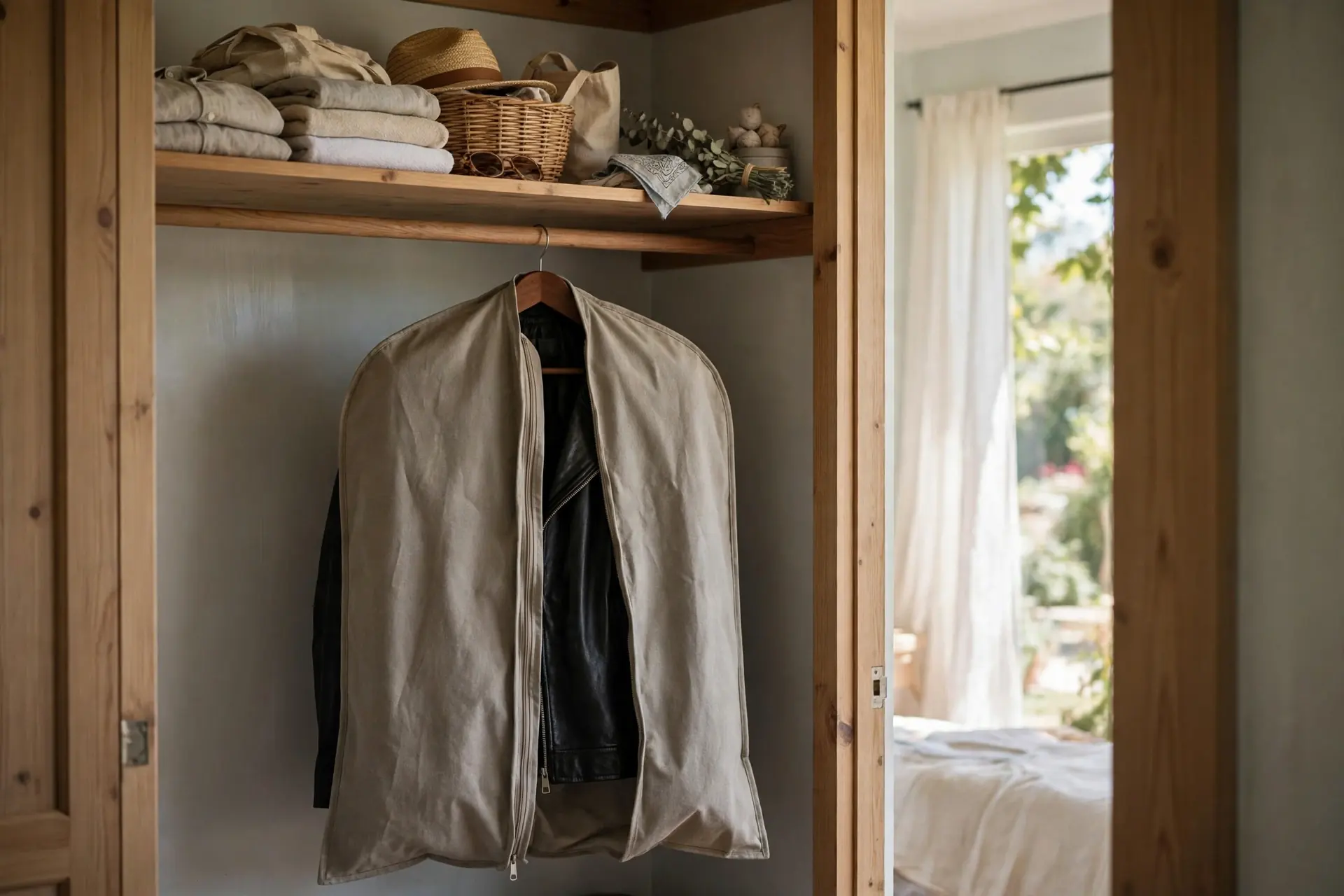
Check in once during the warm months. Open the cover and look the jacket over. Feel the shoulders and collar for damp or stiffness. Smell the lining. An hour of open air on a dry day does a stored jacket real good. Zip it back up and cover it again when the check ends.
Heavy winter builds need this check most of all. Shearling and thick lined jackets hold more damp inside their linings. Our guide to the warmest leather jacket for winter shows how hard those builds work in the cold. They earn a careful rest in the heat.
Suede and shearling rest by other rules
Suede asks for a gentler hand at every step. Brush the nap before storage, not after months of dust. Stuff suede with tissue so the soft panels keep their shape. Cover it in cloth and keep it away from smooth leather. Dye transfer marks suede faster than any other hide. Our post on how to clean a suede jacket covers the brush work in full.
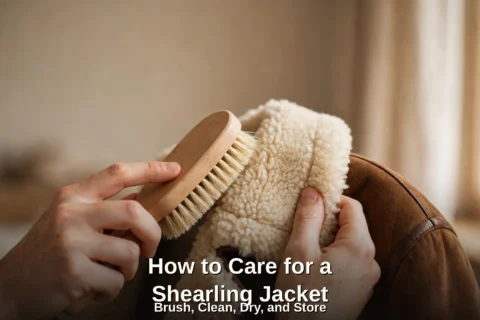
Shearling rests with its wool side in mind. Air the jacket well before it goes away, wool side out for a day. Moths love still wool, so cedar and air checks matter double here. Never seal shearling in plastic for storage. The wool traps damp against the skin side and sours fast. Its full routine lives in our guide on how to care for a shearling jacket
.One rule joins both hides. Store them clean. Skin oil, food spots, and road dust all grow worse in the dark. A stain left in spring is a stain set by fall.
Cracks form slowly in the dark
Owners ask about how to prevent leather jacket cracking in storage as if one trick exists. The truth is a short list of plain habits. Condition the hide before the rest. Keep heat away from the closet. Hold the humidity in the middle band. Hang the jacket, never fold it for months. Skip the plastic cover.
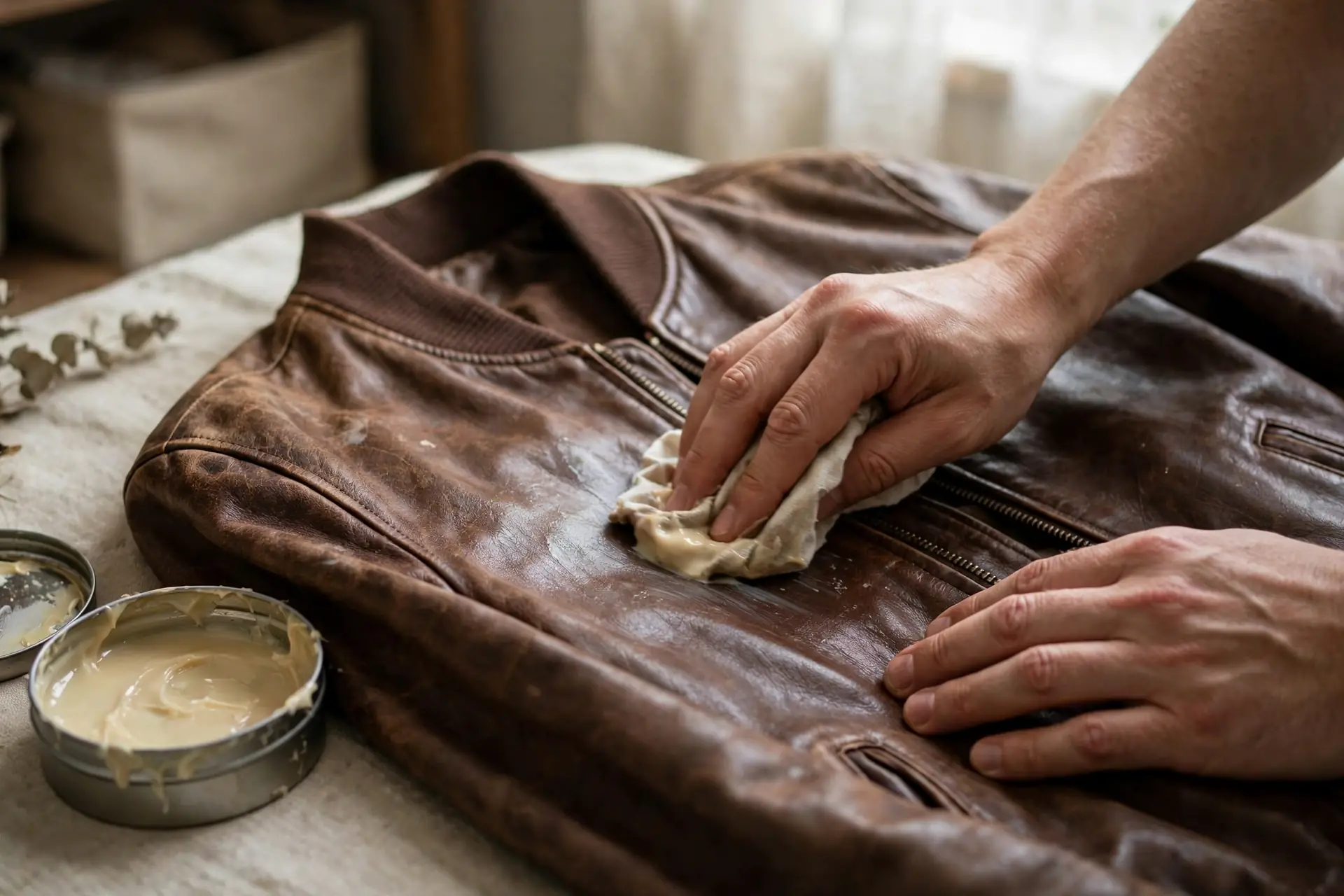
Each item on that list fights the same enemy. Leather cracks when its inner oils dry out and its fibers lock stiff. Dry air, heat, and pressure all speed that loss. Stored leather grows thirsty with no wear at all. Skin oils from your body feed a worn jacket. A stored one gets no such meals. The conditioner you add in spring is its food for the season.
Wear helps too, in small doses. Take the jacket out for a day now and then. Body warmth and movement keep the hide supple. Storage should mean a season of rest, not years in the dark. A jacket worn twice a summer rarely cracks at all.
Short trips and tight spaces
Travel bends the rules for a day or two, and that is fine. Wear the jacket on the road when you can. Your body is the best garment carrier ever made. When the case must carry it, turn the jacket inside out. Fold it once along the seams with a soft shirt in the fold. In a car, hang it from the rear hook instead, flat and uncovered.
Hang it up the moment you arrive. Hang the jacket in the open room and let the creases relax. Most travel folds fall out within a day of hanging. Steam from a hot shower helps the last lines fade. Hang the jacket clear of the water itself. Never iron leather at a hotel to rush the job. Heat on a fold line sets more harm than the fold did.
Waking a stored jacket up
Bring the jacket back with the same calm it rested in. Hang it in open air for a few hours first. Brush off closet dust with a dry cloth. Look over every panel in good light. You are hunting for three things. Mold spots, dry stiff patches, and set crease lines.
Early mold wipes off with a dry or barely damp cloth. Wide or fuzzy growth is a bigger job. Our guide on how to remove mold from leather jacket walks that rescue through, step by step. Musty smells fade with air alone in most cases, and a day on the porch in shade clears all but the worst.
Feed the hide if it feels dry or stiff. Work in a light coat of conditioner and let it rest overnight. Flex the arms and shoulders with your hands. Then put the jacket on and wear it around the house a while. Honest creases from hanging fall out with warmth and wear. Set lines take longer, and our post on how to get wrinkles out of leather jacket covers the slow fixes.
Run each zip up and down once on waking day. Snaps and buckles get one open and close as well. Hardware wakes up stiff after a season of stillness. A slow pass frees each part without force. Then hang the jacket in its normal spot. It is back in service, not back in storage.
What we tell people who buy from us
Every jacket at Denver Jackets comes out of our own production unit. The benches work sheep skin, cow, goat, and lamb. Buyers pick from full grain, top grain, and corrected grain hides. The finish shelf holds matte, natural, and polished looks, plus pull up, distressed, vintage wash, and embossed work. Sizes run to 4XL, with custom made to measure work on top. A jacket built with that care asks little in return. Ten calm minutes of storage care, twice a year, covers it.
Storage questions owners ask most
What is the best way to store a leather jacket long term?
How to store a leather jacket long term comes down to one steady routine. Clean and condition the jacket first. Hang it on a wide padded hanger inside a cloth cover. Keep it in a cool, dry closet with air around it. Check it once or twice a season for damp, mold, and dry spots.
Should I hang or fold my leather jacket?
Hang it, always, for any rest past a few days. Hanging keeps the shoulder shape and lets air reach every panel. Fold only for a trip or a very short spell. Use tissue in the folds, stack nothing on top, and hang the jacket again within days.
Can I store a leather jacket in a plastic bag?
No. Plastic seals damp air against the hide and feeds mildew. It can also stick to some finishes in warm rooms. Use a cloth garment bag or a clean cotton sheet instead. Leave the cover open a little so air keeps moving.
What type of hanger is best for leather jackets?
Pick a wide, padded hanger, or a wood hanger with broad shaped ends. It should match your shoulder width and fill the jacket edge to edge. Skip wire hangers and thin plastic ones. Both bend or cut in under the weight of a leather jacket.
How do I keep my leather jacket from cracking in storage?
Condition the hide before the rest begins. Keep the closet cool and the humidity near the middle band. Hang the jacket and skip the plastic cover. Wear it for a day now and then during long storage. Movement and body warmth keep the fibers supple.
What humidity level is best for storing leather?
Aim for 40 to 50 percent humidity in the closet air. Damp air past that band invites mold growth. Air far drier pulls oils out of the hide and invites cracks. Silica gel packs and a cracked open door help hold the middle.
How do you prevent mold on a stored leather jacket?
Store the jacket clean and bone dry. Give it air flow and space on the rail, then check it once or twice a season and air it for an hour. Silica gel packs drink extra damp. Cedar blocks near the jacket freshen the air as well.
Should I condition my leather jacket before storing it?
Yes. Conditioning before storage is the step owners skip most, and it costs them. Stored leather loses oils month after month with no wear to feed it. A fresh coat before the rest keeps the hide soft and crack free. Let it sink in overnight before the cover goes on.
A closet is not a pause in a jacket’s life. It is a slow season of its own. Treat that season with the same care you give the wearing months. Do the small things right in the dark months. The jacket pays you back every time you reach for it.