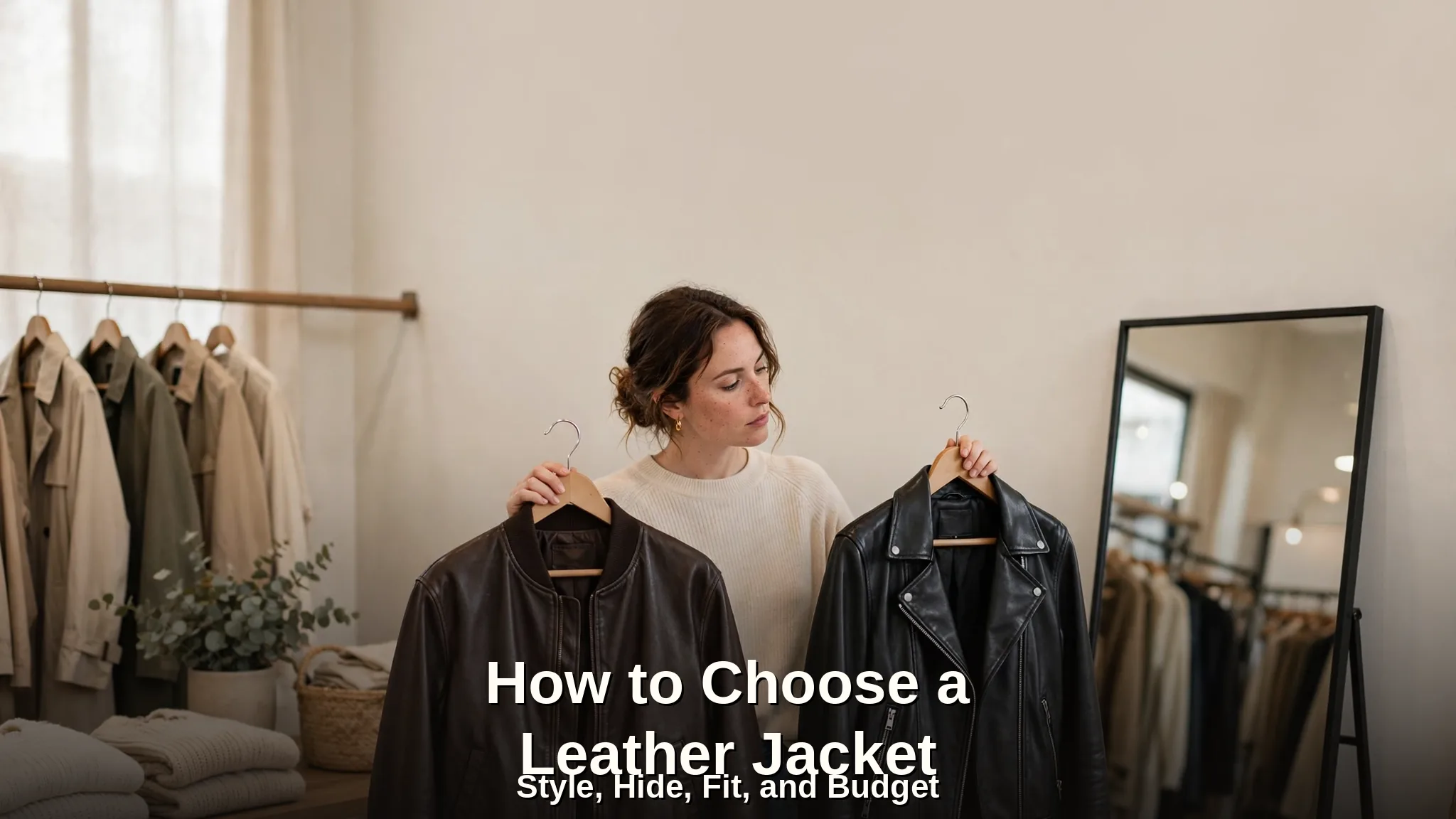
How to Choose a Leather Jacket: The Five Calls, In the Right Order
How to Choose a Leather Jacket: The Five Calls, In the Right Order
Most buyers learn how to choose a leather jacket the hard way. They start with the jacket that looks best on the rail. Color pulls them in next. Then comes the hunt for their size in that color. Fit gets ten seconds in a mirror. The hide gets no thought at all. Six months later the jacket hangs in the closet, fine to look at and wrong to wear.
The buyers who get it right run the same five calls in the same calm order. They start with the life the jacket has to live. Style comes next, matched to that life. Then the hide and the grade get chosen. Fit and size get settled after that. Color and budget close the list, the two calls most people make first. This leather jacket buying guide walks that order, call by call, with the reasons laid out plain.
Choose a leather jacket in this order. Name the job first: riding, commuting, office days, travel, or plain cold weather. Match a style family to that job. Pick a hide that fits your climate and your habits. Set the fit close with room to move and layer. Then pick color and spend. Looks come last. Wear comes first.
Each call below hands you one decision and the facts behind it. Skip none of them. A jacket chosen in the wrong order fails in a quiet way. It fits the shop better than it fits your life.
Start with your week, not with the jacket
Write down where the jacket will earn its keep. A rider needs a shell that seals at speed and shrugs off road grit. Commuters need a cut that sits well on a train and looks right at a desk. A parent on school runs needs pockets, warmth, and a hide that wipes clean. One jacket rarely tops all three lists. Naming your main job cuts the rail down to a sane size at once.
Climate does the next cut for you. Cold months ask for weight, a warm lining, and room for knitwear under the shell. Mild months ask for a lighter hide and a clean, plain lining. Rain prone towns favor smooth, firm hides over soft open surfaces. Hot towns punish thick cowhide, no matter how fine it looks in the shop. Your weather is a fact, not a mood. Shop for the fact.
Think about your habits with the same honesty. Some owners baby a jacket and hang it with care each night. Others toss it over a chair and grab it at dawn. Both habits are fine. They just point at two very different hides. The toss and go life needs a tough skin that hides scuffs. Careful owners can carry soft lamb and pale colors with ease.
Your closet gets a vote too. List the shoes and shirts you wear most. A jacket that fights half your closet stays home on the days you need it most. The right jacket slides into your week like it was always there. That fit with your real life is the ground every later call stands on.
Pick the style family your week can carry
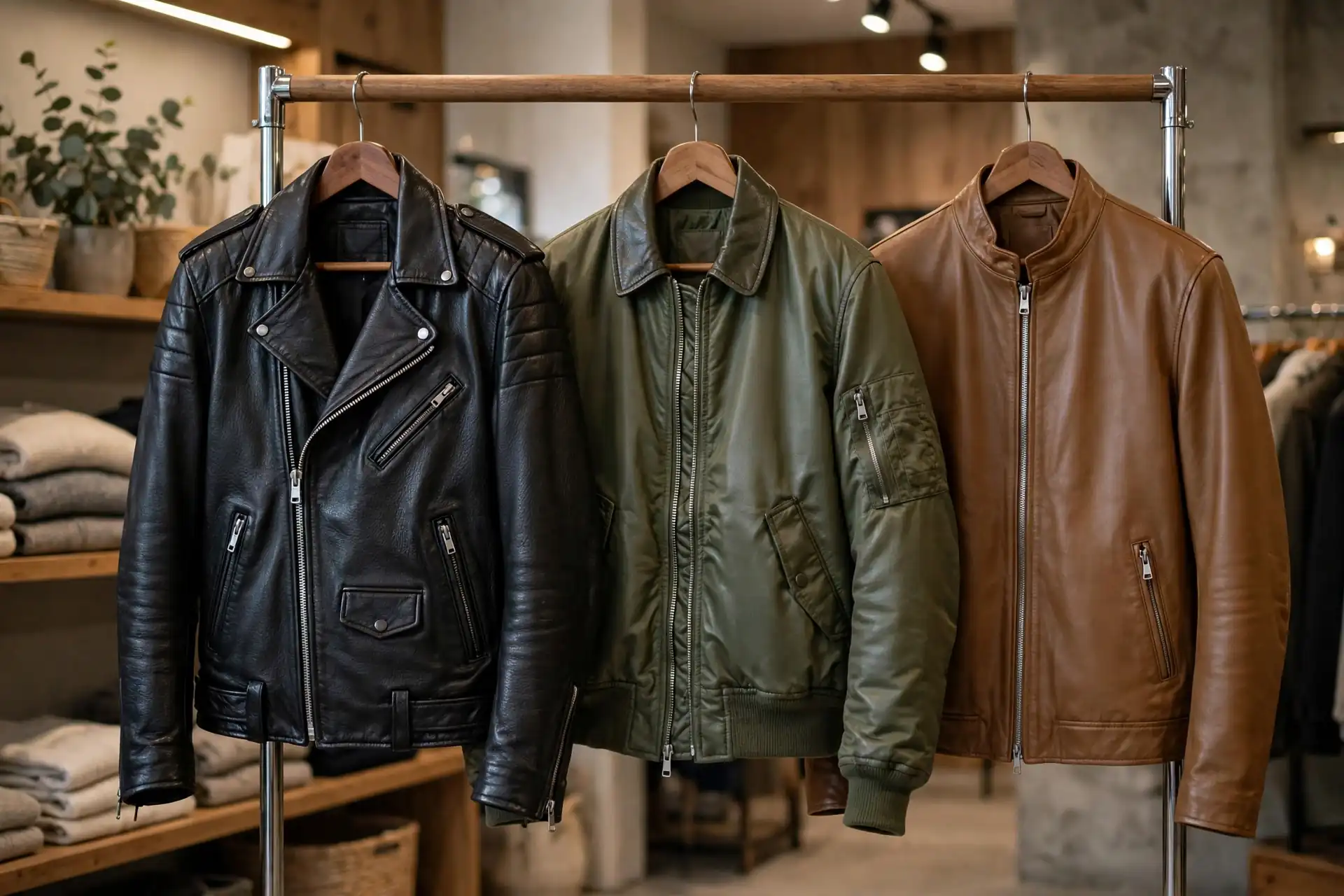
Style families exist because jobs differ. The biker carries zips, snaps, and a belt built for the road. Bombers run clean and roomy, with ribbed cuffs that seal in warmth. The cafe racer strips the shell down to a plain, fast line. Aviator and flight cuts bring collars and weight for cold air. Trench and coat cuts add length for wet streets and sharp dress. None of these is the best style. Each one is the best answer to a different week.
Match the family to your main job first. Riders live in bikers and racers. Commuters split between bombers and clean racers. Cold climate buyers lean toward aviators and long coats. Office dressers lean toward plain racers and blazer cuts. Our full walk through of choosing a leather jacket style sorts each family by job, build, and dress code. Start there if two families both pull at you.
Head to head reads help once the field narrows. The classic three way fight gets its own post on the biker, cafe racer, and bomber compared side by side. Read it with your week in mind, not with a photo in mind. Photos flatter every cut. Your Tuesday morning tells the truth.
Then go and look at real rails. The cuts in the men’s leather jackets range and the women’s leather jackets range show how one family changes across colors and hides. Riders will land on the men’s leather biker jackets sooner or later. Women who ride start with the women’s biker leather jackets and weigh collar and length from there. Seeing the family on real product pages ends the daydream stage fast.
Choose the hide by the life it will live
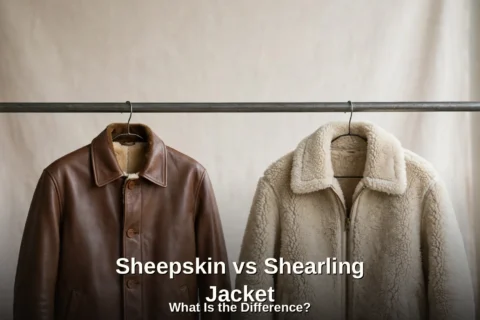
Four skins do most of the work in jackets. Cowhide runs thick, firm, and tough. It takes road wear, rain spray, and years of daily use in stride. Goatskin runs lighter with a pebble grain. It shrugs off scuffs and stays supple with little fuss, a kind pick for busy hands. Sheep skin lands soft and warm in the middle. Lambskin runs the softest of all, smooth and light, and it asks for gentle days in return.
So what is the best leather for a jacket? The one that matches your week. Hard daily wear points at cow or goat. A soft dress jacket for evenings points at lamb. Warm all round wear points at sheep skin. Buyers who pick the hide by habit keep their jackets for decades. Shine led buyers trade up within a year. Our side by side of lambskin, cowhide, and goatskin compared weighs hand feel, weight, and wear for each skin.
Thickness talks in plain numbers at the bench. Thin skins drape and feel kind on day one. Thick skins stand up on their own and need a break in spell. Neither is a flaw. The flaw is a mismatch: a paper thin fashion hide on a work jacket, or a stiff road hide on a dress jacket. Run a thumb across the panel and bend it. The hide should feel dense, alive, and even from edge to edge.
Finish rides on top of the hide choice. Matte and natural faces show grain bare and age with rich tone shifts. Polished faces shed water and wipe clean fast. Pull up leather lightens at each bend and darkens back with wear. Distressed and vintage wash faces start pre worn, which suits owners who hate a stiff new look. Embossed faces carry a pressed pattern. Pick the finish by your cleaning habits as much as by your eyes.
Grade is a ladder, and one rung wears a trap name
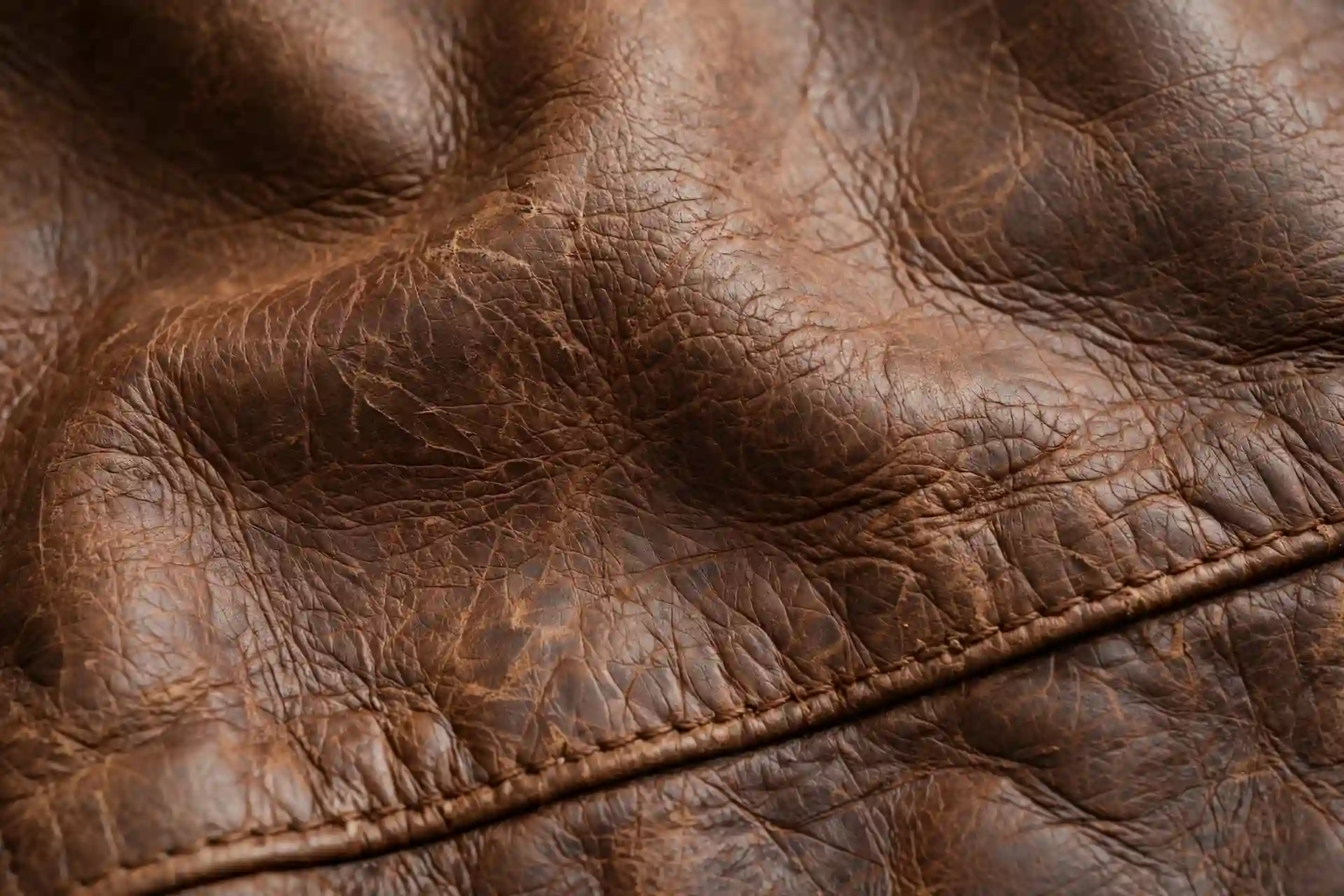
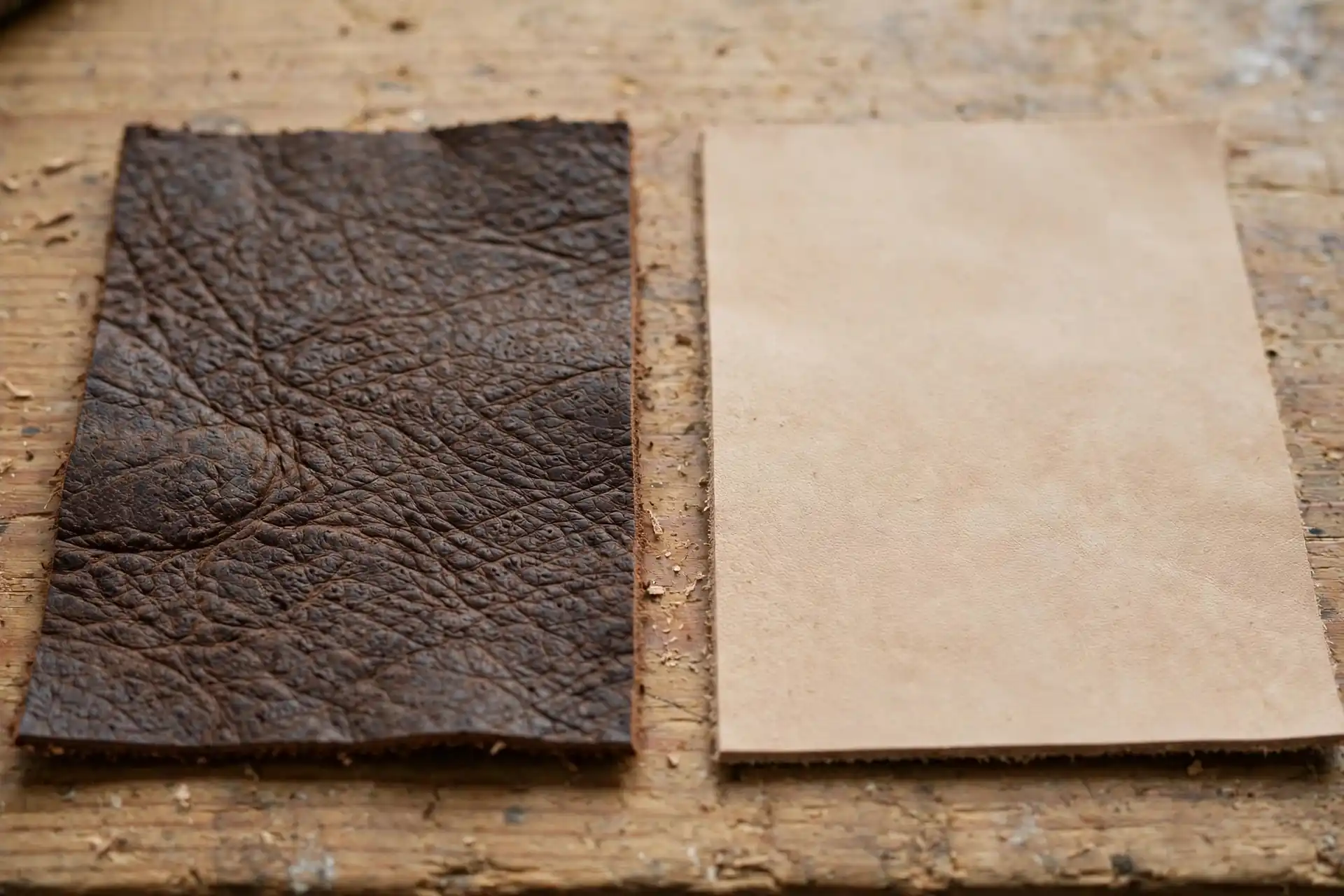
Above the skin sits the grade. Full grain keeps the whole surface of the hide, tight fibers and all. It scuffs less, breathes well, and ages with grace. Top grain gets a light sanding and a fresh finish coat. Its face looks cleaner at the cost of a bit of strength. Corrected grain gets sanded and stamped to hide scars. It leans on its coat for looks and wears fine at a fair price.
The full grain vs top grain leather jacket call is the one grade call worth your time. Full grain wins for a buy once jacket worn hard for years. Top grain wins where a clean, even face matters more than the last drop of toughness. Both are honest leathers. The weak move is paying full grain money for a corrected grain jacket with a loud tag. Grade, not the tag, sets the fair price.
Now the trap. Tags that shout genuine leather jacket buying guide words at you use a grade name as a sales cheer. Genuine leather is a low rung on the ladder. It names split hide left after the top layers are cut away. The stuff is real leather, and it is also the weakest cut in the shop. A sound real leather jacket buying guide tells you that straight. Treat the words genuine leather as a grade label to weigh, never as a badge of worth.
Doubt about real versus fake gets settled with tests, not tags. Grain, raw edges, scent, and a slow water drop each cast a vote. Our bench runs those checks in the post on telling a real leather jacket from a fake. Read it before any big spend. A seller who fears those tests has told you the answer for free.
Fit comes before color, every single time
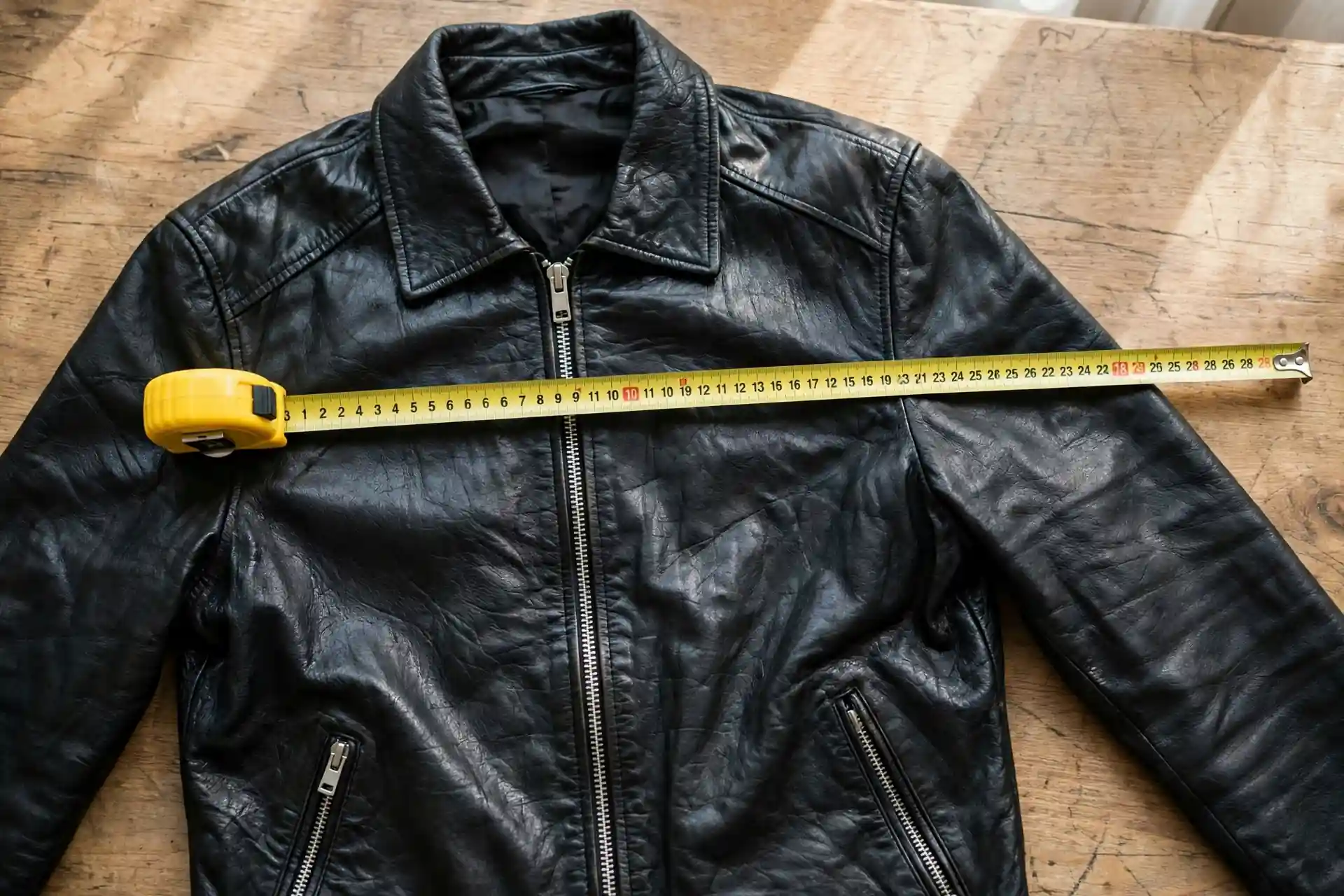
A sharp jacket in the wrong fit looks wrong all day. Fit grades at five points. The shoulder seam belongs on the edge of the shoulder bone. At the chest, the zip should close with a flat hand of room inside it. Sleeves end at the wrist bone. The hem lands near the belt line on most short cuts. And the whole jacket should let you lift, reach, sit, and cross your arms with ease. Our full post on how a leather jacket should fit grades each point with signs for too big and too small.
Size is a call inside the fit call. Knowing how to choose leather jacket size starts with your chest measure, not with the letter on a tag. Letters wander from brand to brand. Inches and centimeters hold still. Measure over the clothes you will wear under the jacket most days. Winter buyers measure over a knit. Summer buyers measure over a tee. The two numbers can call for two sizes, and the bigger one wins for a cold climate coat.
New leather fits snug by design. A sound jacket hugs on day one and shapes to your body across the first weeks of wear. Snug is right. Strain is wrong. A zip that fights you, seams that pull white at the chest, and sleeves that drag past your hands all fail on sight. Hope is not a size. A jacket bought for the body you plan to have next spring gets worn by the body you have now, and it will feel wrong each time.
Body shape deserves the same straight talk. Long torsos need length in the cut. Broad shoulders need room cut into the back. Shorter frames drown in long coats with low hems. None of this is a flaw in you or in the jacket. It is pattern math. A maker who cuts many shapes solves it. Shops that stock one shape for all bodies cannot.
Color is the last call, and the fun one
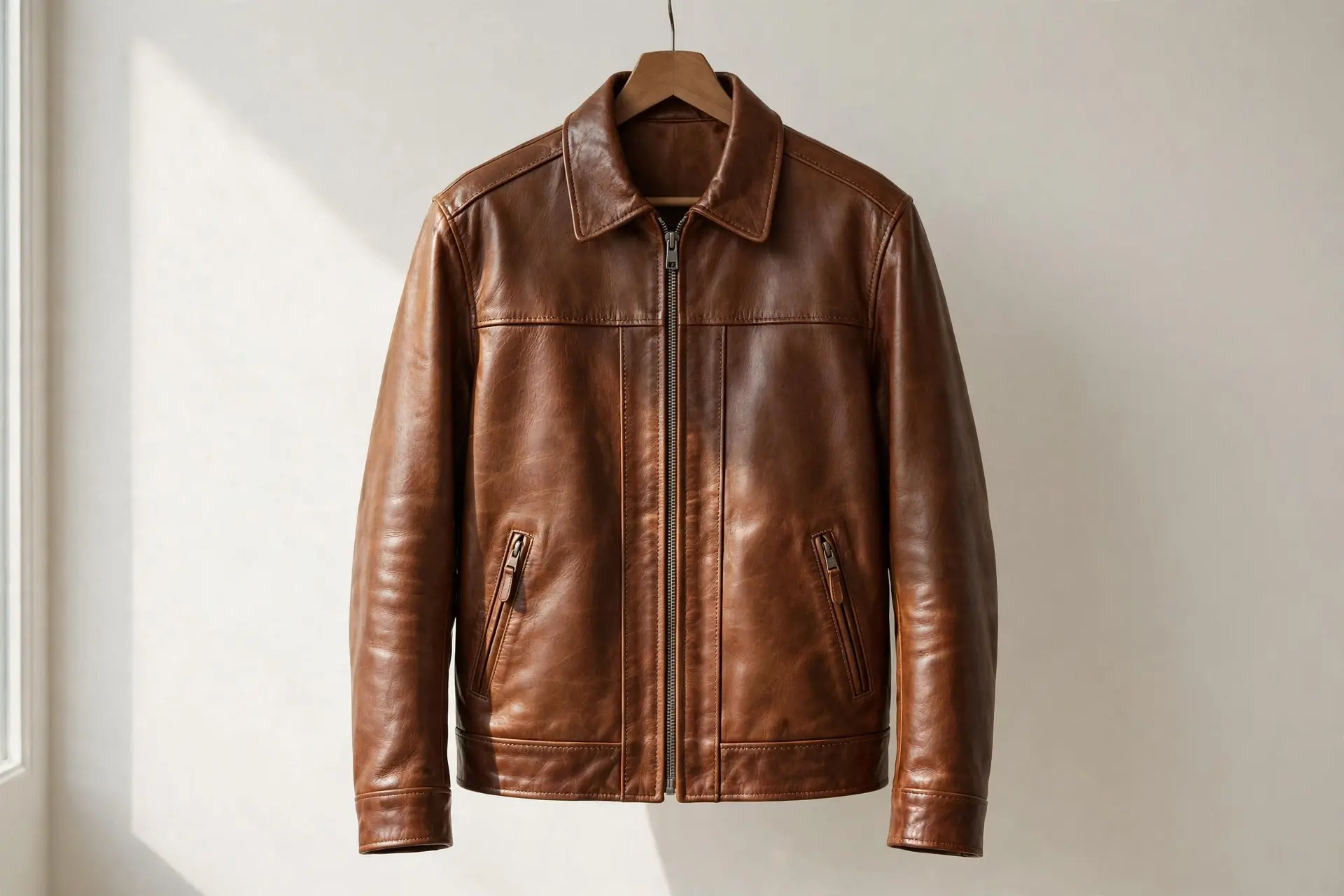
Color feels like the start of jacket shopping. It is the end of it. A color earns its place by the outfits it completes. Black pairs with dark closets, city weeks, and nights out. Brown pairs with denim, boots, and earth tones, and it warms pale skin. Burgundy, tan, and wine red serve owners whose closets already lean warm and bold. Each color also ages in its own way. Black fades toward grey at the rub points. Brown deepens and glows where hands and sun touch it.
The head to head most buyers need sits in our black versus brown leather jacket guide. It counts real outfits for each color and ends with a plain call on which to buy first. Read it once your style and hide are set. Color picked in that order rarely gets regretted. Pick it off a photo, with no thought for your shoes, and regret lands by month two.
One more rule keeps color sane. Buy the color of the life you live now. A bright fashion shade on a daily jacket dates fast and pairs with little. Core colors pair with near all of it. Save the loud shade for a second jacket, bought with joy once the first one earns its keep.
What your money buys, and what it never buys
Ask what makes a good leather jacket and the answer sounds dull in the best way. A strong hide in large clean panels. Close, even stitching. Hardware with weight and a clean glide. A lining that feels sturdy in the hand. None of it glitters. All of it lasts. Money spent on those five things shows up in year five. Spend it on logos and loud trim and it shows up in week one, then fades from there.
So how much should you pay for a good leather jacket? Pay for the build, in tiers you can check with your hands. The low tier buys thin corrected grain, wide stitching, and a papery lining. Mid tier money buys sound top grain, close stitching, and honest hardware. The top tier buys full grain in big panels, dense stitch rows, and linings built to outlast trends. Each tier is a fair buy at its own price. The theft happens when a low tier build wears a top tier tag.
Is it worth buying an expensive leather jacket? Yes, when the spend lands on hide, panels, and build. A strong jacket worn two hundred days a year for ten years costs less per wear than a weak one replaced twice. No, when the spend lands on a name. Price is a claim. Build is the proof. This is why leather jacket construction quality outranks brand talk at every bench. Panels, seams, and thread tell you where the money went.
Where can you save with a clear head? Trim, extra zips, and fashion extras add cost and add no life. A plain cut in a strong hide beats a busy cut in a weak one. Where should you never save? The hide itself and the main zip. Those two touch your hands each day you wear the jacket. A cheap main zip fails first and costs the most to put right.
The checks still run before you pay
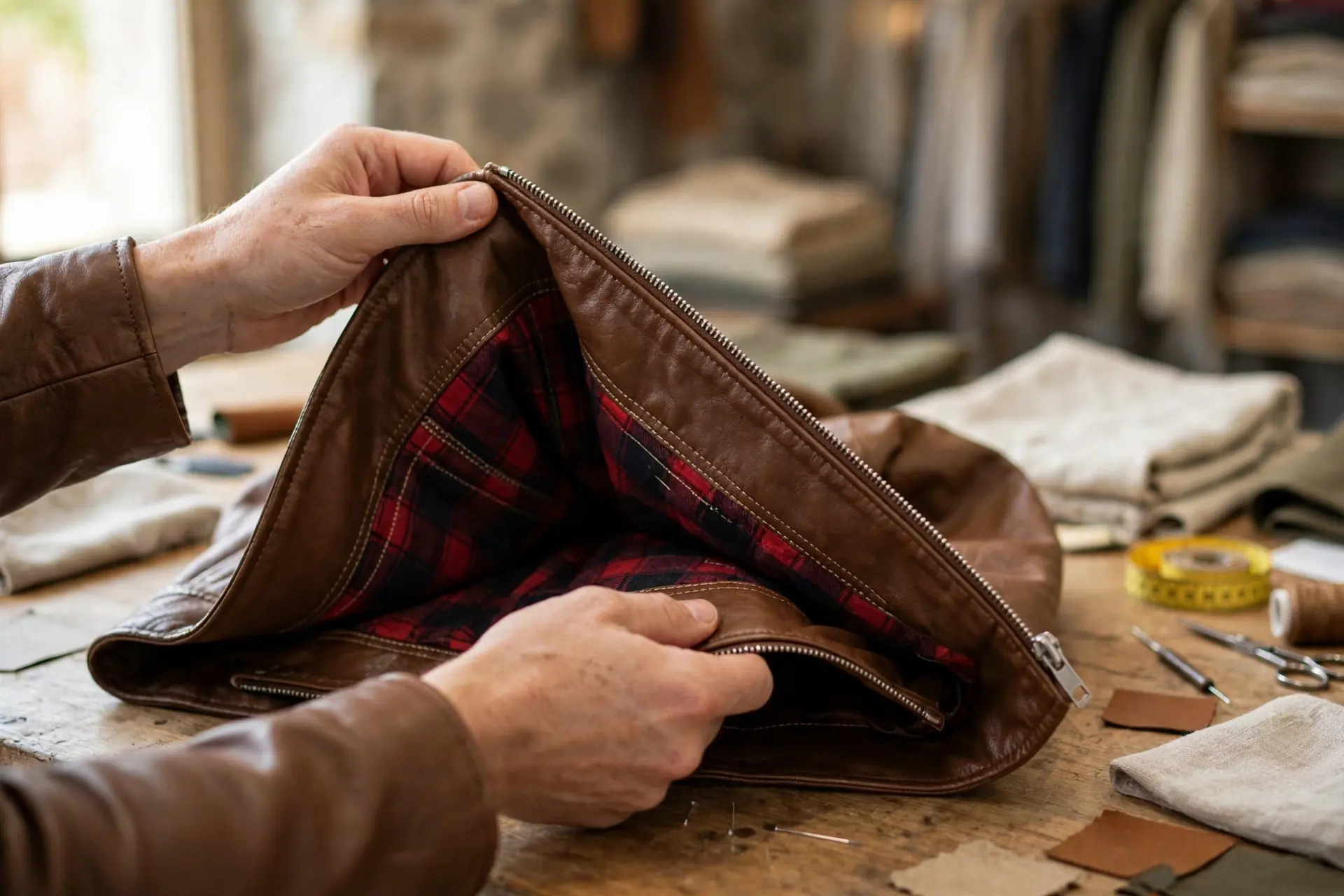
Decisions narrow the field. Checks close the deal. This is the ground where how to pick a quality leather jacket gets learned. Knowing what to look for when buying a leather jacket turns a good pick into a sure one. Press the grain and watch it spring back. Count stitches along one inch of a main seam. Work the main zip in one pull, up and down. Pinch the lining and feel its weight. Hang the jacket and check that the fronts mirror each other. Each check takes seconds. Together they kill whole classes of regret.
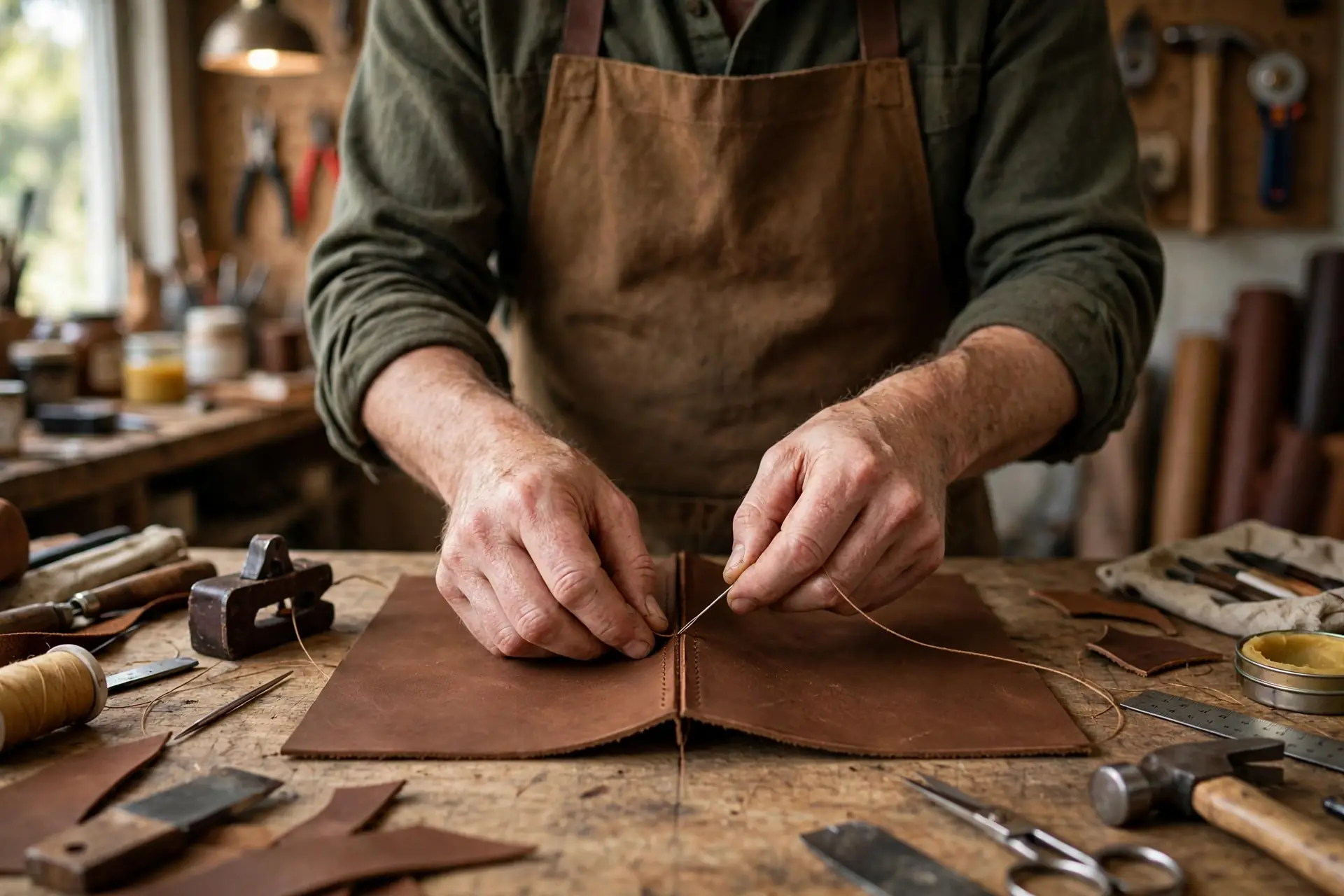
The leather jacket craftsmanship what to check list runs long at bench level. Stitch tension, panel matching, seam flatness, edge finish, and hardware weight all earn a look. Our leather jacket quality checklist lays the full list out zone by zone, with the cheap tells that expose a weak build. One item on that list deserves a line here. Leather jacket stitching quality shows at a glance: rows should run straight, close, and even, with locked ends and no loose loops. Wandering rows are a maker signing weak work in thread.
Run the checks on the exact jacket you will take home. Display pieces get handled with care. Stock pieces vary. A sound shop lets you check the boxed one too. Rushed hands serve the shop, not you, and a shop that rushes yours has a reason.
Buying online: ask before you pay
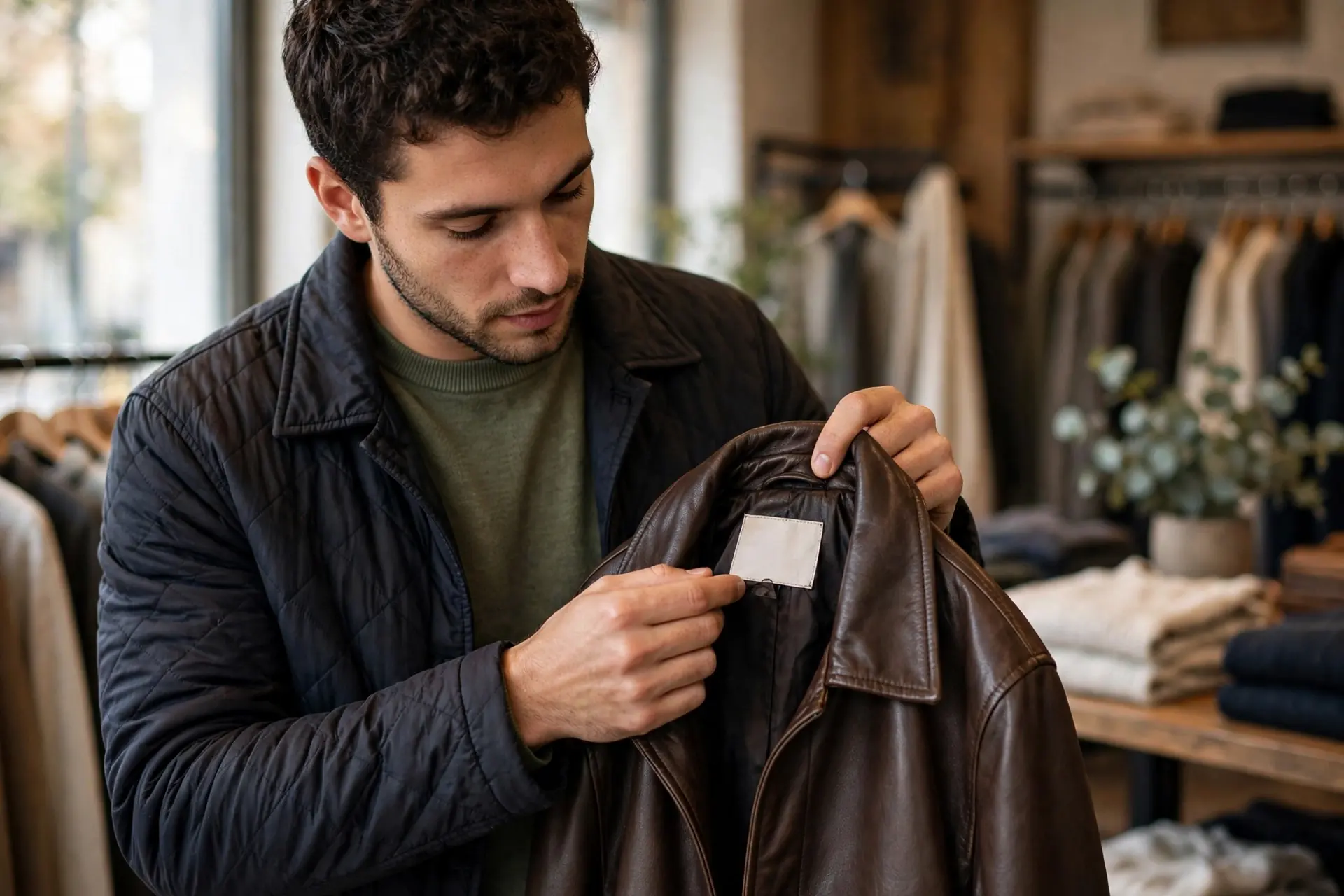
Plenty of fine jackets get bought from a screen. The screen just cannot do the hand checks for you. So the questions do that work. Ask which skin the jacket uses, and which grade. Hide thickness comes next. Then the lining: what is it made of? Get the chest, shoulder, sleeve, and length measures of the exact size you want. End with the cut: true to chart, slim, or roomy. Straight sellers answer in numbers. Praise with no numbers behind it is a warning sign.
Photos need the same firm read. Zoom into the grain and look for a natural, varied pore map. Check the back panel for patchwork seams. Look at the zip and hardware in close shots. Our post on buying a leather jacket online goes through photo reads, size charts, and seller questions in full. Most leather jacket buying tips skip this part. It is the part that saves online buyers the most pain.
Send your own measures when the maker takes them. Chest at the fullest point, waist, shoulder width, and arm length cover most cuts. A maker who builds to order turns those numbers into a fit no rail can match. That door sits open in our custom jackets work, where each design is cut to the body that will wear it.
Your first leather jacket plays by stricter rules
A first jacket has one job: get worn. Learning how to buy your first leather jacket means trading bold picks for safe ones. Keep the style classic: a plain biker, a clean bomber, or a simple racer. The hide stays mid weight: goat or sheep skin for softness, light cowhide for grit. Color stays core: black or dark brown. That mix pairs with near every closet and forgives early care slips.
Skip the traps that tempt new buyers. White and pale shades stain fast and show each mark. Heavy stiff hides feel like armor for the first month. Wild trim dates in one season. A first jacket in a loud style gets worn five times and judged each time. Calm styles get worn five hundred times and loved more each year. Our first leather jacket buying guide walks new buyers through picks by age, job, and climate.
Grow from there. The second jacket is where taste gets its turn: a color with nerve, a hide with gloss, a cut with a point of view. First jackets build the habit. Second jackets build the wardrobe. Both deserve the same five calls, run in the same order.

Traps that lock in the wrong pick
Some traps show up in shop after shop. The mirror trap comes first: shop lights and a slim mirror grade every jacket two points too kind. Then the sale trap: a cut price makes a wrong jacket feel like a smart buy. Size traps plenty of buyers too: they take the size they wish they wore. Trends set their own trap, a cut built for this season’s photos and dead by next winter. Last sits the hide trap: a soft hand feel in the shop that turns out to be a thin split with a thick coat of paint.
Each trap locks because leather lasts. A weak cloth jacket wears out and frees you. Wrong leather stays sound for years, wrong the whole time, too good to dump and too off to love. Our post on mistakes to avoid when buying a leather jacket names the full set with the fixes for each. Read it before a big spend. Ten minutes of reading beats ten years of a near miss.
The cure for all five traps is the order at the top of this page. Job, style, hide, fit, color. A buyer with the order in hand walks past traps without a fight. The jacket that survives all five calls is the jacket that gets worn.
How the call gets made at our bench
At Denver Jackets, the choosing starts in our own production unit. We work sheep skin, cow, goat, and lamb at the bench. Our cuts run full grain, top grain, and corrected grain. Finish work at the unit covers matte, natural, and polished faces, plus pull up, distressed, vintage wash, and embossed looks. That spread is why this guide pushes order over brand. We see each week how the same cut in two hides lives two lives.
Sizes run to 4XL on our rails, and made to measure sits on every design. A buyer whose body falls between letters gets a jacket cut to their numbers, not a lecture on sizing. The wider method behind how to buy a leather jacket lives in our leather jacket buying hub, where the whole buying cluster sits in one place. Guides, checklists, and tests all hang off that hub.
Bring us your week, your climate, and your closet colors. The style, hide, and fit calls get easy from there. That is the whole secret of a jacket that still earns its hook in year ten. It was chosen on purpose, in the right order, from the start.
Questions buyers ask before they choose
What should I look for when buying a leather jacket?
Look for a hide that fits your life, a grade that matches the price, and stitching that runs straight and close. Check the main zip for weight and a clean glide. Pinch the lining and feel real substance there. Then grade the fit at the shoulder, chest, sleeve, and hem. A jacket that passes those checks wears well for years.
How do I know if a leather jacket is good quality?
Good quality shows in the grain, the seams, and the hardware. The grain looks natural and varied, and it springs back under your thumb. Stitch rows run close and even with no loose ends. Zips and snaps feel heavy for their size. Panels match in tone and grain direction. Weak builds fail two or more of those checks at a glance.
What is the best leather for a jacket?
The best leather is the one that matches your week. Cowhide wins for hard daily wear and road use. Goatskin wins for light weight and scuff sense. Sheep skin wins as a warm all rounder. Lambskin wins for soft dress wear on gentle days. Grade counts too: full grain tops the ladder for strength and aging.
Should I buy full grain or top grain leather?
Buy full grain for a buy once jacket worn hard for years. Its whole surface stays intact, so it scuffs less and ages with grace. Buy top grain where a clean, even face matters most, like a sharp office jacket. Both are honest leathers. Just match the grade to the price tag, and walk from full grain prices on corrected grain builds.
How should a new leather jacket fit?
A new leather jacket should fit snug, never strained. The shoulder seam sits on the edge of the shoulder bone. With the zip closed, a flat hand of room should sit at the chest. Sleeves end at the wrist bone, and the hem lands near the belt line on short cuts. You should be able to lift, reach, and sit in it with ease. The hide will shape to your body across the first weeks.
Is it worth buying an expensive leather jacket?
Yes, when the price buys hide, panels, and build. A strong jacket worn for ten years costs less per wear than a weak one replaced twice. No, when the price buys a name and trim. Read the build before you judge the tag. Stitching, lining, and hardware tell you where the money went, and they never lie about it.
What questions should I ask before buying a leather jacket online?
Ask which skin and which grade the jacket uses. Hide thickness and lining cloth come next. Get the chest, shoulder, sleeve, and length measures of your exact size. End by asking whether the cut runs slim, true, or roomy. A straight seller answers in numbers and facts. Praise with no numbers is a warning.
How much should I pay for a good leather jacket?
Pay for the tier you can check with your hands. Sound top grain, close stitching, and honest hardware mark the fair middle. Full grain in large clean panels marks the top. Thin corrected grain, wide stitching, and a papery lining mark the low tier, whatever the tag says. Match your spend to the build in front of you, not to the name above the door.
The jacket still on your hook in year ten
Picture the jacket a decade from now. The grain has darkened at the elbows. Shoulders hold your shape. The zip still runs clean in one pull. That jacket was no luck and no accident. It came off the right five calls, made once, in the right order. Run them in order on your next buy, and the closet stops collecting near misses.