How to Tell If a Leather Jacket Is Real: Tests, Labels, and the Price Trap
How to Tell If a Leather Jacket Is Real: Tests, Labels, and the Price Trap
The jacket hangs under bright shop lights. Its tag uses big words and gives no clear facts. Your hand finds a smooth panel, and the price feels almost too kind. Learning how to tell if a leather jacket is real starts in that pause. You need proof from the stuff itself, not faith in a sales line.
Plenty of fake jackets look sharp on a rail. Some real jackets look plain, stiff, or oddly dull at first touch. Sight alone gives weak proof, and price alone gives even less. A sound check joins scent, grain, edge, flex, labels, and build. Each clue casts one vote. Strong proof comes when the votes agree. This is the heart of real leather vs fake leather jacket checks.
The short answer for a busy shopper
Use this real leather jacket test before you trust any tag. Real hide shows varied pores, a fibrous raw edge, and a rich skin scent. Its surface shifts under your thumb. It drinks a tiny hidden water drop in a slow way. Plastic cloth looks stamped. It smells sharp or sweet. Its edge shows cloth, foam, or a smooth core.
That answer also settles the point in most shops. It covers how to tell if leather jacket is real or fake with care. No test acts as a magic key. Finishes change scent and water action, and good fake grain fools eyes at a glance. Work through a few checks in a calm order. Together, they show how to tell if leather is real with home tests with no harm done. Doubt grows fast when a seller blocks the easy ones.
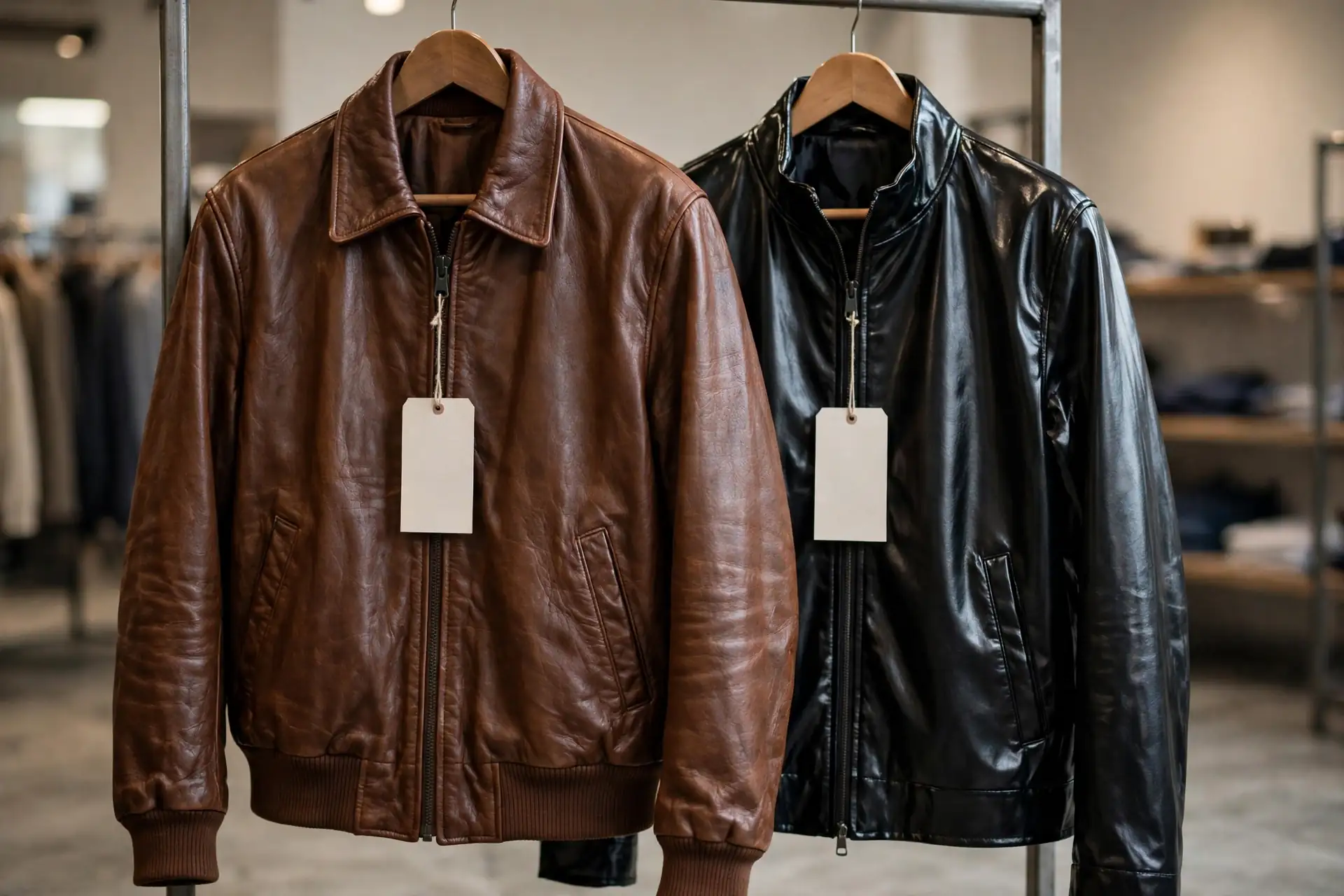
Shoppers face the same puzzle across cuts and colors. Black bikers hide it. Brown bombers and red coats hide the same truth in their edges. The checks on men’s leather jackets match the checks on women’s leather jackets. Style changes the shell. Skin and cloth keep their own tells.
Your nose and hands get there before your eyes
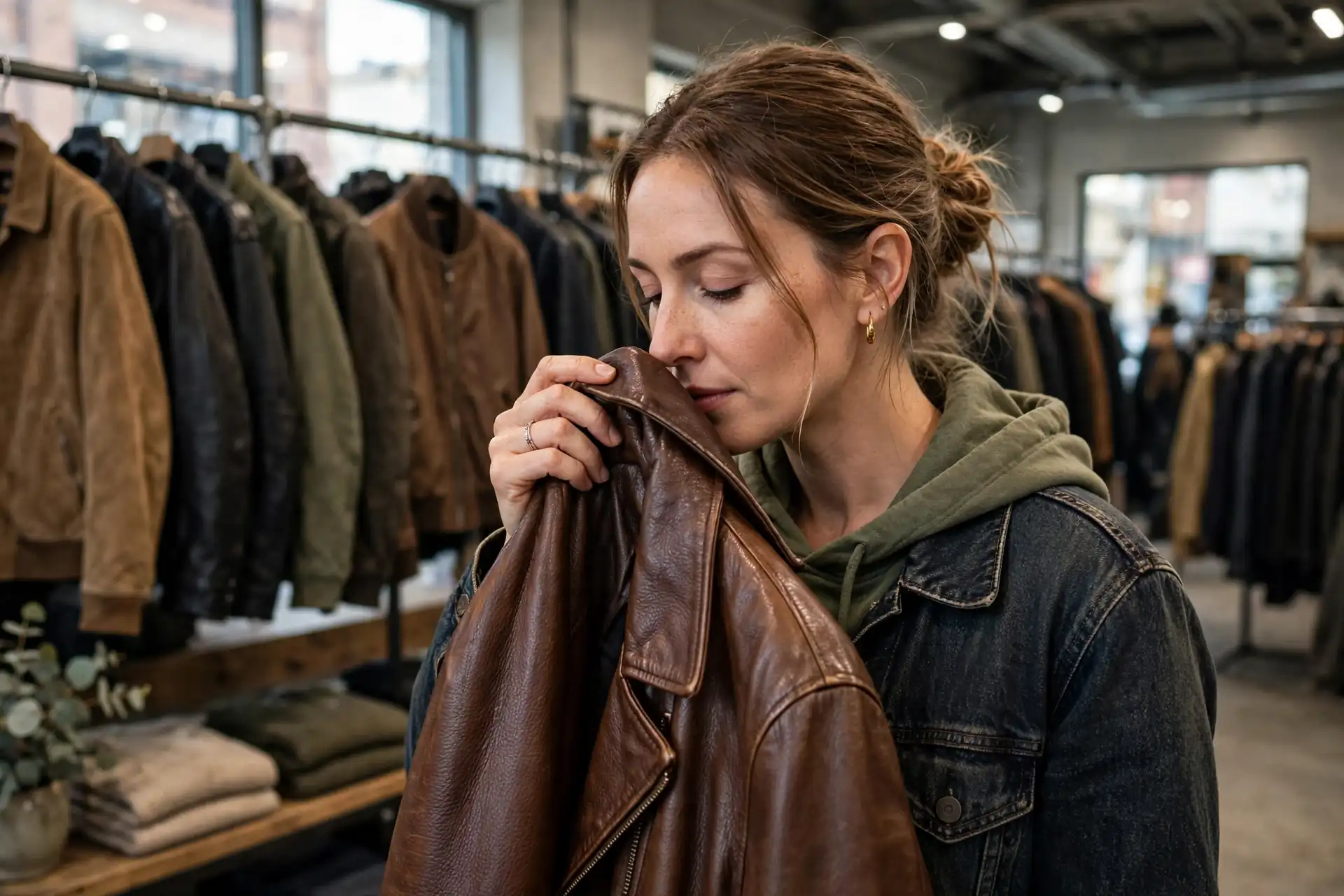
Start with the smell test real leather buyers talk about so much. Real hide smells earthy, warm, and a bit like skin and oil. Old jackets add scents from smoke, rain, dust, and years in a closet. Fresh fake cloth often smells like plastic, glue, vinyl, or a sweet shop spray. Lift the collar and breathe near an inner seam. Scent near the outer shell alone can mislead, since sprays and store air cling to it.
Smell gives a clue, not a court ruling. Strong dyes and rich finish coats can mute a real hide scent. A fake jacket stored beside real leather goods can steal a faint skin smell. Use your nose as a gate, not as the whole fence. A sharp plastic smell plus stamped grain plus a cloth edge ends the debate.
Warmth under your palm tells the next part. Real skin warms fast where your hand rests. Fake surfaces tend to stay cool and slick, with a slight rubber feel on warm days. Press your thumb in and slide it a short way. Real grain shifts in tone and depth as light moves across tiny ridges. Plastic print keeps one flat shine, and the pattern rides on top like ink.
Softness proves far less than people think. Lambskin feels tender from day one, and thick cowhide feels firm for months. A slick PU coat can feel soft in a shop and still peel next year. Judge the feel of the base stuff, not the ease of the first bend. Weight helps here too. A full hide panel has dense, calm weight. Thin coated cloth feels light and papery in the same style.
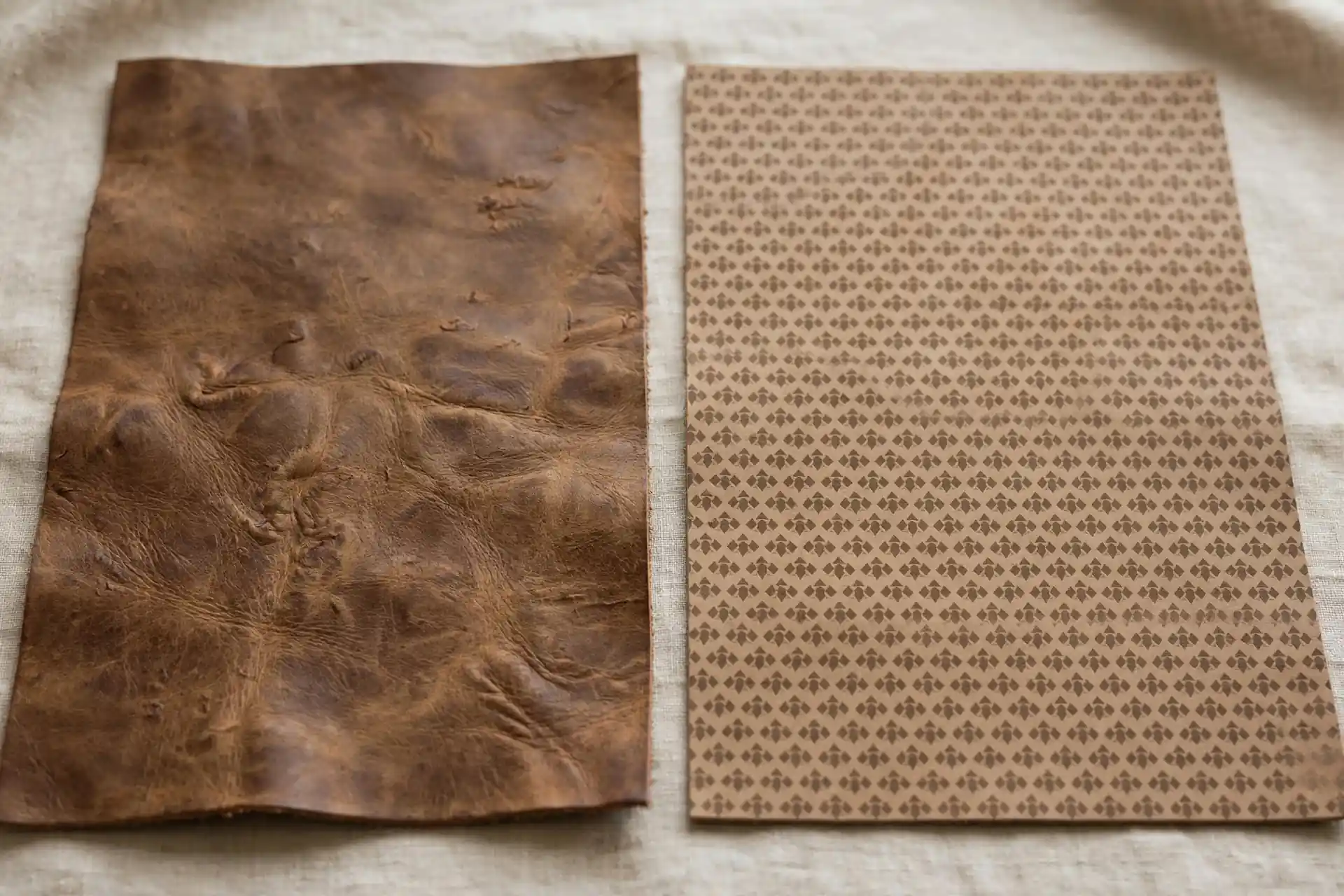
Pores give eyes a better job. Real pores vary in size, depth, and spacing across one panel. Scars, insect marks, and slight tone shifts can show under strong light. Fake grain repeats one stamp again and again. Even the same tiny pit lands in the same place. Turn the jacket and study spots far apart. Real skin refuses to repeat its map in neat rows.
Corrected grain needs fair treatment in this check. Makers sand and press some real hides. The goal is to even out marks, so the face looks more uniform. That face still sits on a fibrous hide, and its edge tells the truth. Plain softness plus even grain does not prove fake. Softness plus a woven back and a painted edge points that way with force.
Bend it, press it, then look at the raw edge
A gentle bend shows how the surface lives. Fold a cuff or an inner flap with care, then let it go. Real hide forms fine lines near the bend, and the grain deepens for a moment. Most panels ease back with a soft change in tone. Fake cloth often folds in one sharp crease. It shines along the fold. Its printed face keeps no depth. A hard crease has no place in a shop test. Owners hate damaged stock. Real hide also marks under abuse.
Stretch recovery follows the same rule. Pull a hidden panel just a bit between your hands. Real skin gives in a slow, firm way and then settles close to its first shape. The return lacks snap, since hide fibers slide and rest in a natural way. Coated cloth can spring back fast from its woven base. It can also bag and crack near stress points. Treat this as a support clue only. Hide weight, cut, and finish all change the feel.
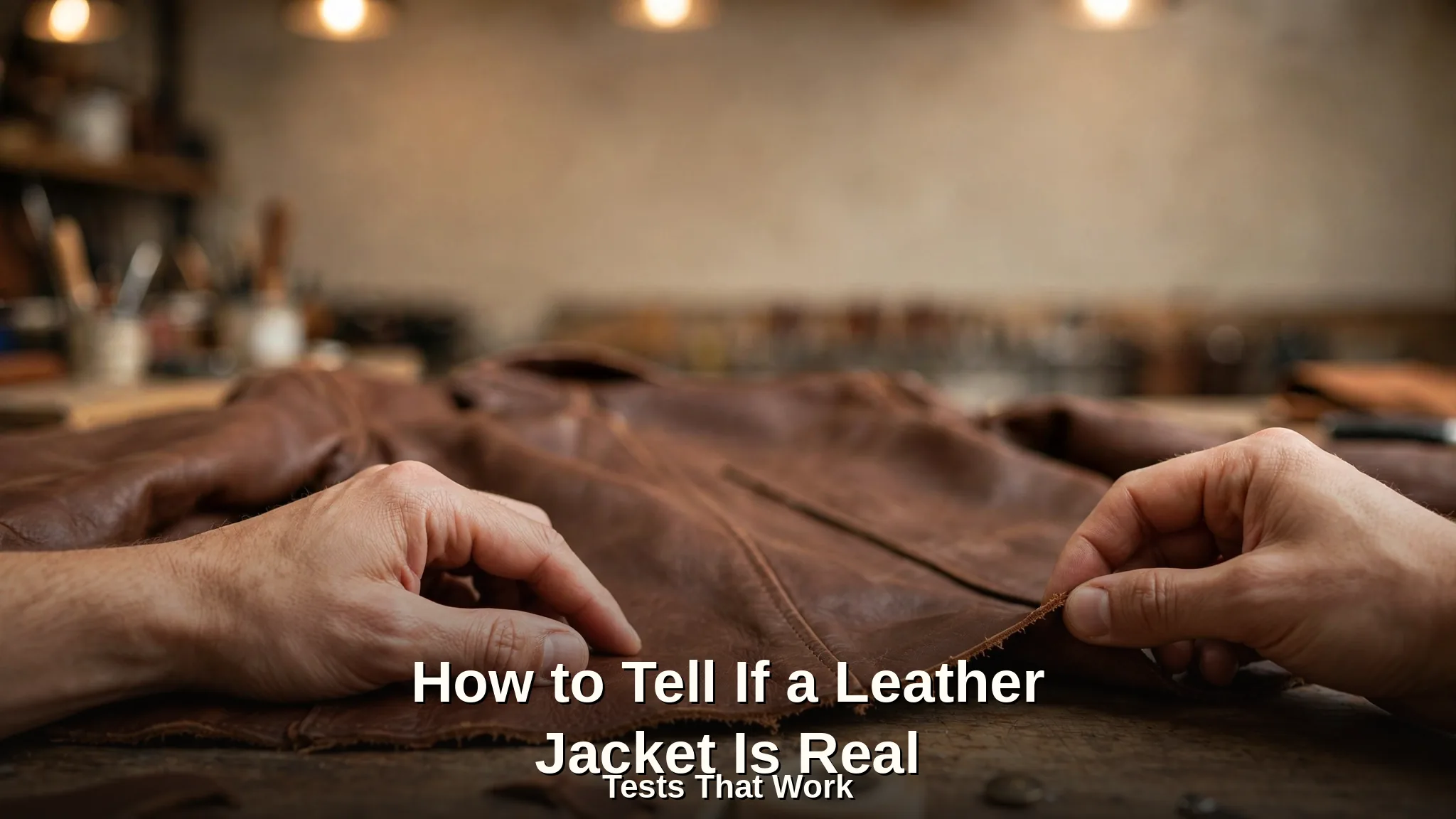
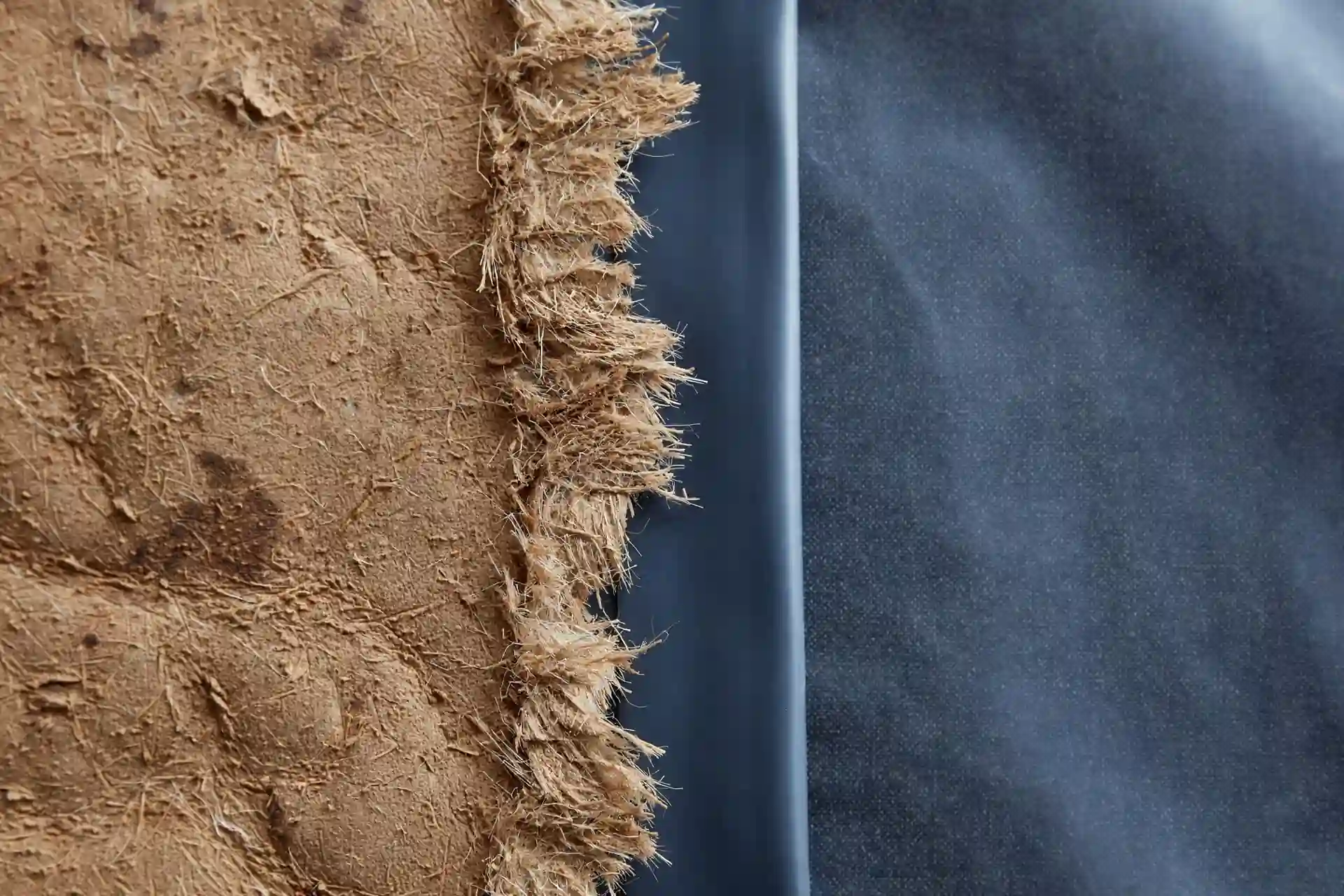
Now hunt for a raw edge. Seams hide the truth on most jackets. Pocket mouths, vents, collar backs, and loose inner flaps can show a sliver. Real hide shows fibers through the cut, much like dense suede with uneven depth. Fake cloth shows a neat stack instead. Look for a shiny top coat, a foam layer, and a woven base with clear threads. A painted edge with a smooth plastic core is a loud warning.
Look at the back where you can do so with care. An unlined real panel has a fibrous back with a soft nap. Split hide also has fibers, since it came from a real skin layer. Fake panels show cloth mesh, a knit grid, or long loose threads in a set pattern. Bonded stuff looks mixed and crumbly, with short fibers held in a flat mat. One glance at the core often beats ten looks at the face.
Stitch holes add one quiet clue. Thread passes through real hide and leaves holes with slight fiber lift. Holes in coated cloth can show a clean plastic rim or a woven hole. Seams on real skin also sit with small shifts from panel to panel. Machine work on fake goods tends to look too even. Cheap real jackets still run rough. Fine fake jackets still look neat. Let the core make the call, and let the holes cast a small vote.
Water leaves a mark, and flame leaves a mess
Does water absorb into real leather?
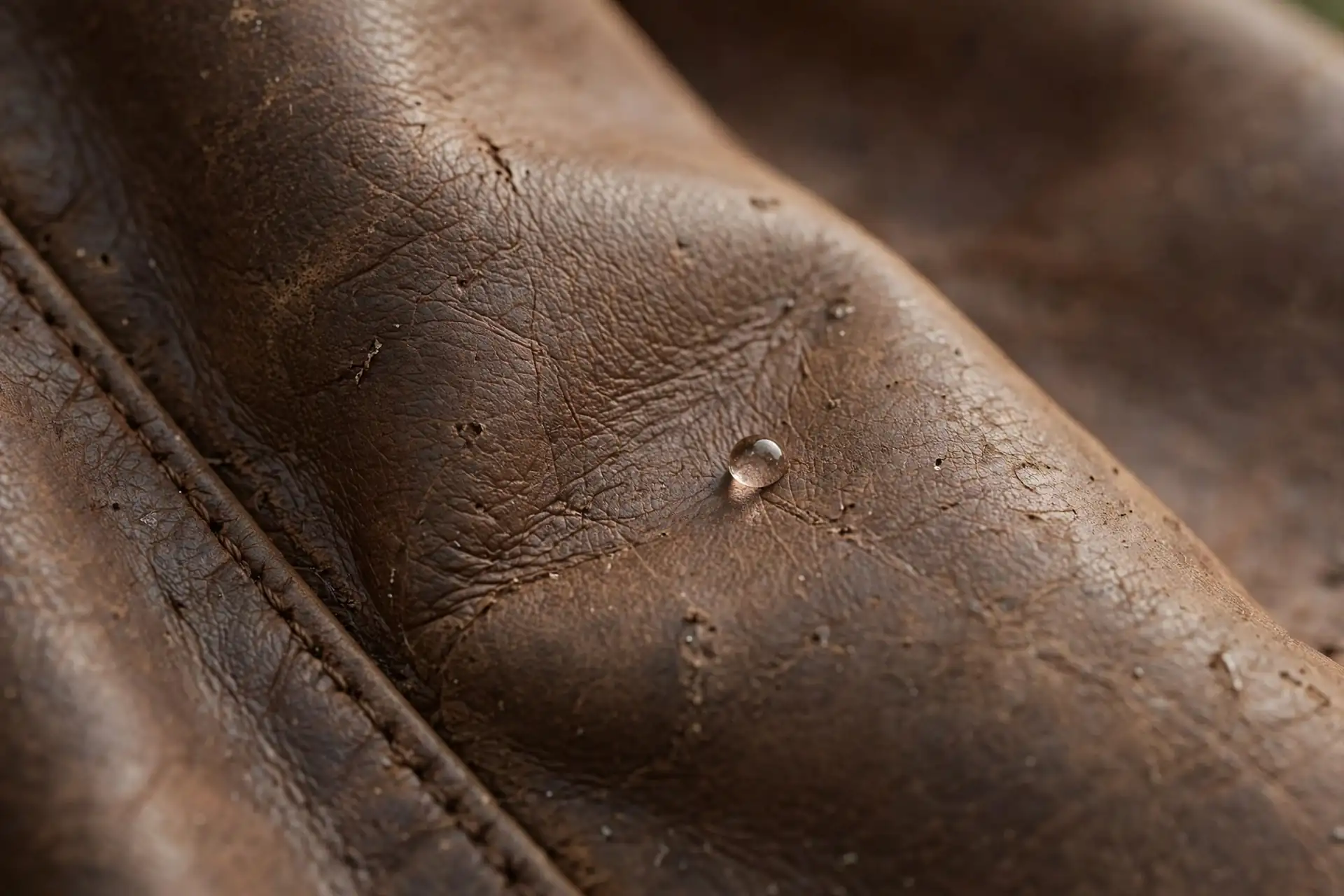
Use the water test leather jacket method on a hidden spot only. Place one tiny drop inside a cuff. Put it under a collar, and ask first in a shop. Bare real hide drinks the drop in a slow way. The wet spot turns dark, spreads at the edge, and dries back over time. Surface finish can slow the drink, so a sealed real jacket can bead water at first.
Fake cloth gives a cleaner show. A drop sits on the plastic coat, rolls with a tilt, and leaves the face dry. Dust and rough fake grain can hold a drop in place. Wipe the spot and look with care. Never soak a jacket for this clue. Suede and nubuck need a full stop here, since water marks their nap with ease.
The burn story needs a firm warning
The burn test leather real or fake trick fills short videos for a clear reason. It looks fast, brave, and final. Real skin chars under flame and gives off a burnt hair scent. Plastic coats can shrink, bead, bubble, or melt, and cloth backs can catch fire. Coatings blur both acts, and dye adds its own smoke and smell.
Skip flame on any jacket you own or hope to buy. Fire scars real hide, melts fake cloth, and sends harsh fumes into the room. A loose swatch from a maker tells more with less risk. Even a swatch test needs a safe place and adult care. Your goal is a sound jacket, not a burnt patch with a story. Ask for the hide name, grain, and content tag instead. Those facts beat a flame trick every day of the week.

The label words, in plain speech
Labels demand a cold eye. Part of learning how to spot fake leather jacket stock is reading words with care. Sellers use grain terms, source terms, and trade names. They act as if all three mean the same rank. No rank joins them. Each word tells a small fact, and some words hide the fact you need most. Ask what animal gave the hide. Name the layer too, plus what sits on the face.
Full grain
Full grain hide keeps its true outer face. Growth marks, pores, and small scars stay in view, and the fibers keep their full strength. This grade suits long wear and rich age marks. It still needs proof from edge and touch. A stamp can copy the look on plastic. Any full grain claim with a cloth core fails at once.
Top grain
Top grain hide starts as real skin, then gets a light sand and a fresh finish. The face looks smooth and even, with fewer marks than full grain. Stain guard runs strong on many top grain jackets, and daily wear suits it well. Our own work uses full grain and top grain hides, along with corrected grain. Names of grain describe face work, not a real or fake split.
Corrected grain
Corrected grain hide gets more surface work than top grain. Makers even the color, press a grain pattern, and seal the face. Shoppers can miss its real core if they trust pores alone. Look past the pressed face to fibers at the edge. A real corrected panel bends like skin and shows skin through the cut.
Split hide and bonded stock
A split comes from the lower part of a thick hide. Suede uses split fibers in a direct way. Coated split wears a colored film on top. That film gives a smooth face. The base lacks the tight grain of the outer skin. Wear life drops when the base runs thin or loose. Ask a direct question when a tag says only leather and gives no grain.
Bonded stock starts with scraps and shaved fibers from real hides. Workers mix those fibers with a binder and press them onto a backing. Shoppers ask, is bonded leather real leather, when a tag plays up the leather word. The fair answer is part yes and part no. It holds leather fibers. Yet it lacks one whole hide with a live grain face and a strong fiber mat.
The genuine label
A genuine vs fake leather jacket debate often turns on one label with weak power. The words genuine leather say a good came from real hide in a broad trade sense. Those words give no grain grade, no hide share, and no clue about a coating. Split panels can sit near that phrase in the market. Corrected panels and bonded stock can sit there too. Read it as a label to question, not as a badge of rank.
Ask for the next fact every time. Full grain, top grain, corrected grain, split, or bonded tells you far more. Animal source adds more light still. Sheep skin, cowhide, goatskin, and lambskin act in distinct ways. A clear seller names the source with ease. Vague words guard vague goods.
PU, PVC, and faux
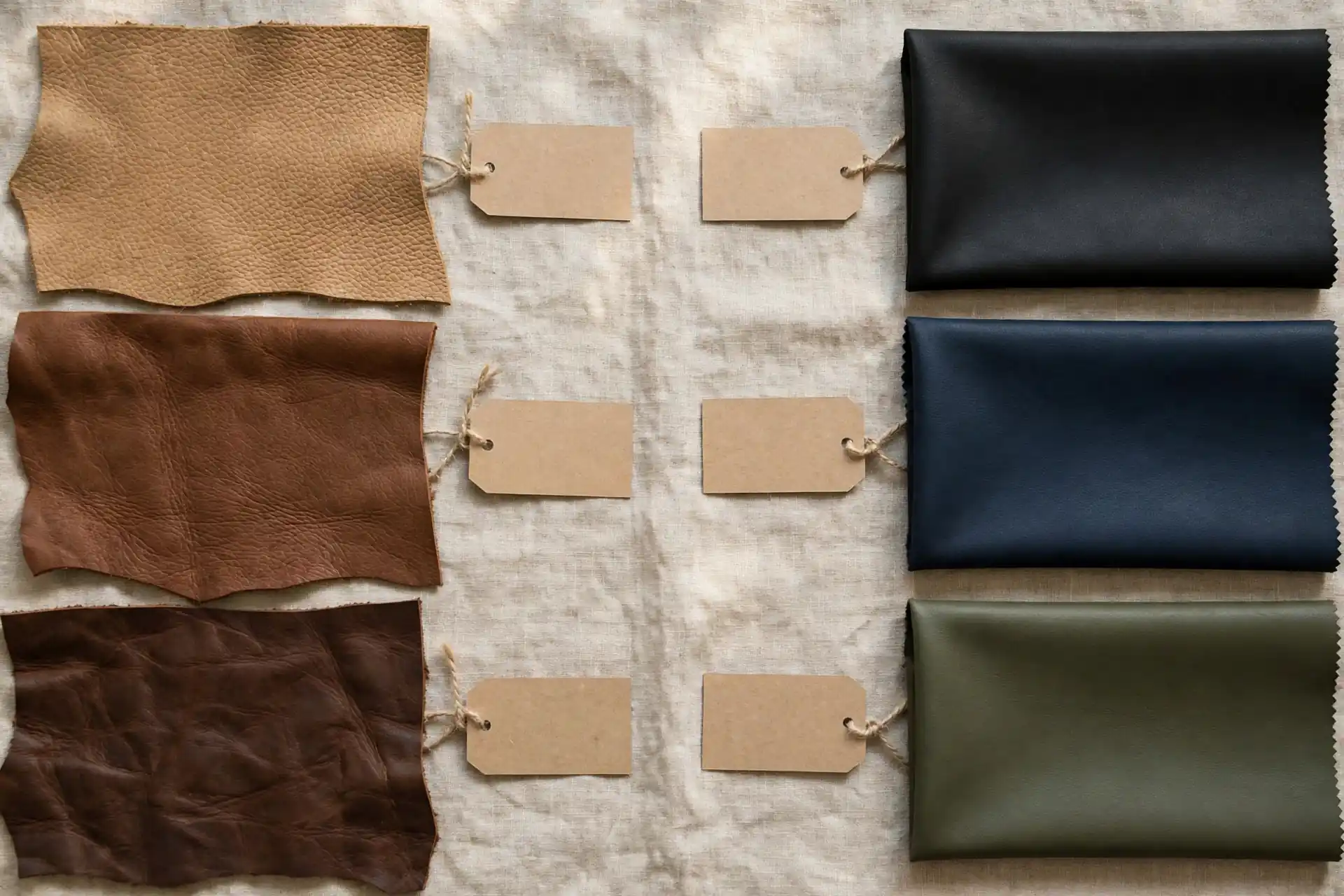
The PU leather vs real leather jacket split is plain once you see the layers. PU means a plastic coat spread over a cloth base. PVC uses a second kind of plastic coat over cloth. Faux acts as a wide shop word for goods with no hide face. Such goods copy the look of skin. Light weight and low cost drive their appeal, and rain beads off the face with ease.
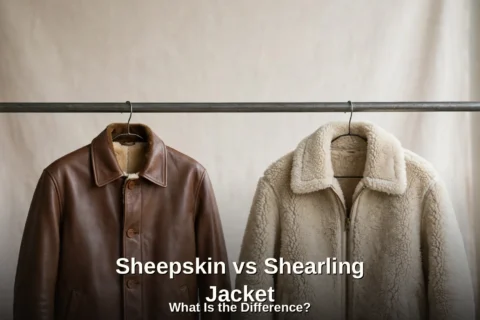
A plastic coat can carry a rich color and a neat print. It can also pass a quick sight test in dim light. Time at elbows, cuffs, and collar folds tells on it. The coat and cloth move as two stuffs. Our faux leather vs real leather jacket guide gives that pair a full side by side view. Read it beside this test. The shearling leather jacket guide shows the same split in wool lined coats. Real fleece roots in hide there. Fake fleece sits on cloth.
Stitching and hardware cast small votes
Neat seams tell you a shop spent time on a jacket. Stitches sit at an even pace. Corners turn clean. Thread holds a firm pull with no loose loops. Linings lie flat at the hem and cuffs. Pockets open with clean cuts, and seam joins meet with care. Sloppy work raises doubt about the hide too. Weak shops often cut costs in more than one place.
Hardware adds weight to the story. A sound zip runs with a steady pull and teeth that meet in a clean line. Snaps close with a firm click, and buckles feel dense in the hand. Thin pulls bend with ease, paint chips fast, and rough teeth snag on cloth. Fine fake jackets can still carry good metal. A sound old hide can sit in a jacket with plain trim. Treat build as a vote for care, never as proof of skin.
Price has a voice, just not the last word
The fake leather jacket vs real price difference grows out of stuff and labor. A real jacket starts with a whole animal hide. One hide gives a set yield after scars and weak spots get cut away. Tanning takes time, skill, and care with water and waste. Skilled hands then cut thick panels, skive edges, sew dense seams, and set lining and trim. Cloth rolls for fake goods cost less per yard. They move through fast sewing with less waste.
Price alone still fails as a test. Sales, used stock, outlet lines, plain trim, and thin fashion hides pull real prices down. Brand heat, gloss coats, and store rent push fake prices up. A very low price needs hard proof. This is true for a thick new jacket with a grand real leather claim. Ask where the money went. The tag brags about full hide, rich lining, metal trim, and hand work at a toy price. Silence from a seller speaks quite well there.
A photo can warn you, but touch still rules
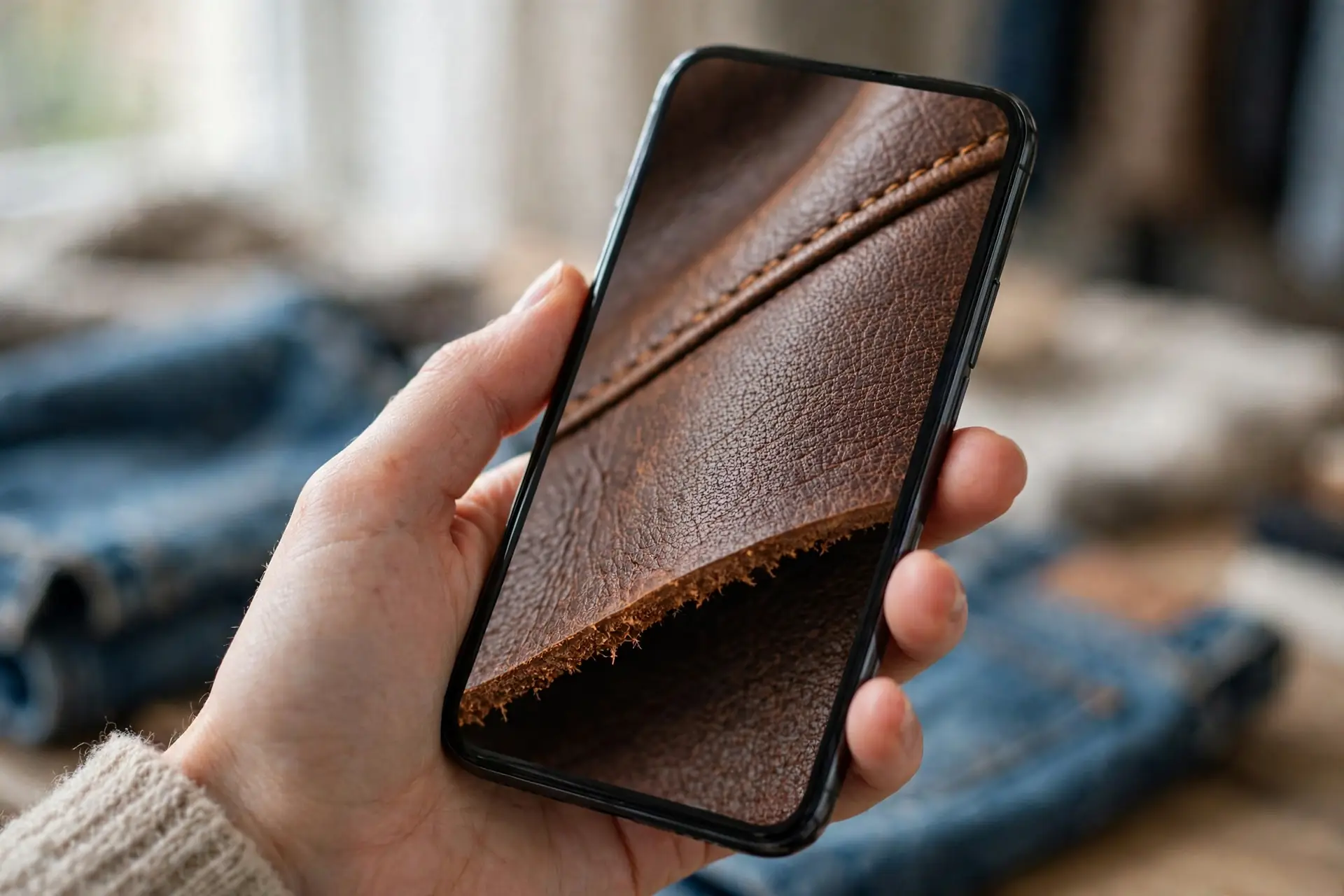
Learning how to identify real leather from a photo starts with a demand for close views. Ask for grain near a seam. Request the back of the collar, a pocket mouth, the cuff edge, and the content tag. Plain light beats moody shade. A hand press shot shows grain depth, while a short clip shows how a panel bends. Stock shots of a model on a street tell you style and fit. They hide the stuff.
Patterns speak in a still frame. Zoom in and hunt for one pore map in two far spots. A stamp repeats with neat faith, while real grain shifts and breaks its rhythm. Edges speak too. Paint, foam, and cloth layers show in a sharp close view. Stitch holes show the core at each pierce point. Gloss can hide all three, so ask for a matte view near a window.
Words in a listing need the same care. Phrases like leather like, man made, and premium hide with no animal name guard the truth. A clear seller names sheep skin, cowhide, goatskin, or lambskin and states the grain. Follow up on split, coating, bonded stock, and PU share. A seller who gives a tag photo and plain replies earns trust. One who sends emojis and praise has told you a lot.
Photos give no scent and no warmth. Glass and screens flatten depth, tone, and shine. Use shots to screen out weak goods and pick finalists. Proof at home then rests on edge, pores, scent, water, and flex. A swatch from the seller bridges the gap in a clean way. Its small cut piece shows the core at once.
Time exposes the split
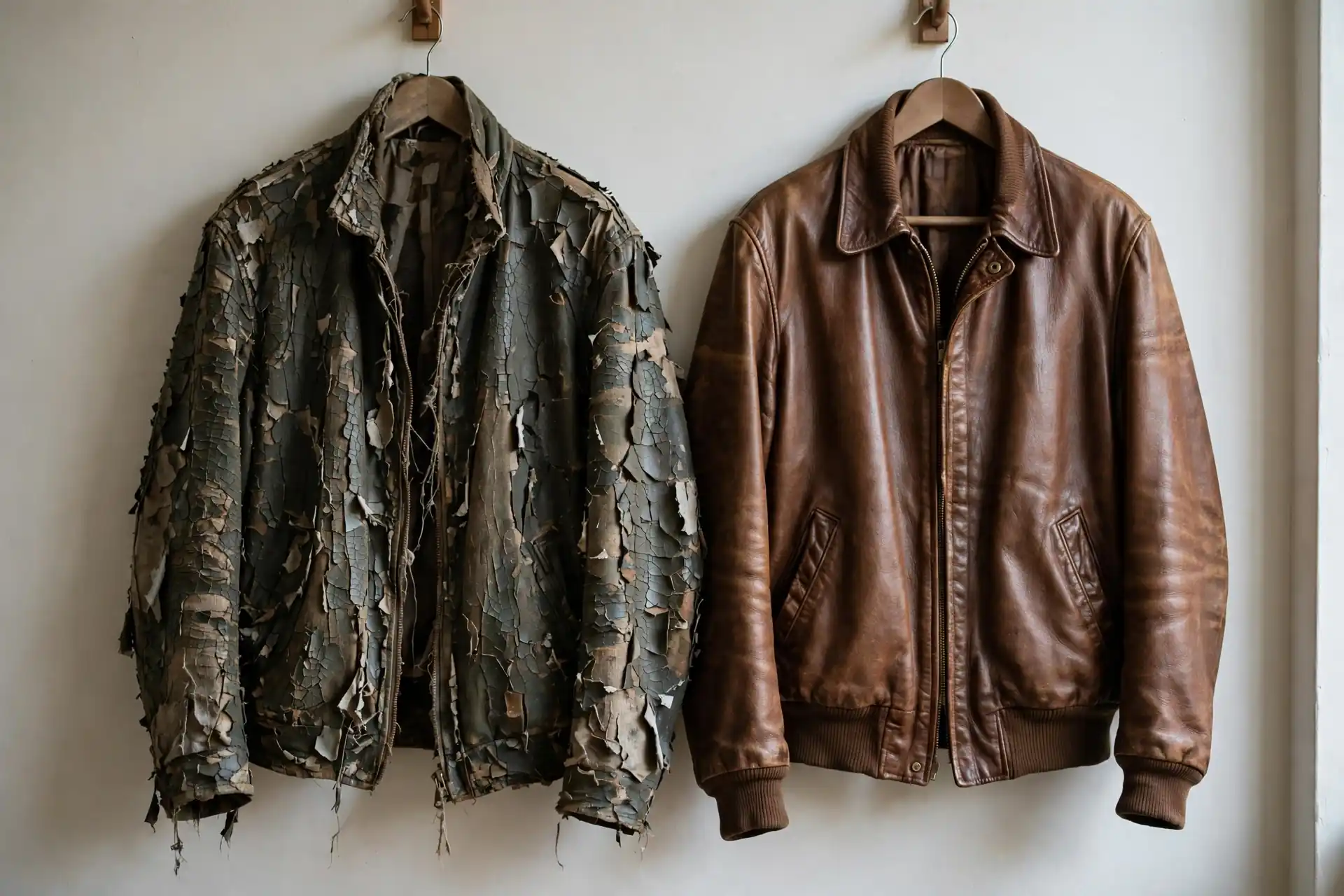
Ask how long does a fake leather jacket last and wear gives a blunt reply. A PU jacket in weekly use often shows cracks in one to three years. Bonded stock can fade, flake, or crumble. The span often runs from a few months to two years. Heat in a car, sun on a hook, and tight folds speed the fall. A jacket kept for rare nights can look fine far longer. Age alone does less harm than flex and heat.
Real hide runs on a longer clock. A sound full grain or top grain jacket can serve ten years. Care pushes it far past that mark. Thin lambskin asks for a gentler life. Thick cowhide takes hard wear and slow age marks. Scratches buff out on some finishes, and dry spots drink in care oils. Torn seams and worn cuffs go to a repair bench with real hope. Skin stays one stuff through its depth, and that fact drives its long life.
Peeling starts where movement never rests. Elbows bend, collars rub, straps press, and seat belts drag across the same line each day. Tiny cracks open in a PU coat as heat and time dry the bond. Air and damp then lift the coat in scales, and the cloth base shows through. Bonded stock fails in a sadder way. Its pressed fiber mat breaks down and sheds at the face. No oil feeds a plastic coat back to life.
Care splits along the same line. Real leather needs dust wiped off, air after rain, and care cream matched to the finish. Our guide on how to clean a leather jacket walks through safe steps for home care. Fake cloth needs a soft damp cloth, mild soap on marks, and storage away from heat. Harsh sprays, hot rooms, and long sun baths shorten its life fast. Conditioner made for hide does not heal a cracked plastic face.
Vegan leather, with the lights on
A vegan leather vs real leather jacket choice starts with values, then moves to stuff. Vegan tells you no animal hide went into the good. The word does not name one stuff, one plant source, or one wear life. Many vegan jackets use PU or PVC on cloth. Newer lines blend plant matter with plastic binders. Ask for the full content split before you judge cost, care, or green claims.
Fair points sit on the vegan side. The jackets run light, shrug off rain, cost less at the till, and spare animal use. Occasional wear in a wet city suits them well. Hard daily wear tells a tougher tale. Cracks and peel end the garment once the coat breaks. Real hide asks for animal use and more money. Yet it brings long wear, repair paths, and age marks with depth. Choose with eyes open, and respect the ground you stand on.
The maker check before money moves
Run the checks in a set order at the rail. Edge first, since the core gives the fastest truth. Pores next, with two far spots under good light. Scent and palm warmth add their votes, and a tiny water drop seals the home round. Labels, seams, trim, and price then test the story as a whole. One red flag calls for a pause. Three red flags call for a walk.
At Denver Jackets, our own unit cuts sheep skin, cow, goat, and lamb. The bench works full grain, top grain, and corrected grain hides. Its finishes run matte, natural, polished, pull up, distressed, vintage wash, and embossed. Sizes run to 4XL, with made to measure work on each design. That bench time shapes the advice on this page. Real skin shows its past in grain and fiber. No print has fooled a hand that knows the core.
Pair these tests with a wider how to buy a leather jacket plan before you shop. A leather jacket quality checklist then keeps your eyes on fit and seams. It covers lining and trim at the same time. Knowledge turns a vague tag into a set of facts you can test. Spend after the facts agree, and your jacket will earn its place for years.
Questions buyers ask at the rail
How can you tell if a leather jacket is real or fake?
Check the edge, pores, scent, and flex as one team. Real hide shows a fibrous core, uneven grain, and a rich skin scent. Fake cloth shows a woven or foam core, a repeated print, and a plastic smell. Price and labels support the verdict, yet the stuff in your hands leads it.
What is the easiest home test for real leather?
Look at a raw edge inside a pocket or under a collar. Real hide shows fibers through the cut. Coated cloth shows a smooth coat over foam or woven threads. Add the pore check for a firm call, since a lined jacket can hide most edges.
Does real leather smell different from fake leather?
Yes, real hide smells earthy and warm, with notes of skin and oil. Fake cloth often smells like plastic, glue, or vinyl. Store sprays and strong finishes can blur the split. Treat scent as one clue beside grain and edge.
Does water absorb into real leather?
Bare real hide takes in a tiny drop in a slow way. It turns dark at the spot. A sealed finish can make real hide bead water at first. Fake cloth tends to hold the drop on its plastic coat. Test a hidden spot only, and blot the drop after a short wait.
Is genuine leather the same as real leather?
The label points to goods made with real hide in a broad trade sense. It gives no grain grade and no hide share, so it adds little proof by itself. Ask for full grain, top grain, corrected grain, split, or bonded for a clear fact. Read the words as the start of a question, never as a rank.
How long will a fake leather jacket last?
Weekly wear often gives a PU jacket one to three years before cracks show. Bonded stock tends to fail in a span from a few months to two years. Rare wear, cool storage, and soft folds stretch that span. Heat, sun, and sharp bends cut it short.
Can you tell real leather from a photo?
A photo can raise strong clues. Close views can expose a core or a stamped grain. Screens hide scent, warmth, depth, and flex, so a photo rarely gives full proof. Ask for edge, tag, and hand press shots in plain light. Home tests or a swatch give the last word.
Is bonded leather real leather?
Bonded stock holds real leather fibers, ground from scraps and offcuts. Those fibers sit in a binder on a backing, with no whole grain face on top. Wear life and strength fall far below a full hide panel. Call it a leather fiber good, not a full leather jacket skin.