Shearling Leather Jacket Guide: Real Warmth, Honest Checks, and the Right Pick
Shearling Leather Jacket Guide: Real Warmth, Honest Checks, and the Right Pick
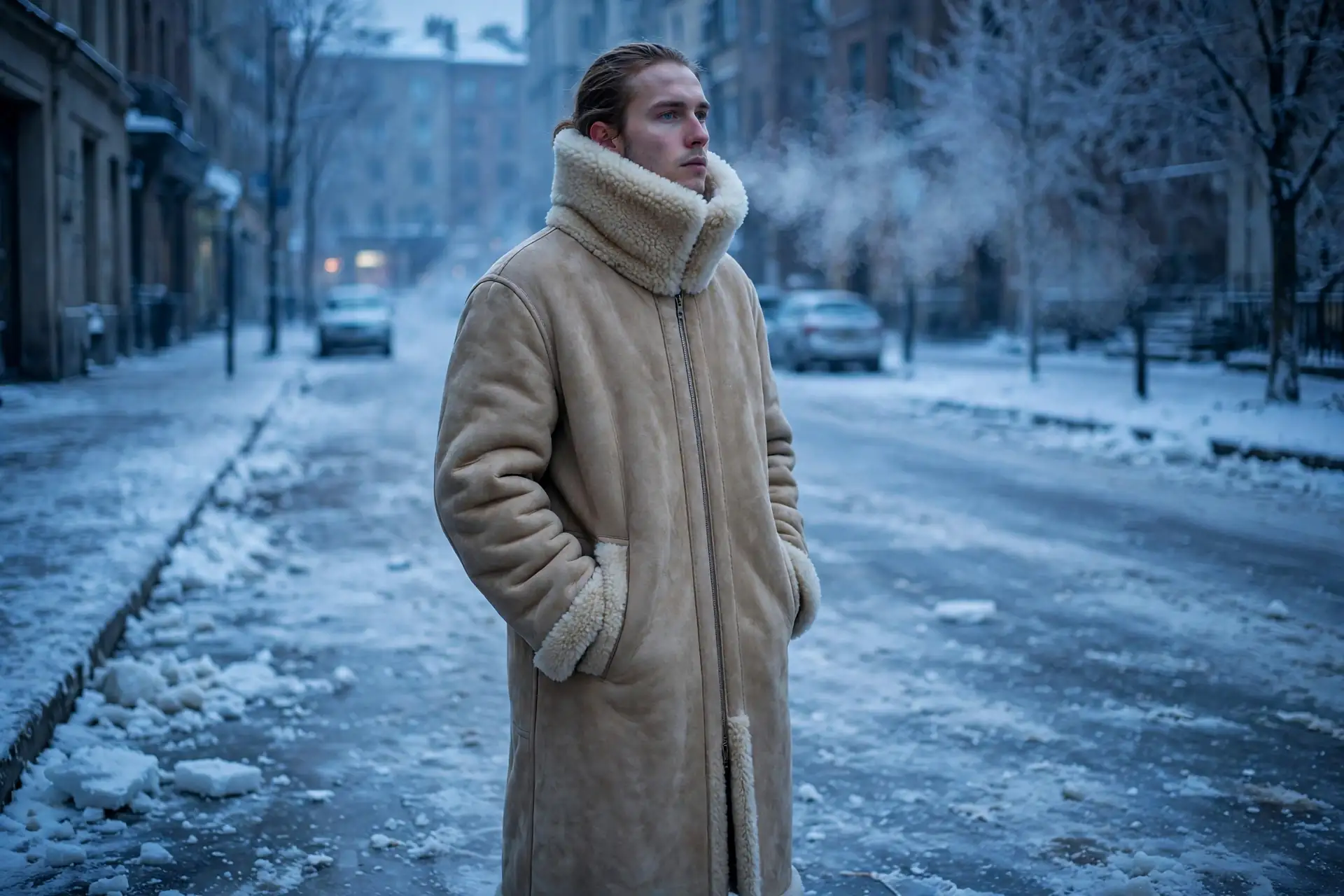
This shearling leather jacket guide starts where the jacket itself starts, on the coldest morning of the year. The frost has teeth that day. Wind finds every gap in a normal coat. Most jackets feel thin by the second block, and the walk to work turns into a small test of will. A shearling works on a different plan. The wool grew on the hide, the hide blocks the wind, and the two layers were never apart. That is why this jacket has kept pilots, ranch hands, and cold city walkers warm for a hundred years. This guide covers what shearling is, how warm it runs, how to spot the real thing, which shapes suit men and women, what the price pays for, and how to wear and keep one.
Shearling, in plain words
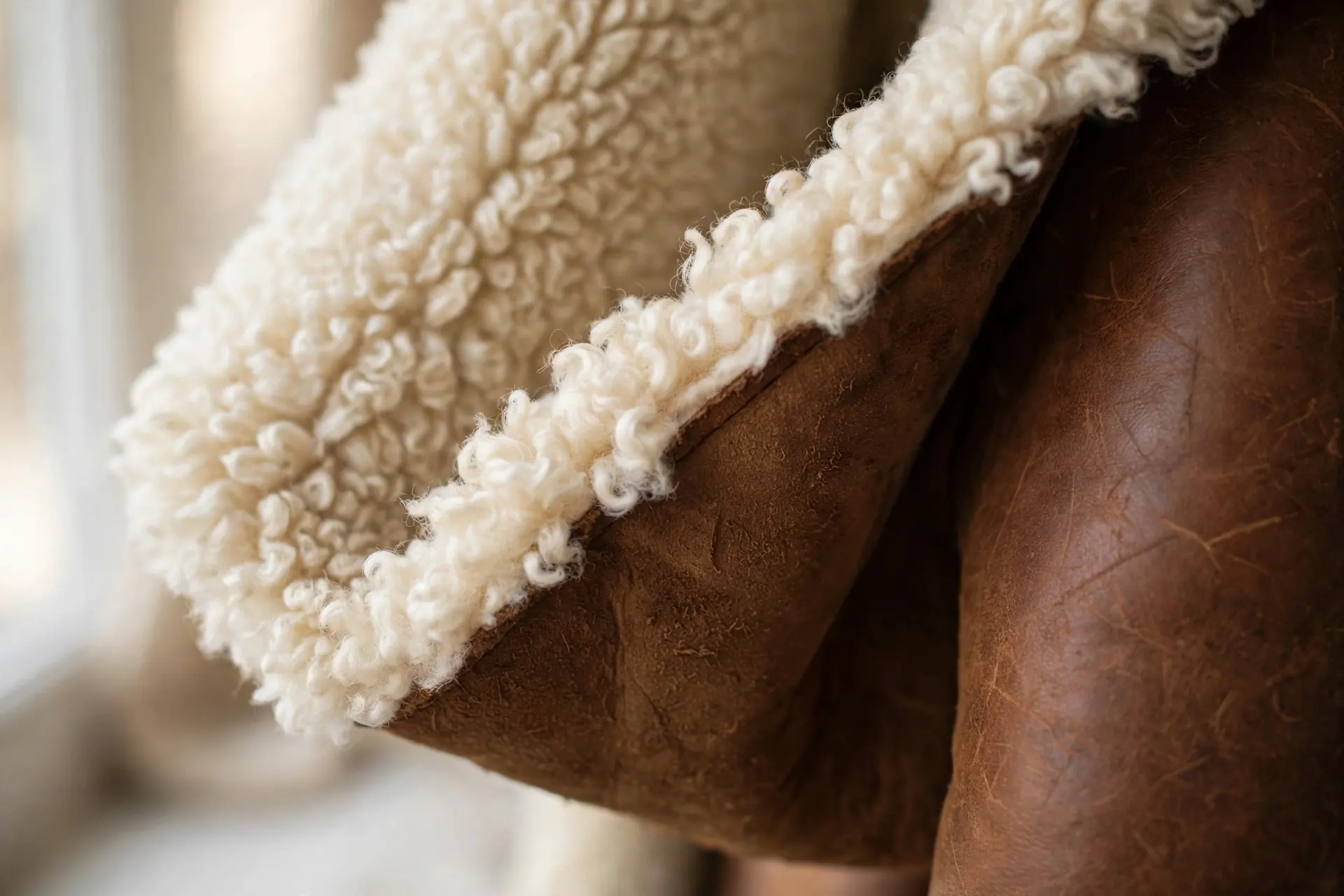
Shearling is a sheep skin that was tanned with the wool left on. The hide becomes the outer leather side of the garment. Its wool forms the warm inner side. One skin gives both layers, with no glued on lining and no sewn in fill.
That one fact answers most of the questions people type into search bars. What is a shearling jacket made of? A single sheepskin, wool side in, leather side out. What is shearling made of at the fiber level? Real wool, still rooted in real hide, cut to an even length after tanning so it feels smooth and dense to the hand. So what is a shearling coat? The same build in a longer cut, and the word sherling that shows up in search is a plain misspelling of the same thing. Some hides get sheared short for a neat city look. Others keep a long, wild fleece for hard winter work.
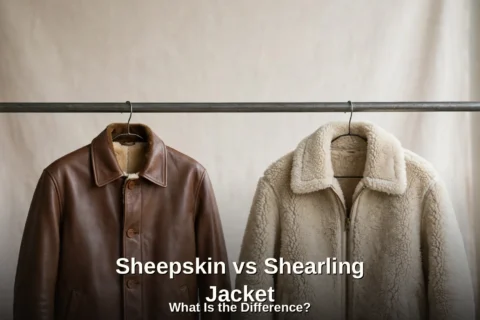
One mix up is worth clearing at the start. Sheepskin and shearling come from the same animal, yet the words point at two states of the skin. A sheepskin jacket is often built with the wool side out or with the wool trimmed and used as a lining. Shearling keeps the wool as the inside face of the jacket itself. The full side by side lives in our piece on sheepskin vs shearling, and it repays a read before money changes hands.
The warmth is the whole point
Ask how warm is a shearling jacket and the honest answer is this: it sits at the top of the leather family. Wool traps air in a dense mat of fibers, and still air is what holds body heat in place. The leather face then stops the wind from pushing that warm air out. Down fills loft well yet compress under straps and pack flat in a bag. A plain leather jacket with a thin lining leans on the hide alone, and hide on its own is a wind shield, not a warm layer. Shearling brings both halves of the job in one skin.
So, is a shearling jacket warmer than a regular leather jacket? Yes, by a wide margin. The shearling jacket vs regular leather jacket warmth gap shows up most on still, bitter days, the days when a lined biker feels fine at noon and fails at dusk. A good shearling stays steady through both. It is also the rare warm layer that breathes. Wool takes in damp air from the body and lets it go, so the wearer feels dry heat rather than the clammy sweat that sealed plastic fills produce.
Push the cold further and the jacket keeps its nerve. A shearling jacket for extreme cold is a real thing with a long record. Flight crews wore shearling at altitude in open and unheated planes, where the air ran far below zero. The same build serves ground level winters in the northern states, in Canada, and in mountain towns where minus twenty is a normal week. Length helps at that level. A coat cut past the hip seals the gap where short jackets leak heat at the waist.
What climate is best for a shearling jacket? Cold and dry wins. Think long winters, hard frosts, and windy plains. Wet coastal cold is harder on it, since the leather face dislikes a long soak. Mild places with two cold weeks a year will not give the jacket enough work to earn its keep. Our wider look at leather jackets by season maps each leather type to the months where it earns its place.
Shearling next to a plain leather jacket
The shearling jacket vs leather jacket choice is less about looks than about the season you live in. A plain jacket is a three season tool. It layers over a tee in spring, over a knit in fall, and it moves with the body since the hide is the whole garment. A shearling is a winter tool first. It carries its own warmth, so it needs less under it, and it gives back true cold weather power that no thin lining matches. Weight tells the same story. The wool adds heft, and a long shearling coat has a real presence on the shoulders.
Feel differs too. Plain leather starts stiff on some hides and breaks in over months of wear. Shearling feels kind from day one, since the wool pads every point where the jacket rests. The trade runs the other way in care. A plain jacket shrugs off a light rain and wipes clean in a minute. Shearling asks for more respect, with dry storage and a soft brush for the wool. Price splits them as well, and the price section below breaks down why. Pick the plain jacket for range across the year. Choose shearling when winter where you live is a season with a bite, not a rumor.
Real shearling and the fake stuff
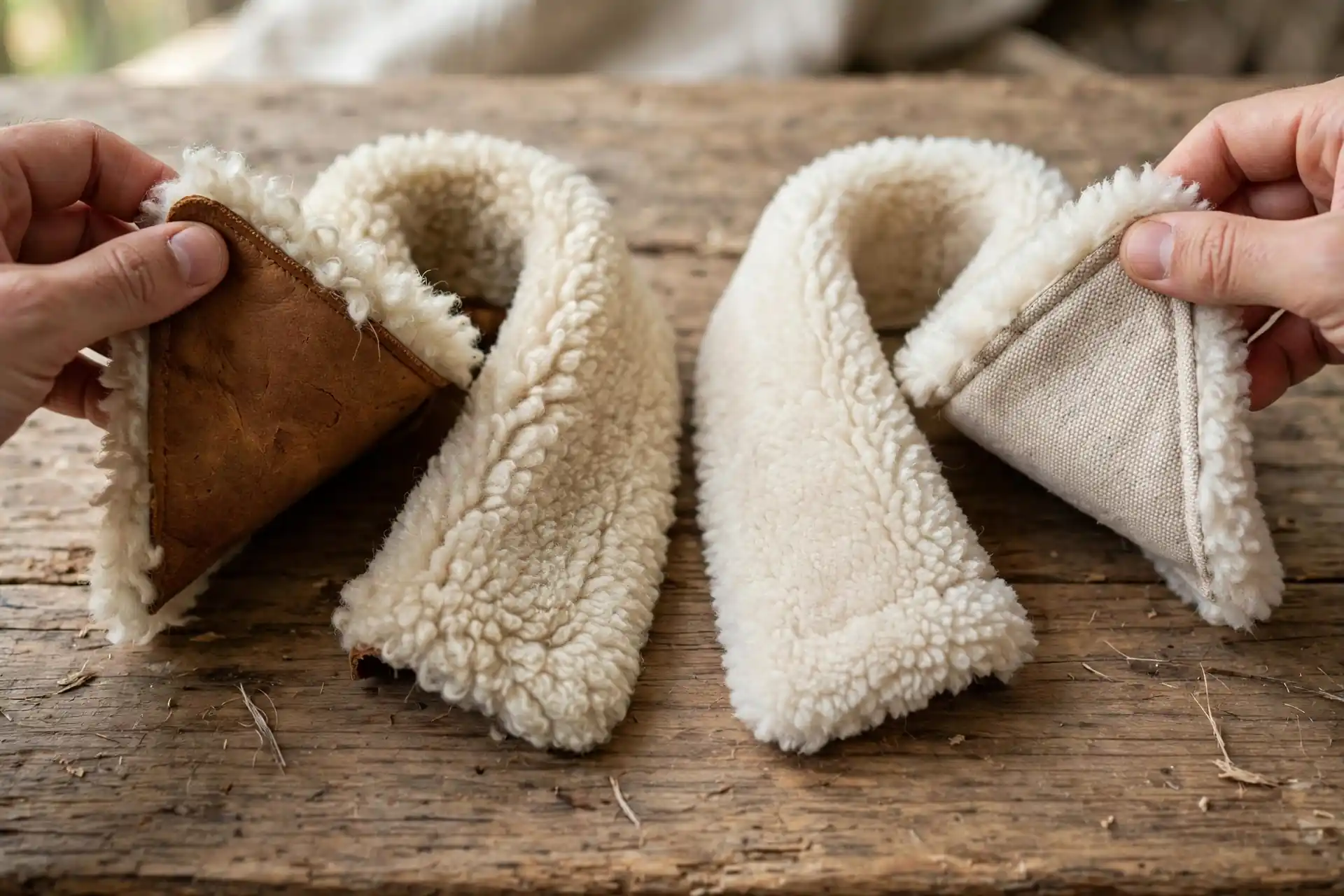
The real shearling vs faux shearling jacket gap is wide, and shops do not always make it clear. Faux shearling is a woven cloth with plastic fibers brushed up to look like wool, glued or sewn to a fake leather face. It costs far less and it photographs well. In wear, the cloth pills, the fibers mat flat in a season or two, and the warmth fades with them. Real shearling keeps its loft for decades when it is stored dry, and the leather face ages with grace marks rather than cracks and peels.
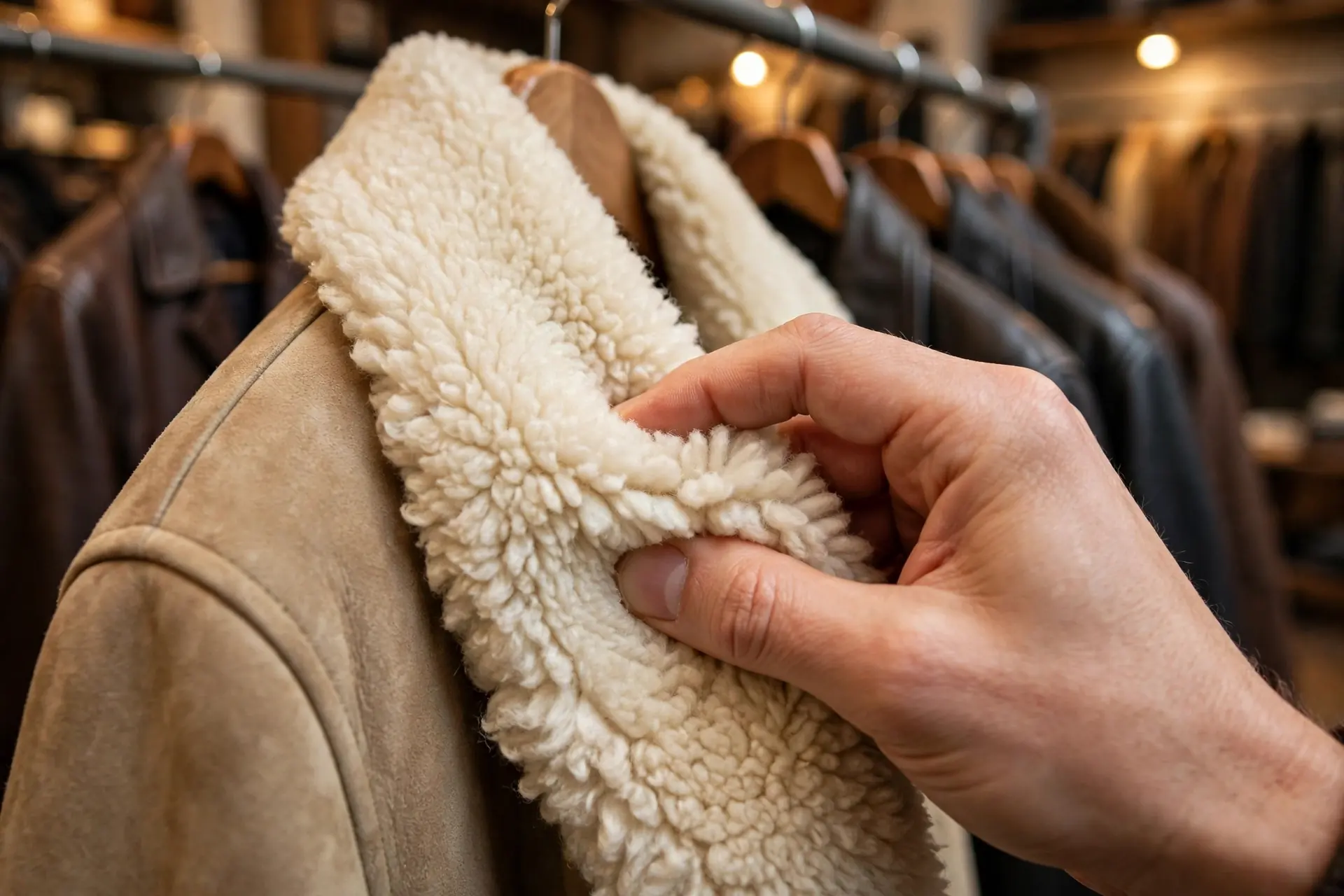
How do I know if a shearling jacket is real? Run four checks. Part the wool with your fingers and look at the base. Real wool grows out of skin, so the base is hide, smooth and solid. Fake wool sits on a woven mesh, and the grid of the cloth shows through. Touch the back edge of a seam or a raw cut where the maker left one. Real hide feels like skin, dense and cool. The fake feels like cloth or foam. Smell helps too. Real shearling smells of wool and leather, warm and faint. Plastic smells sharp and sweet. The last check is the price tag, since real skins of jacket size cost real money before a single stitch is sewn.
None of this means faux has no place. A faux piece serves a person who wants the look for mild winters, or who skips animal goods on principle. The honest rule is to buy it as what it is, at a faux price, with faux hopes. Trouble starts when a fake is sold at a real price to a buyer who trusts the label.
The shapes shearling wears best
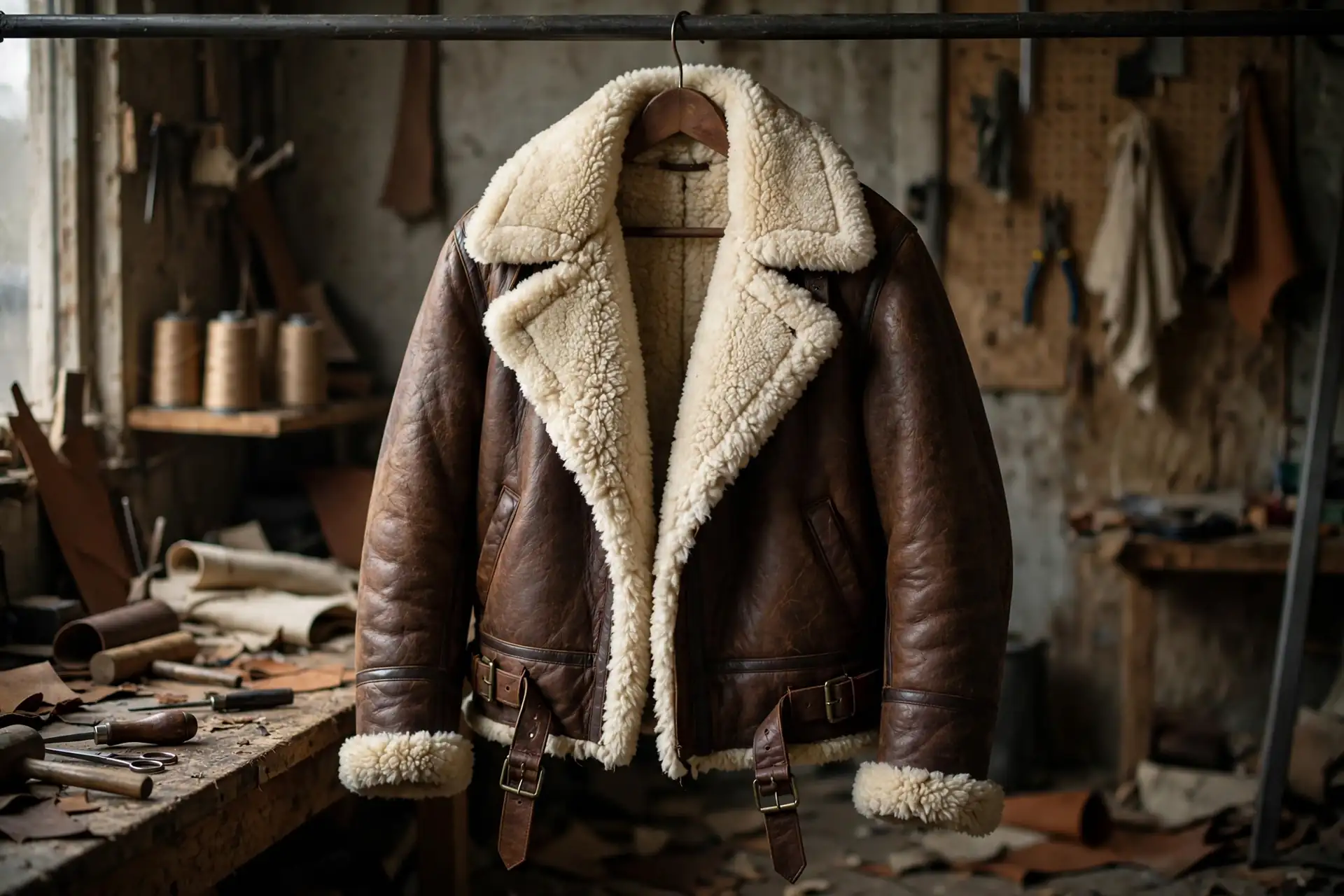
Shearling flatters some cuts more than others, since the wool adds bulk that a pattern has to plan for. Standing at the head of the family is the B3 shearling bomber jacket. It was built for bomber crews in high, freezing planes, and it shows in every line: a wide wool collar that wraps the neck, straps at the waist and throat, and a short body that sealed heat in a cramped cockpit. Worn today, it reads bold and warm in equal parts, and it anchors the mens leather bomber jackets rail for men who want the true flight look.
The shearling aviator jacket shares the same roots with a softer hand. Aviator cuts run a bit longer, with cleaner fronts and a collar that folds down for daily wear. The full flight family tree, from the B3 to the A2 and G1, sits in our aviator leather jacket guide for readers who love the history. Long shearling coats take the warmth story to its end point, covering the hips and thighs in one wool lined wall. Ranch and trucker shapes borrow just the collar and chest in shearling over a plain hide body, a lighter nod to the look for fall. Set beside the wider family in types of leather jackets, shearling is the one branch where warmth, not style, leads the design.

Shearling on men
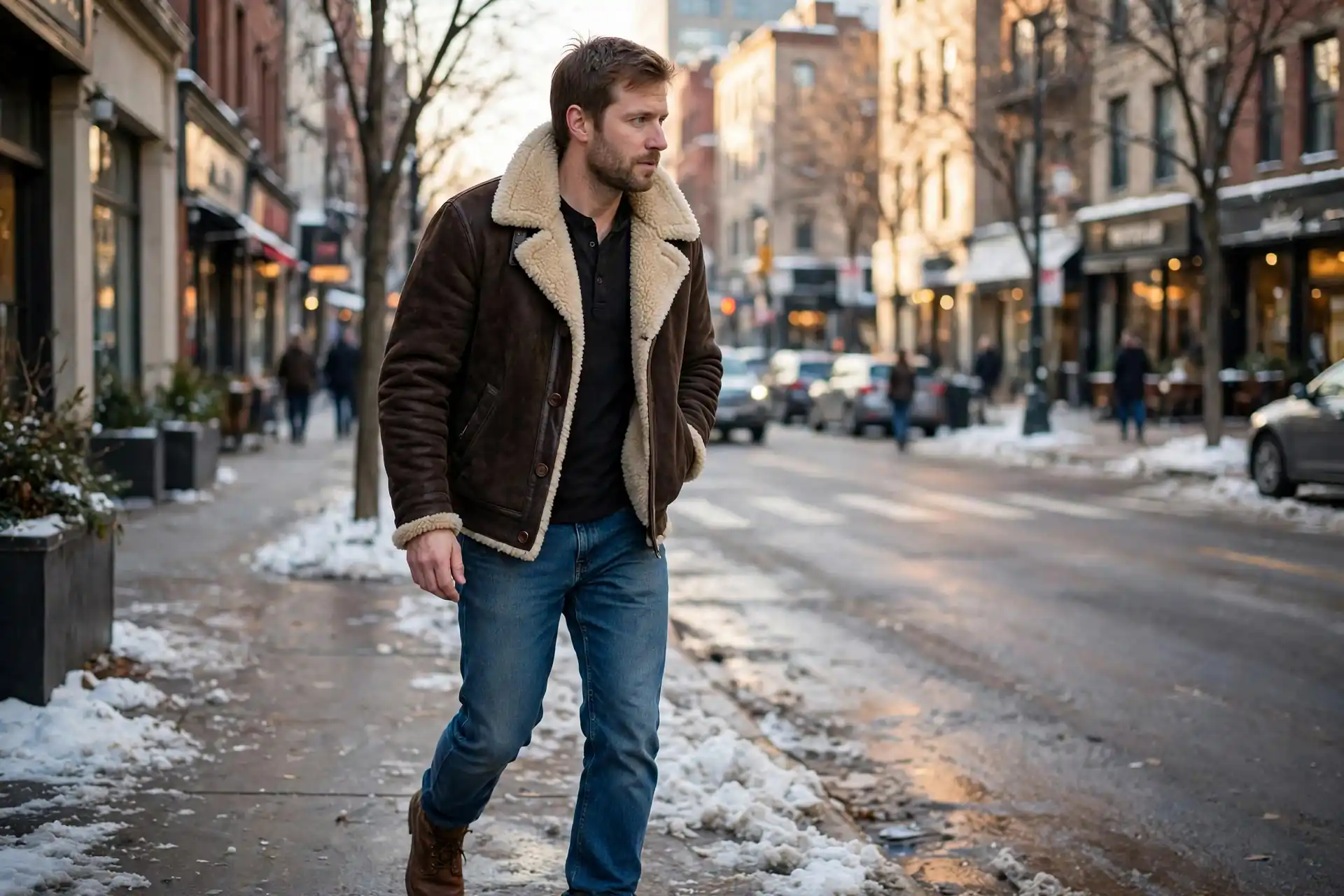
The rail of shearling jacket men reach for splits by the life the man leads. At the rugged end sit the B3 and the aviator. They pair with boots, dark denim, and knit caps, and they suit broad frames since the wool adds shape where a thin jacket hangs flat. Long coats serve men in true cold country and men who walk to work through winter. A ranch cut with a shearling collar is the entry point for a man who likes the look yet lives where winters stay mild. Fit runs roomier than a biker or a racer, since the wool takes space inside the jacket. A man between sizes takes the larger one and lets the wool settle.
Color for men stays close to the hide. Tans, russets, and chocolate browns show the natural two tone of wool against skin, and they hide winter grime with ease. Black shearling reads sharper and more urban, with black wool to match. The full range of cuts and colors sits with the rest of the leather jackets for men, where shearling holds the warm end of the rail. One honest note on bulk: a slim man in a long, pale shearling coat risks a swamped look. Shorter cuts and darker hides keep the lines clean on lean frames.
Shearling on women
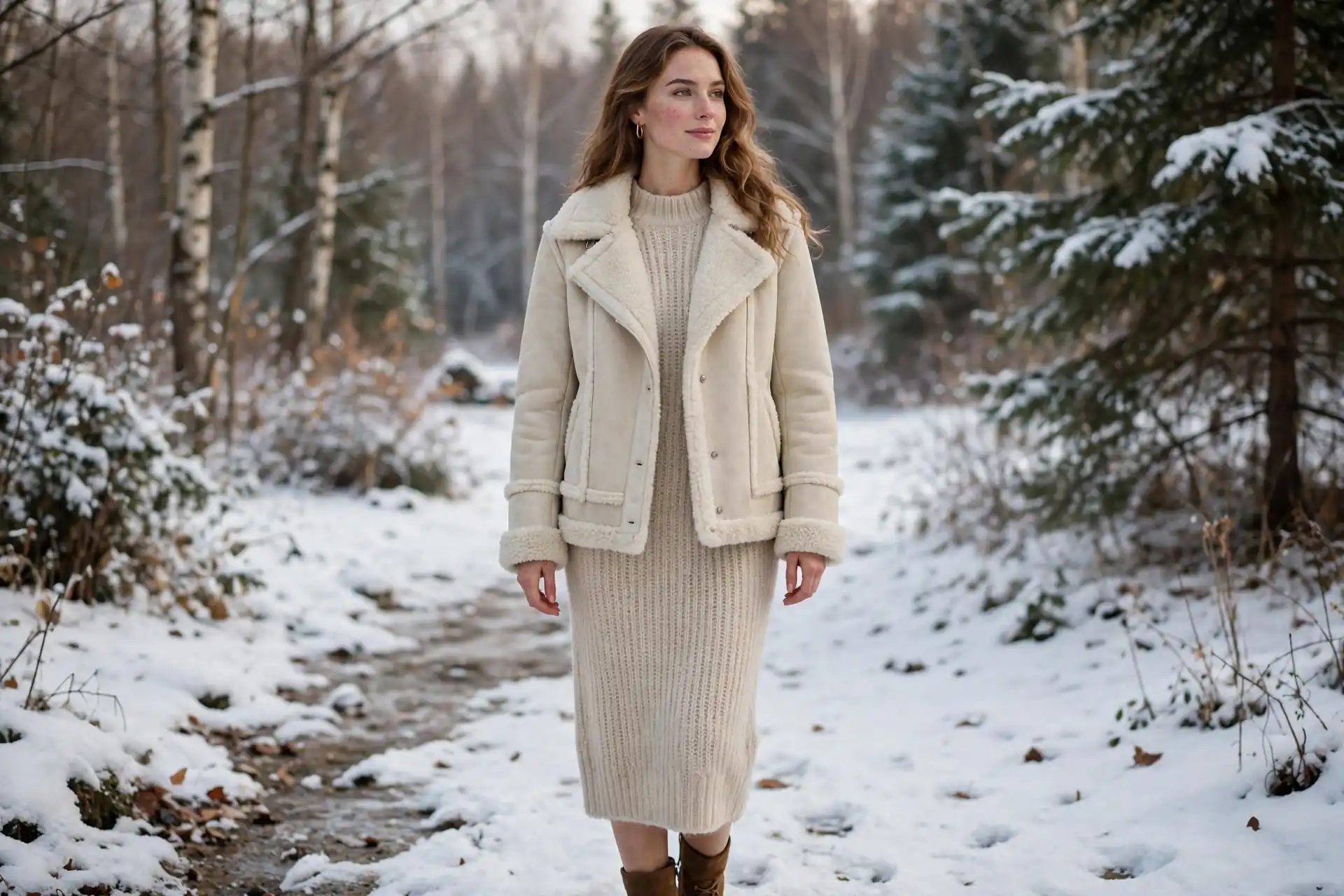
The shearling jacket women love most solves a problem plain fashion coats ignore: real warmth that still has a waist. Good womens cuts nip in at the middle, so the wool warmth does not cost the wearer her shape. Cropped aviator shapes end at the hip and love high rise jeans and boots. Long belted coats turn the jacket into the whole outfit on the coldest days, worn over knit dresses and tall boots. The womens leather bomber jackets show how the bomber shape adapts, and shearling takes that same shape and lines it with winter.
Cream and pale tan wool reads soft and bright against winter skin, and it lifts dark wardrobes in a dull month. Deep browns and black read sleek and pair with the black heavy closets most women own. Fit needs care at the shoulder, since thick wool hides a poor shoulder line until the coat is on and moving. The shoulder seam should sit at the true shoulder, not past it. Browse the wider range of womens leather jackets to see where the shearling cuts sit beside the slimmer plain styles. For petite frames, a cropped cut with short wool keeps the warmth and drops the bulk.
Picking the right one
How to choose a shearling jacket comes down to five checks, done in order. Wool first. Run a hand through the fleece and press it flat. Dense wool springs back at once and hides the skin base. Thin wool that shows the hide in patches will mat and chill in time. Hide second. The leather face should feel supple, not board stiff and not paper thin. A jacket weight hide bends with a firm, even give along the whole panel.
Fit third. Try the jacket over the knit you wear most in winter. You should pinch a small fold of room at the chest, no more. Wool compresses a touch with wear, and the jacket will settle closer in the first month. Seams fourth. Look inside at the joins. Shearling panels are sewn skin to skin, and neat, even seams with no gaps mark careful work. Weight last. Heft is normal here, yet the jacket should feel balanced on the shoulders, not dragging at the neck.
At Denver Jackets, shearling is cut in our own production unit from sheep skin, in sizes up to 4XL plus custom sizes for bodies the standard rail misses. That range matters for this style more than most, since a winter jacket that pulls at the chest leaks heat at every step. Choose the collar with your climate in mind too. A tall collar that buckles shut is worth real money in wind country and pure fuss in a calm city winter.
What the price is really paying for
Every shearling jacket price guide should start with the skin. A jacket takes several whole skins, and a skin that is large, clean, and free of scars costs the maker far more than a small or marked one. Cheap shearling is often pieced from small offcuts, and the seams multiply across the back. Each seam is a weak point and a cold point. Wool quality is the second driver. Long, dense, even fleece comes from select grades. Short or patchy wool costs less because it warms less.
Work is the third driver. Sewing thick skins with wool attached is slow, skilled labor. Panels must match in color and wool depth, or the jacket looks patched. Hardware and finish add the rest: solid buckles, smooth zips, and a leather face finished to shrug off road salt and light snow. How much should a good shearling jacket cost? It should cost what several prime skins and slow skilled sewing cost, and a price far below that line is paid for in pieced panels, thin wool, or a fake face. The believable test is the reverse one. If the price sounds too kind for real shearling, the checks in the real and fake section will find the reason in a minute.
Worth the money, or not
So, is shearling jacket worth it? Count the wears, not the tag. A well made shearling worn through fifteen winters, at sixty cold days a year, passes nine hundred wears. Spread the cost across those days and the jacket turns cheap per wear in a way few garments match. It also stays in style by standing outside it. The B3 shape has looked right since the war years, through every trend cycle since. Nobody dates a shearling to a season.
The worth case rests on one habit: storage. A shearling that is aired, brushed, and kept dry in summer will outlast its owner’s plans for it. The same jacket left in a damp closet will fail early, and the fault sits with the closet, not the coat. A buyer in a cold place who keeps good things with care gets a clear yes. For a mild climate or a closet that stays damp, the money serves better in a plain leather jacket worn two hundred days a year.
Care that keeps the wool alive
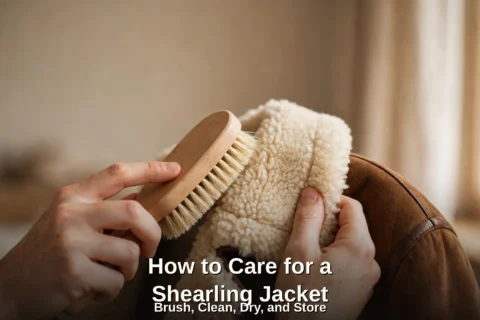
Shearling care is plain work, done little and often. Shake the jacket out after wear and hang it on a wide hanger so air moves through the wool. Brush the fleece with a soft brush when it looks flat, always in the lie of the wool. Keep the jacket away from radiators and direct heat, since heat dries the skin face and curls the wool tips. Store it in a cool, dry room in a cloth bag, never in plastic, which traps damp against the hide.
Spots on the leather face wipe off with a barely damp cloth, the same gentle rule that governs how to clean a leather jacket of any kind. Wet wool should dry at room pace, far from heat, then get a brush to lift it back up. Salt marks from winter roads brush out once dry. The full routine, from full cleans to summer storage, lives in our guide on how tocare for a shearling jacket ,and ten calm minutes with it each season keeps the jacket at full strength.
Colors and outfits that work
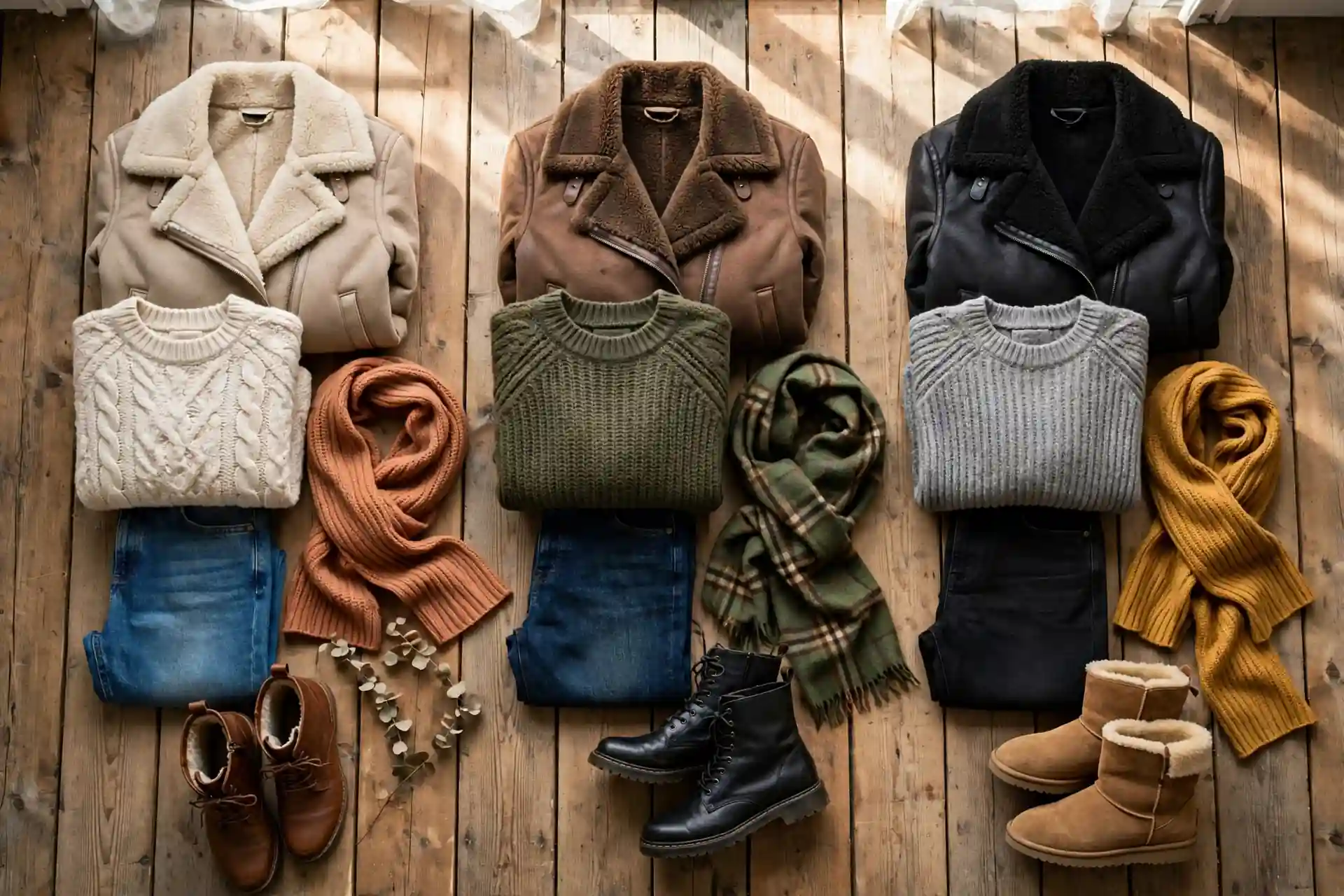
What colors do shearling jackets come in? The natural range leads: tan hide with cream wool, russet with honey toned wool, chocolate brown, and black on black. Makers also dye hides to deep red, navy, grey, and olive, with wool dyed to match or left pale for contrast. The natural pairs outsell the dyed ones year after year, since the two tone of skin and wool is the whole charm of the style. Pale wool shows city dirt faster and asks for a brush more often. Dark wool hides a month of wear with no effort.
How do you style a shearling jacket? Treat it as the loudest piece in the outfit and keep the rest quiet. Shearling jacket outfit ideas that never fail: the B3 over a black knit, dark jeans, and rough boots; a long brown coat over a cream dress and tall boots; a cropped aviator with a white tee, straight jeans, and clean sneakers for a mild cold day. Wool this rich fights with prints and bright colors, so plain knits and denim do the supporting work. A scarf is rarely needed, since the collar does that job. Gloves in a tone near the hide tone tie the whole look shut.
Who should wear one, and who should pass
Shearling suits the person who is cold while others are fine. It suits walkers, riders in open vehicles at low speed, dog owners on dawn rounds, and anyone whose winter runs long and dry. The same jacket rewards buyers who keep one great coat for a decade over five thin ones for a season each.
Pass on it if your winters are wet more than cold, since rain is the one weather this jacket dislikes. Skip it if you hate any weight on your shoulders, or if your home has no dry place to store a bulky coat through summer. And pass on the real thing, with respect, if you avoid animal goods. A good faux worn with open eyes beats a real jacket bought with doubt. For everyone else in cold country, the guide comes back to its first line. When the frost has teeth, this is the jacket that does not quit.
Shearling questions, answered
What is shearling made of?
Shearling is made of one sheep skin, tanned whole. The leather side is the skin itself, finished smooth. Its warm side is the sheep’s own wool, left rooted in the skin and sheared to an even length. No part is glued on or sewn in from a separate cloth.
Is a shearling jacket warmer than a regular leather jacket?
Yes. A regular leather jacket blocks wind with the hide and leans on a thin lining for warmth. Shearling adds a dense wool layer that traps body heat across the whole body of the jacket. On still, bitter days the gap is wide, and it grows as the temperature falls.
How do I know if my shearling jacket is real?
Part the wool and look at the base. Real wool grows from skin, so the base is solid hide. Fake wool sits on a woven mesh that shows a cloth grid. Real shearling also smells of wool and leather, and its cut edges feel like skin, not foam or fabric.
What climate is best for a shearling jacket?
Cold and dry climates suit it best. Long winters with hard frost, wind, and low damp give the jacket steady work from late fall to early spring. Wet coastal winters are harder on the leather face, and mild places will not call on its full warmth often enough.
What colors do shearling jackets come in?
Natural pairs lead the range: tan with cream wool, russet, chocolate brown, and black on black. Dyed hides add deep red, navy, grey, and olive, with wool matched or left pale. Natural two tone pairs stay the most worn, since they hide winter dirt and suit most wardrobes.
Is a shearling jacket worth the money?
For a cold climate buyer who stores it dry, yes. A well made shearling serves fifteen winters or more, and the cost per wear falls below most winter coats. Its shapes have stayed in style for decades, so the money buys warmth and a look that does not date.