How to Clean a Leather Jacket at Home Without Ruining It
How to clean a leather jacket comes down to one rule: go gentle, work slow, and never soak the leather. At Denver Jackets, we make leather jackets every day in our own unit. The jackets that come back hurt almost always got hurt at home, in a sink or a washing machine.
The good news is simple. This guide shows how to clean a leather jacket without damaging it, using tools you already own and steps that respect the hide. Safe cleaning is easy once you know the order of the steps.
These steps work on smooth leather jackets of every style. They cover biker, bomber, and cafe racer cuts, the same styles you will find across our men’s leather jackets and women’s leather jackets ranges.
Suede and shearling follow different rules, and this guide flags each point where the rules change.
The Short Answer
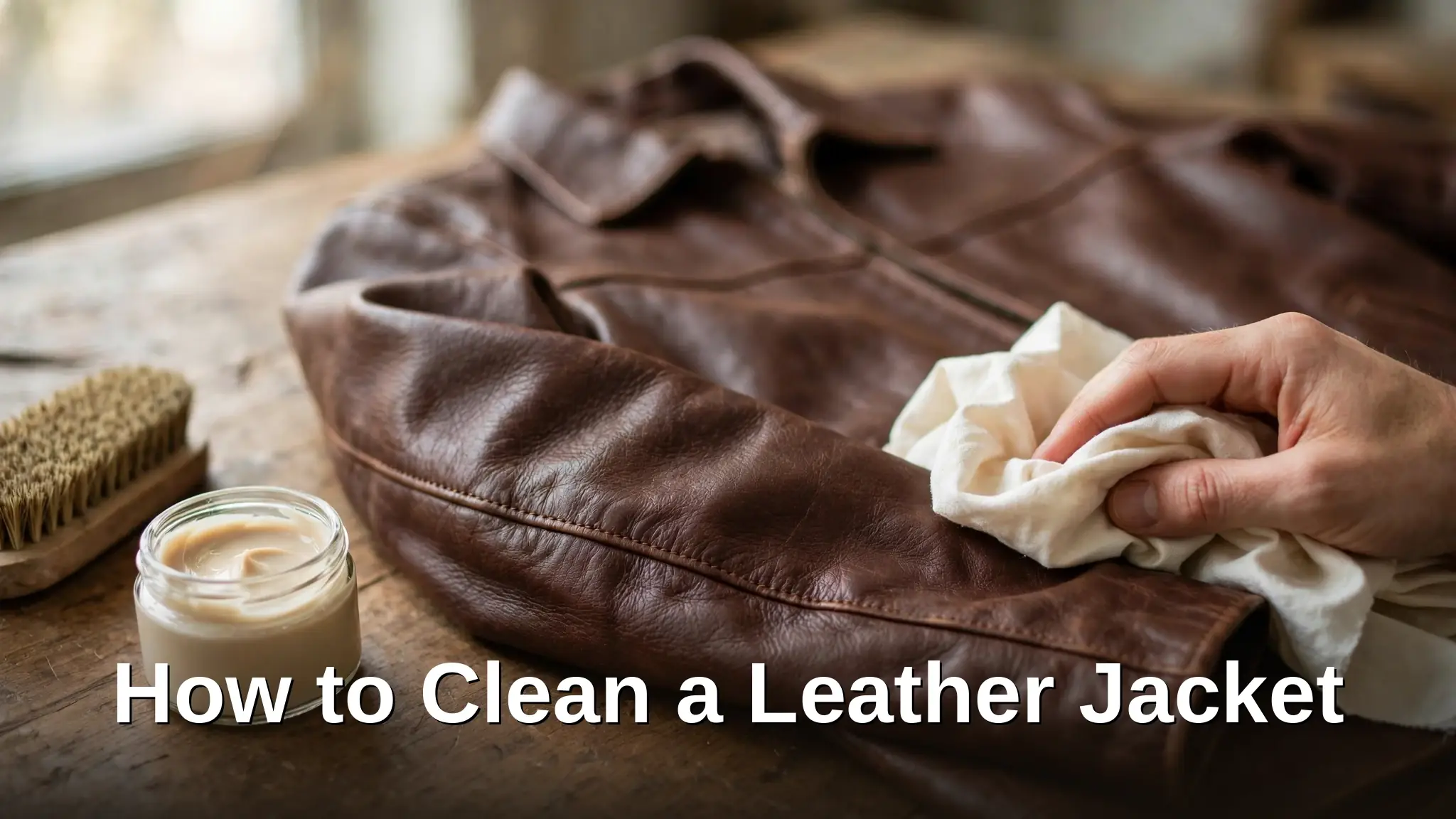
Dust the jacket with a dry soft cloth. Mix a few drops of mild soap in lukewarm water, dampen a cloth, and wipe the surface in small circles. Wipe once more with a clean damp cloth to lift the soap off. Let the jacket air dry at room heat, then rub in a thin layer of leather conditioner.
That is the whole method in one breath. The rest of this guide gives you leather jacket cleaning step by step, with the small details that keep leather safe.
What You Need Before You Start
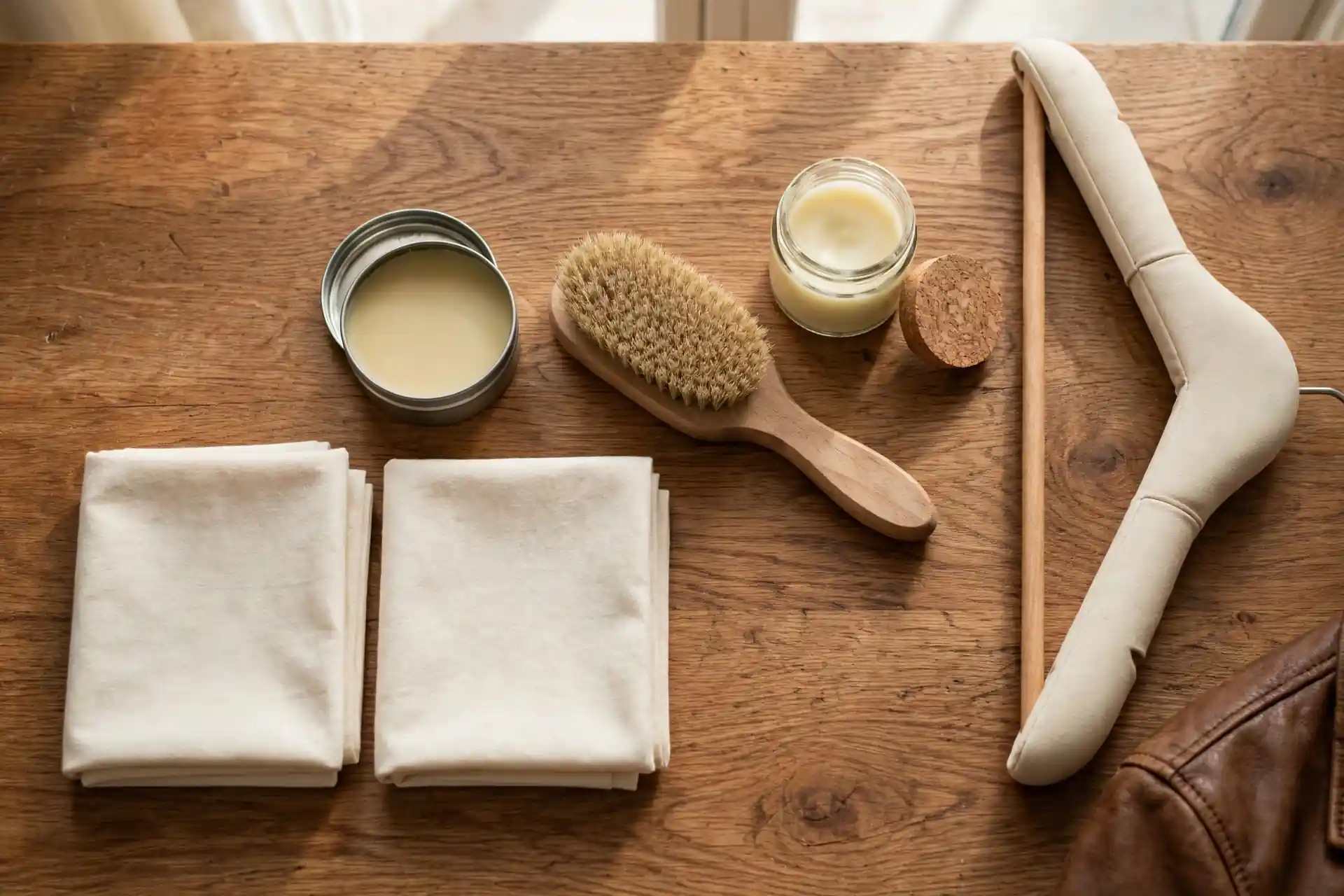
Gather your tools first so you never leave a damp jacket sitting while you hunt for a cloth.
- Two soft cotton cloths. Old cotton shirts work well. Rough fabric scratches polished finishes, so keep the cloth soft.
- A soft horsehair brush. It lifts dry dust out of seams and stitch lines where cloths miss.
- Mild soap or saddle soap. Saddle soap for leather jackets is a gentle soap made for leather, sold in small tins, and a little goes a long way.
- A leather cleaner made for clothing. The best leather jacket cleaner is a gentle one built for jackets and garments. Skip furniture polish, skip all purpose kitchen sprays, and skip anything with bleach.
- Leather conditioner. Cleaning pulls natural oils out of the hide. Conditioner puts those oils back.
- A wide padded hanger and clean towels. Thin wire hangers dent wet shoulders. A wide hanger holds the jacket shape while it dries.
Good tools beat strong chemicals every single time. Leather asks for patience, not power.
Know Your Leather Before Water Touches It
Different leathers drink water in different ways, so read your jacket before you wet a cloth.
Smooth leather has a sealed top surface. Water beads on it for a short while, and a damp cloth wipes it clean with ease. Most biker and bomber jackets use smooth leather.
Suede has a raised, fuzzy surface made from the inner side of the hide. Water spots suede and stiffens it, so cleaning a suede leather jacket stays dry at every stage. Suede gets brushed and dry cleaned with a suede eraser, and the full method sits in our suede jacket cleaning guide.
Nubuck is top grain leather buffed to a soft, velvet feel. It acts like suede around water, so treat it with the same dry methods.
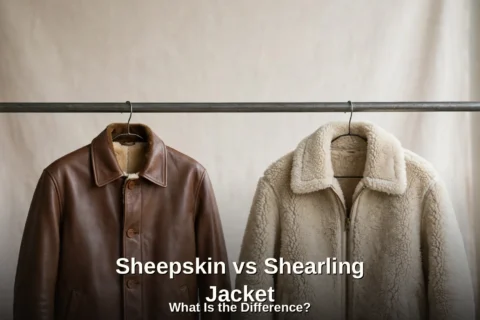
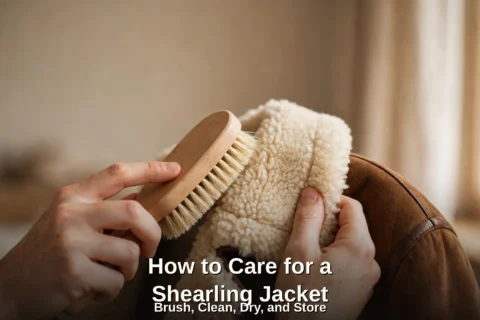
Shearling pairs wool on one side with skin on the other. It needs its own care routine, covered in the shearling guide inside our leather jacket care guide.
Now run one quick test. Wet a hidden spot, like the inside of a cuff, with your damp cloth. Wait ten minutes. If the color stays even and the feel stays soft, your jacket takes the full clean well. Lambskin and light colors deserve this test every time, since both mark with ease.
The Full Clean, Step by Step
Work in a bright room on a clean table. Light shows you the dirt you would miss in a dim corner.
- Empty every pocket and unzip the jacket. Coins and keys scratch linings and tear pocket bags.
- Brush the whole jacket with the horsehair brush. Short strokes push dust out of the seams, the collar fold, and the cuff edges.
- Fill a bowl with lukewarm water and add a few drops of mild soap. Hot water dries leather out, so keep the water close to skin warmth.
- Dip a soft cloth in the soapy water and wring it hard. The cloth should feel damp, never dripping.
- Wipe the jacket in small circles, one panel at a time. Front, back, sleeves, then collar. Rinse the cloth often so dirt moves off the leather instead of across it.
- Dampen the second cloth in clean water and wipe every panel again. This pass lifts soap residue off the surface. Soap left behind turns stiff and dull.
- Pat the jacket dry with a clean towel. Press gently. Never twist or wring leather.
- Hang the jacket on the wide hanger and let it air dry at room heat. Keep it away from radiators, heaters, and direct sun.
- Once the leather feels fully dry, rub in a thin layer of conditioner with a clean cloth. Small circles, thin coat, full coverage.
- Buff the surface with a dry cloth after the conditioner sinks in. The shine you see now is the healthy kind.
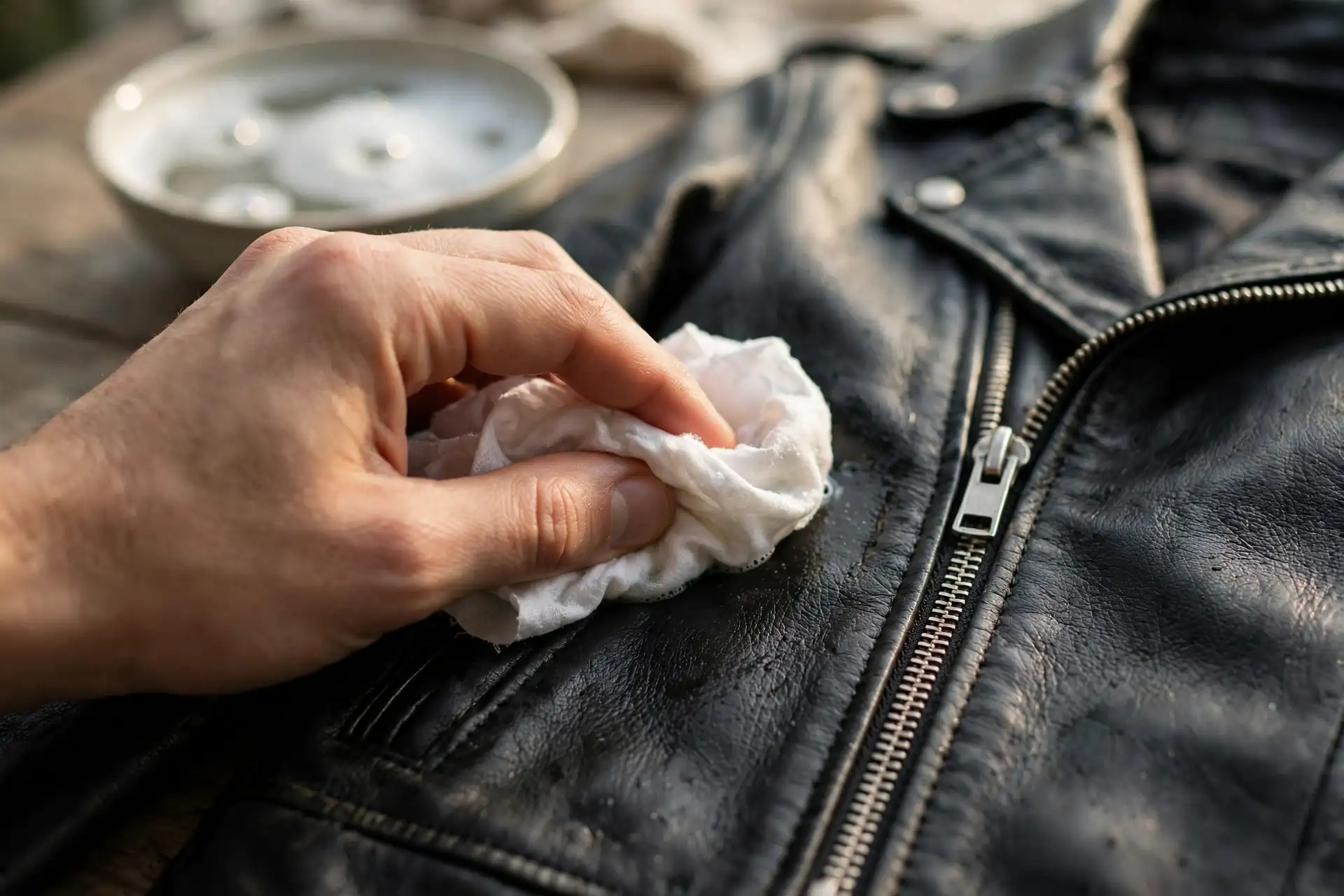
A full clean like this takes about twenty minutes of hands on work. Most of the clock is drying time, and drying time is where patience pays off.
Spot Cleaning Stains Before They Set
Fresh stains lift with ease. Old stains sink in and fight back, so treat marks the day you spot them. The steps below show how to remove stains from a leather jacket while the mark is still fresh.
Blot fresh spills with a dry cloth. Press and lift, press and lift. Rubbing spreads the stain wider and pushes it deeper into the grain.
Road salt leaves white lines on cuffs and hems in winter. A cloth dampened with plain water lifts most salt marks. Work from the outer edge of the mark toward the center so the line shrinks instead of growing.
Grease and oil need a different method, and ink needs care of its own. Both have full guides in this series, since a wrong move on either one sets the mark for good. Water stains from rain also get a dedicated walkthrough, linked from the care hub.
Cleaning the Lining Without Harming the Shell
The lining soaks up sweat and scent while the outer shell stays clean looking. A jacket can smell worn out while the leather still looks new.
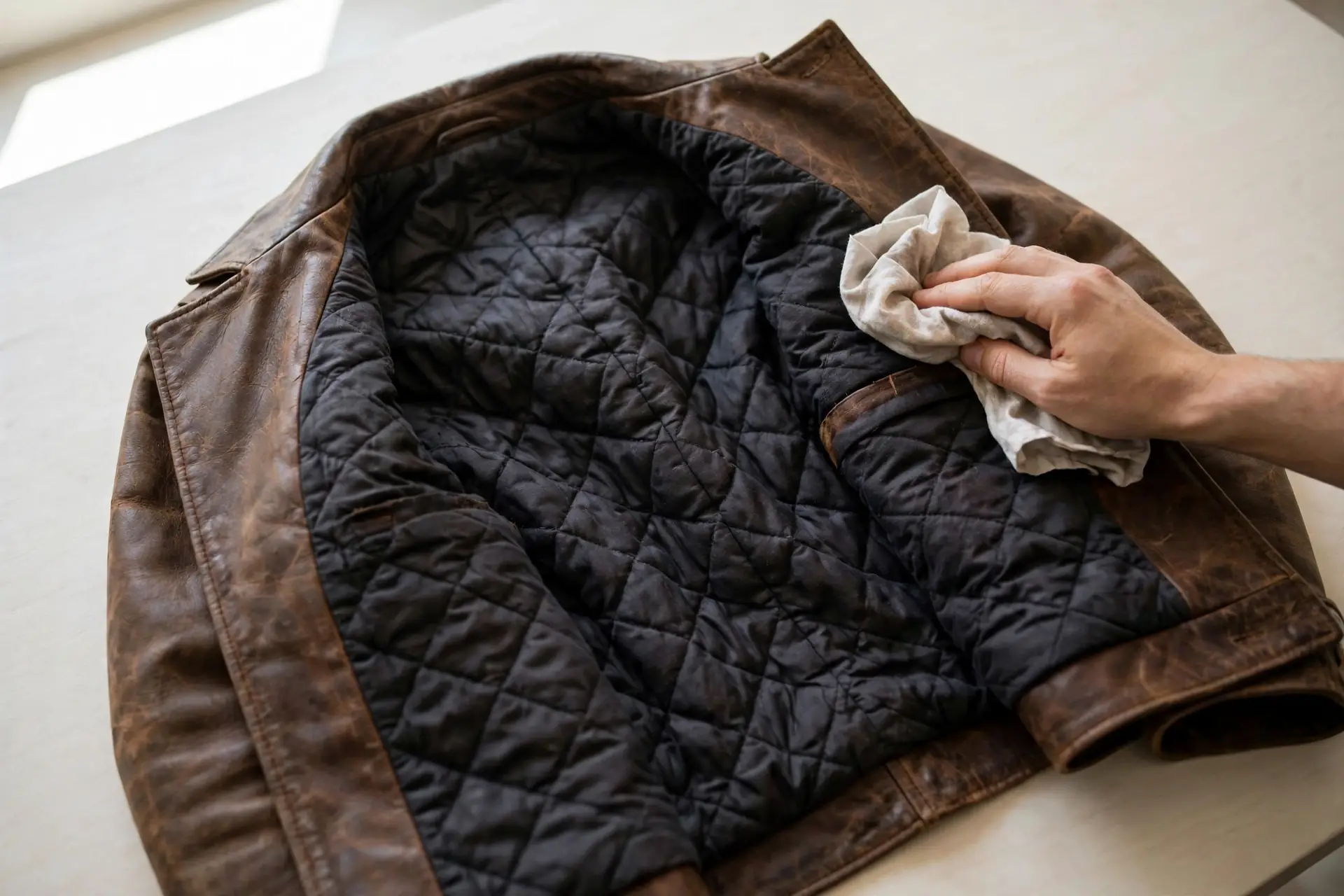
Learning how to clean leather jacket lining takes five minutes and saves the whole jacket. Turn the jacket inside out. Wipe the lining with a cloth dampened in mild soapy water. Pay close attention to the collar band and the underarm zones. Sweat gathers in those two spots first.
Wipe once more with a clean damp cloth. Then hang the jacket inside out until the lining feels bone dry.
The full lining routine, with product picks for stubborn sweat marks, lives in our leather jacket lining cleaning guide.
Can You Wash a Leather Jacket in a Washing Machine?
No. A washing machine floods leather with water, beats it against a steel drum, and spins it hard. Leather comes out shrunken, stiff, and cracked along the fold lines. No conditioner on earth fully undoes that damage.
People asking how to wash a leather jacket usually picture a machine or a full bathtub. The same warning covers soaking a jacket in a tub. A brief, gentle surface wipe with a damp cloth is safe. A long soak is not.
Dry cleaning sits in the middle. A normal dry cleaner uses strong solvents that strip leather oils. A leather specialist cleaner works with gentle methods built for hides. Our wash or dry clean guide breaks down each option, price range, and risk in full.
Drying Matters as Much as Washing
Heat is leather’s quiet enemy. A hair dryer, a radiator, or a sunny window pulls moisture out too fast, and fast drying cracks the grain.
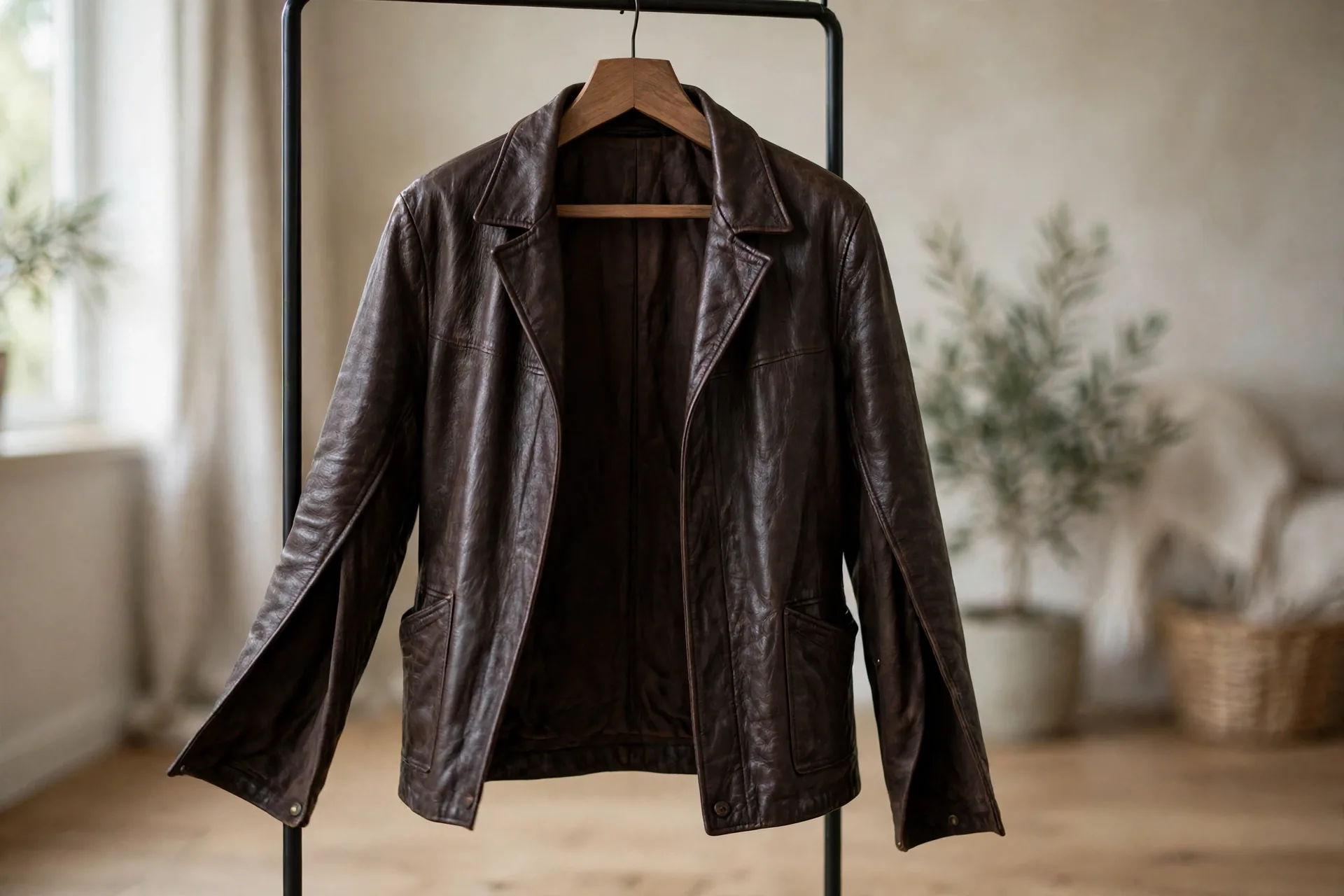
Room air does the job right. A jacket wiped with a damp cloth dries in a few hours. A jacket that got caught in rain needs a full day on the hanger. Hold the sleeves open so air moves through. Stuffing the sleeves with dry towels holds the shape while the leather dries.
Never store a jacket while it still feels cool or damp to the touch. Trapped moisture grows mold, and mold is a far bigger fight than dust.
Condition Right After Every Clean
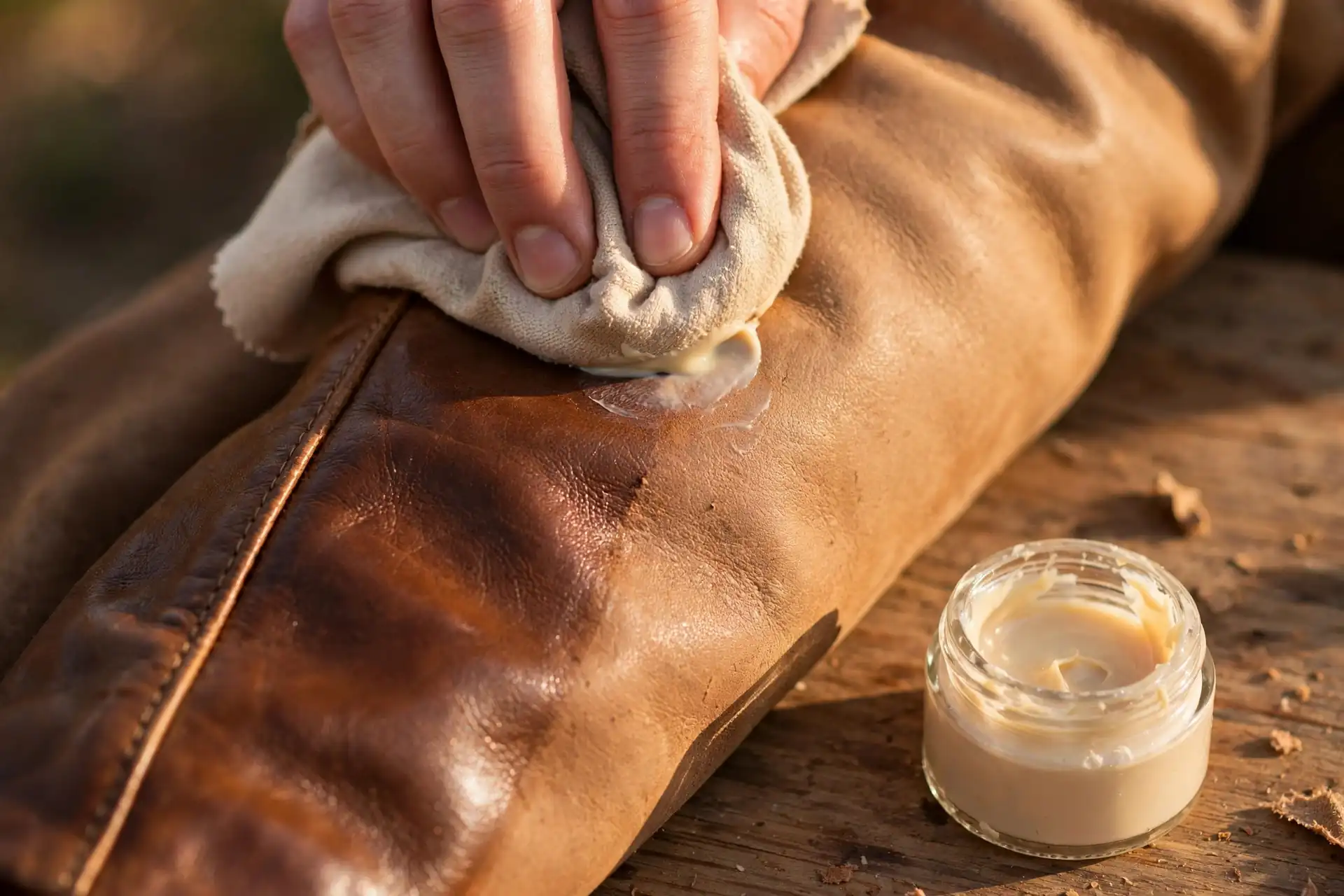
Soap and water lift dirt away, and they lift a share of the leather’s own oils with it. Dry leather feels stiff, looks dull, and cracks sooner. Conditioner feeds the hide and keeps it supple.
Warm a pea sized amount of conditioner between your fingers, then work it into the leather in small circles. Thin layers win. A thick coat sits on top, turns sticky, and pulls dust out of the air. Wipe off any excess with a clean cloth after fifteen minutes.
A jacket that feels stiff is thirsty, not ruined. Work a thin layer of conditioner in, let the leather drink overnight, and it loosens right up. Skip the kitchen shelf hacks you see online. Cooking oils stain the hide, turn rancid, and leave a smell that never leaves.
Timing and product choice get the full treatment in our conditioning guide, and the care hub covers how often each leather type needs a feed.
Smell and Mold, the Two Problems People Panic About
Most advice on how to clean a smelly leather jacket starts with sprays. A smelly jacket usually needs air before it needs products.
Hang it outdoors in shade for a day, inside out, and let moving air pull the scent out of the lining. Closed rooms and perfume sprays only mask the problem for a few hours.
For smells that hang on, bring in baking soda. Sprinkle a light layer inside the jacket, slip it into a cotton pillowcase, and leave it for a full day. Take it outdoors, shake the powder out, and brush off the rest. The soda pulls scent out of the lining as it sits.
Stubborn cases follow the steps in our smell removal guide.
Mold shows up as pale spots with a musty smell. It grows most often after storage in a damp closet.
Brush the jacket outdoors so spores fall outside your home. Mix equal parts water and rubbing alcohol. Dampen a cloth, run a hidden spot test, then wipe the spots. Dry the jacket fully in open air. Wide spread mold belongs with a specialist, and our mold removal guide shows you where that line sits.
How Often Should You Clean a Leather Jacket?
Wipe dust off after every few wears with a dry cloth or the brush. Run the full soap and water clean two or three times a year for a jacket in weekly use. Condition after every full clean, and add one extra conditioning round in the middle of dry winter months.
A jacket worn once a month needs less. One full clean a year, plus conditioning twice a year, keeps it in top shape. Storage rules matter just as much between wears, and our storage guide covers hangers, covers, and closet air in full.
Mistakes That Ruin Leather Fast
The leather jacket cleaning mistakes to avoid are simple, and each one below has killed real jackets. Read the list once and you will dodge every one of them.
- Soaking the jacket in water. Leather stiffens and shrinks as soaked fibers dry tight.
- Scrubbing with a stiff brush or scouring pad. Stiff bristles tear the grain and leave pale scratch lines.
- Cleaning with bleach, vinegar soaks, or harsh sprays. Strong chemicals strip color and eat the finish.
- Drying on a radiator or in direct sun. Fast heat cracks the surface and fades the color in patches.
- Hanging wet leather on a thin wire hanger. The wire cuts into soft wet shoulders and leaves dents that stay.
- Skipping conditioner after a clean. Clean leather with no oil feed dries out and ages years in a season.
- Storing the jacket in a plastic bag. Plastic traps moisture against the hide and feeds mold.
- Using shoe polish to fix color. Shoe products sit on top of jacket leather and rub off on clothes.
Doing It Yourself vs Paying a Pro
Professional leather jacket cleaning vs DIY comes down to one line: dust and light damage belong at home, set in damage belongs with a pro. DIY leather jacket cleaning handles dust, light dirt, and fresh small stains with ease.
Your cost is a tin of saddle soap, a bottle of conditioner, and half an hour.
Hand the jacket to a leather specialist when the damage sits below the surface. Set in oil stains, dye transfer from jeans, wide mold spread, torn linings, and fragile vintage hides all belong in expert hands. A pro clean costs real money, and it still beats replacing a jacket you love.
Ask one question before you hand any jacket over: does this cleaner work on leather every week, or once in a while? Weekly leather work is the answer you want.
Questions People Ask About Cleaning a Leather Jacket
1. How do you clean a leather jacket at home?
Brush off the dust. Wipe the surface with a cloth dampened in mild soapy water. Wipe again with a clean damp cloth. Air dry at room heat, then finish with a thin layer of conditioner. The full walkthrough sits in the steps above.
2. Can you wash a leather jacket in a washing machine?
No. Machine washing shrinks, stiffens, and cracks leather. Stick to surface cleaning with a damp cloth, or use a leather specialist for heavy soil and set in stains.
3. What is the best cleaner for a leather jacket?
A cleaner made for clothing leather, or plain saddle soap for smooth finishes. Both clean gently without stripping color. Avoid household sprays and furniture polish.
4. Can you use saddle soap on a leather jacket?
Yes, on smooth leather. Work up a light lather, wipe it off fully, and condition after. Keep saddle soap away from suede and nubuck, which need dry methods only.
5. How do you clean the lining of a leather jacket?
Turn the jacket inside out, wipe the lining with a cloth dampened in mild soapy water, focus on the collar and underarms, then hang it inside out until fully dry.
6. How do you remove stains from a leather jacket?
Blot fresh stains, never rub. Water marks lift with a damp cloth, while oil, grease, and ink each need their own method, covered in the stain guides inside the care hub.
7. How often should you clean a leather jacket?
Dust it after every few wears, run a full clean two or three times a year for weekly wear, and condition after each full clean.
8. Can leather get wet?
Light rain will not ruin a smooth leather jacket. Dry it slowly at room heat, away from heaters and sun, and condition once dry. Long soaking is the real danger.
9. Should I clean my leather jacket myself or take it to a professional?
Clean light dirt and dust at home. Take set in stains, mold spread, dye transfer, and vintage pieces to a leather specialist.
10. How do you clean a smelly leather jacket?
Air it outdoors in shade, inside out, for a full day. If the smell stays, clean the lining with a damp soapy cloth and dry it fully before wearing. Baking soda sprinkled inside overnight pulls out stubborn scents.
11. Can you clean a leather jacket with wet wipes or baby wipes?
Only as a quick dust pass in a rush, and only on smooth leather. Wipes carry soaps and scents made for skin, not hides, and the residue dulls the finish over time. A damp cotton cloth does the same job with zero risk. Keep wipes away from suede at all times.
12. Can you clean a leather jacket with vinegar?
Skip it. Vinegar is an acid. It dries leather out, dulls the finish, and its sharp smell sinks into the lining and stays. Mild soap and water clean just as well with none of the risk.
13. How do you clean a leather jacket from a thrift store?
Check the pockets, seams, and lining for mold first, and treat any spots before you start. Then run the full clean in this guide, wipe the lining with extra care, and air the jacket outdoors for a day before you wear it.
A Clean Jacket Ages Beautifully
Leather rewards small, steady care. Twenty minutes with a brush, a cloth, and a dab of conditioner keeps a jacket soft, rich in color, and ready for years of wear. Treat cleaning as part of owning the jacket, like lacing boots or charging a phone. The leather gives you its best side every single season.
The full leather jacket care guide pulls every routine in this series into one place, from conditioning schedules to long term storage.