How Long Do Leather Jackets Last? Honest Years by Hide and Grain
How Long Do Leather Jackets Last? Honest Years by Hide and Grain
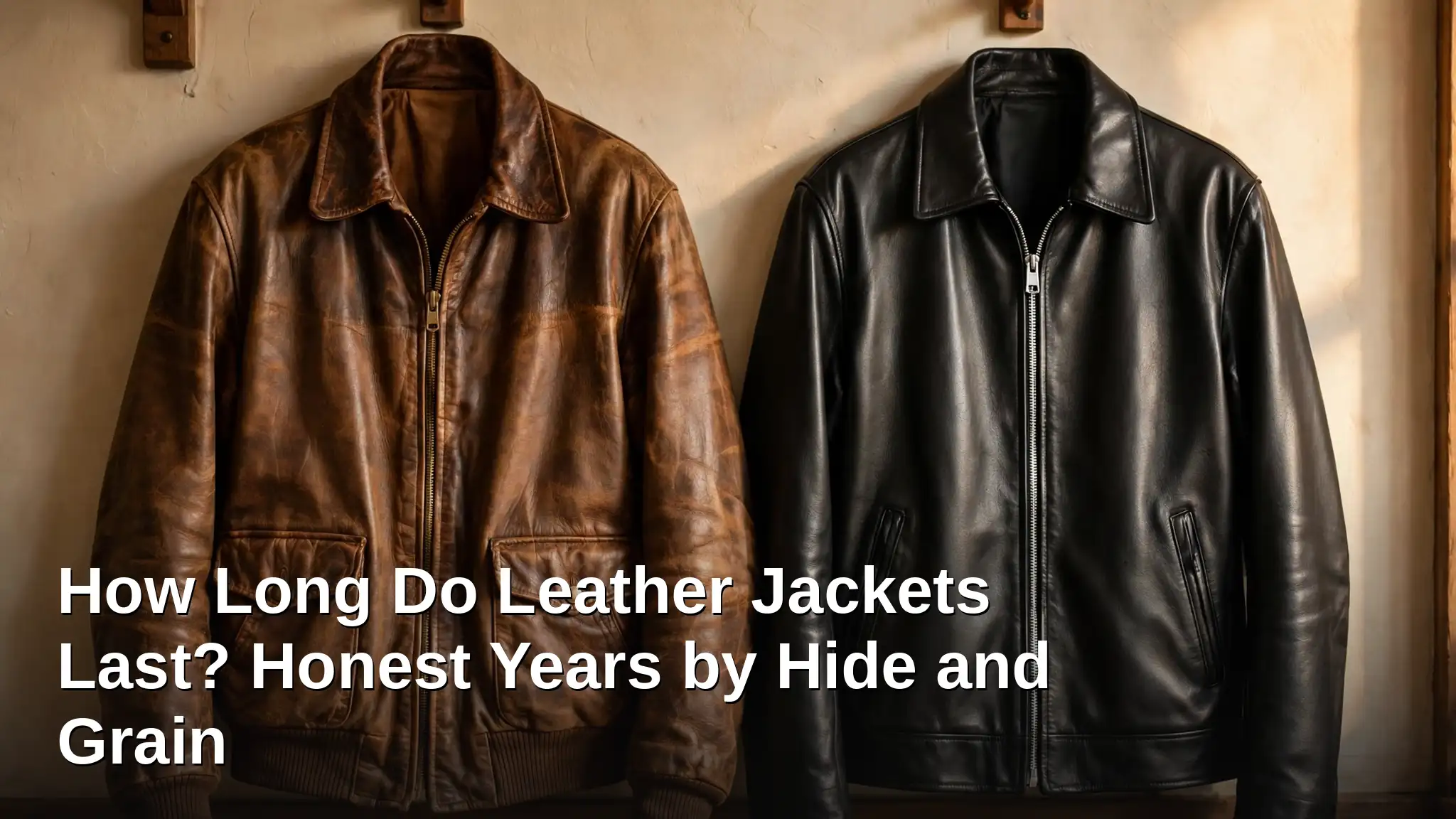
Two jackets share one closet rail at a house clear out. One is three years old, and grey flakes fall off its collar at a touch. Beside it hangs a coat that turns twenty five this fall, and it still shrugs off rain. Both tags said leather jacket. So how long do leather jackets last? Honest answers start at one hard year and reach three full decades. Hide, grain, build, and your habits pick the number.
Ask how long does a leather jacket last in a shop and you hear a round claim with no facts under it. This page gives the ranges owners see in real life. Each range comes with its terms. Wear pattern, hide type, and care level sit right next to the years, where they belong.
A sound real leather jacket lasts ten to twenty years of regular wear. Thick full grain cowhide with steady care passes twenty years and reaches thirty. Lambskin and corrected grain run shorter lives. Faux leather gives one to three years before the coat cracks and peels. Care and use move every one of those numbers.
The ranges hold across the rails of men’s leather jackets and women’s leather jackets alike. Cut changes the look. Skin and build set the clock. Read the clock for your jacket below.
The short answer, with its terms on show
A leather jacket lifespan is not one number. It is a band, and the band is wide. At the top sit thick hides, full grain faces, strong thread, and owners who feed the leather. Thin skins, coated faces, weak builds, and closets that bake in the sun sit at the bottom.
Ten to twenty years is the honest middle for a well made real jacket in weekly wear. That means worn two or three days a week, through fall, winter, and spring. Daily wear on a work site cuts the same jacket down hard. Light wear on weekends stretches it long past the band. The years on this page assume street wear in town, not trade work in all weather.
Price alone tells you little here. A costly fashion jacket in thin lambskin dies young by design. Plain work jackets in thick cowhide shrug off decades. What you pay for is the hide, the grain, and the build. Those three set the lifespan long before the tag does.
Why do leather jackets last so long?
Ask why do leather jackets last so long and the skin itself answers first. Hide is a tight mat of fibres crossed in all paths. The mat flexes at the elbow thousands of times a year and holds. It takes scrapes that tear woven cloth clean through. Rain beads on a fed surface and dries off with no harm.
Leather also takes repair well. Torn seams get fresh thread. Dead linings get swapped out. Dry panels drink oil and bend again. Cloth coats and coated goods give you none of that grace. Once their face fails, the whole garment fails with it.
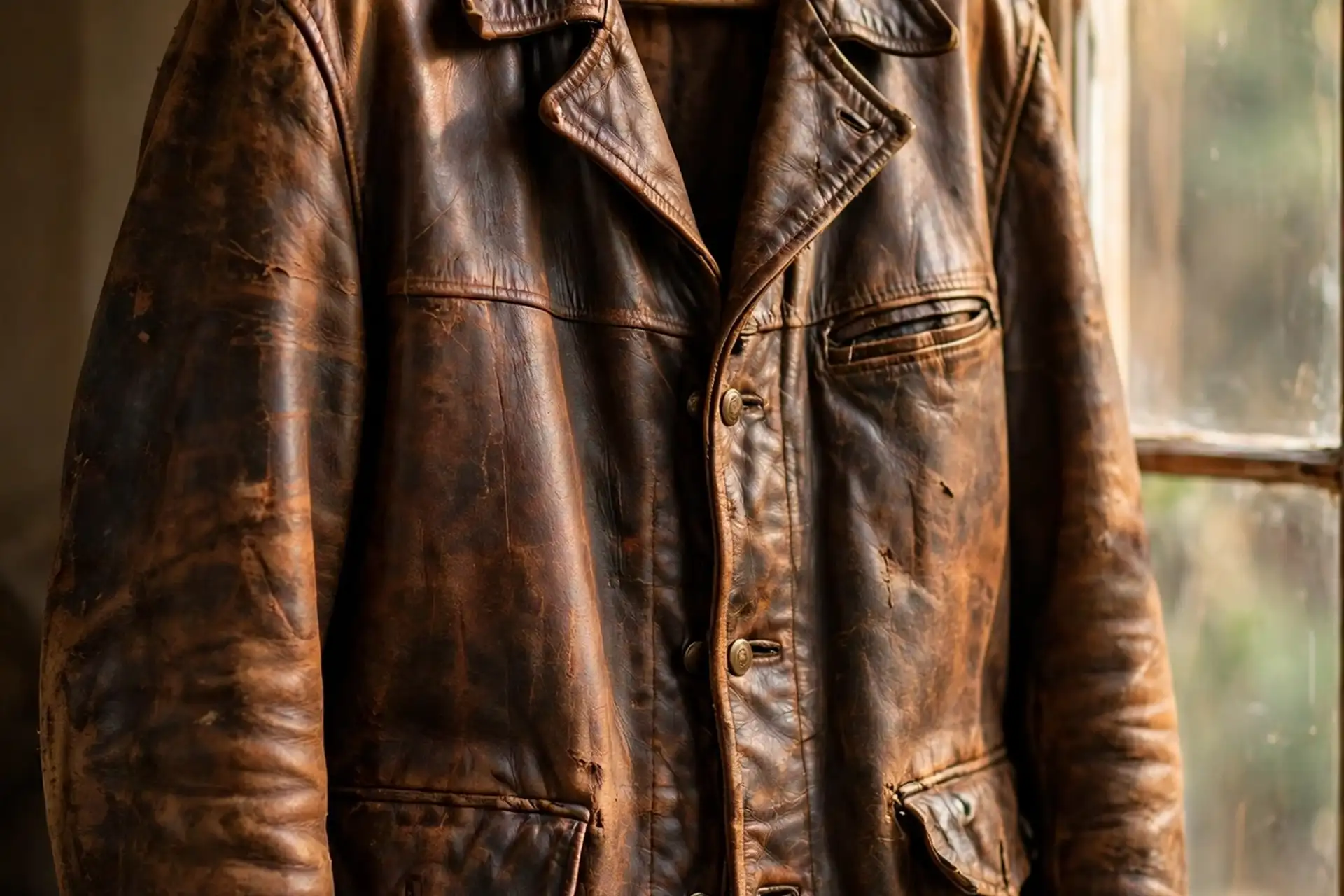
Wear even helps the look for years at a time. Real hide darkens at the touch points and softens at the folds. Owners call that patina, and it reads as character, not damage. A jacket at year ten often looks richer than it did at year one. Few goods in a closet can say that.
Lifespan by hide: cowhide, goatskin, lambskin
Cowhide sits at the top of the life table. Thick cowhide in street wear runs twenty to thirty years with care. Riders and workers get fifteen to twenty hard years from the same hide. The skin is dense, slow to tear, and calm under rain and scrape.
Goatskin runs a close second and weighs far less. Owners see fifteen to twenty five years from a goatskin jacket in normal use. The grain is pebbled and tight, and the skin shrugs off scuffs well. Old flight jackets in goatskin still turn up in fine shape, and that track record is earned.
Lambskin trades years for softness. It feels kind on the skin from day one and drapes like cloth. The cost is strength. Gentle owners get eight to fifteen years from lambskin. Hard daily wear cuts that to five to eight. Sheep skin sits near lambskin for softness, with a touch more give in the fibres. Our lambskin, cowhide, and goatskin comparison walks through the feel and care split hide by hide.
None of these numbers are a pledge. A lambskin jacket worn on Sundays and fed twice a year outlasts a cowhide jacket left in a hot car. Hide sets the ceiling. Habits set the real date.
Lifespan by grain: full, top, corrected
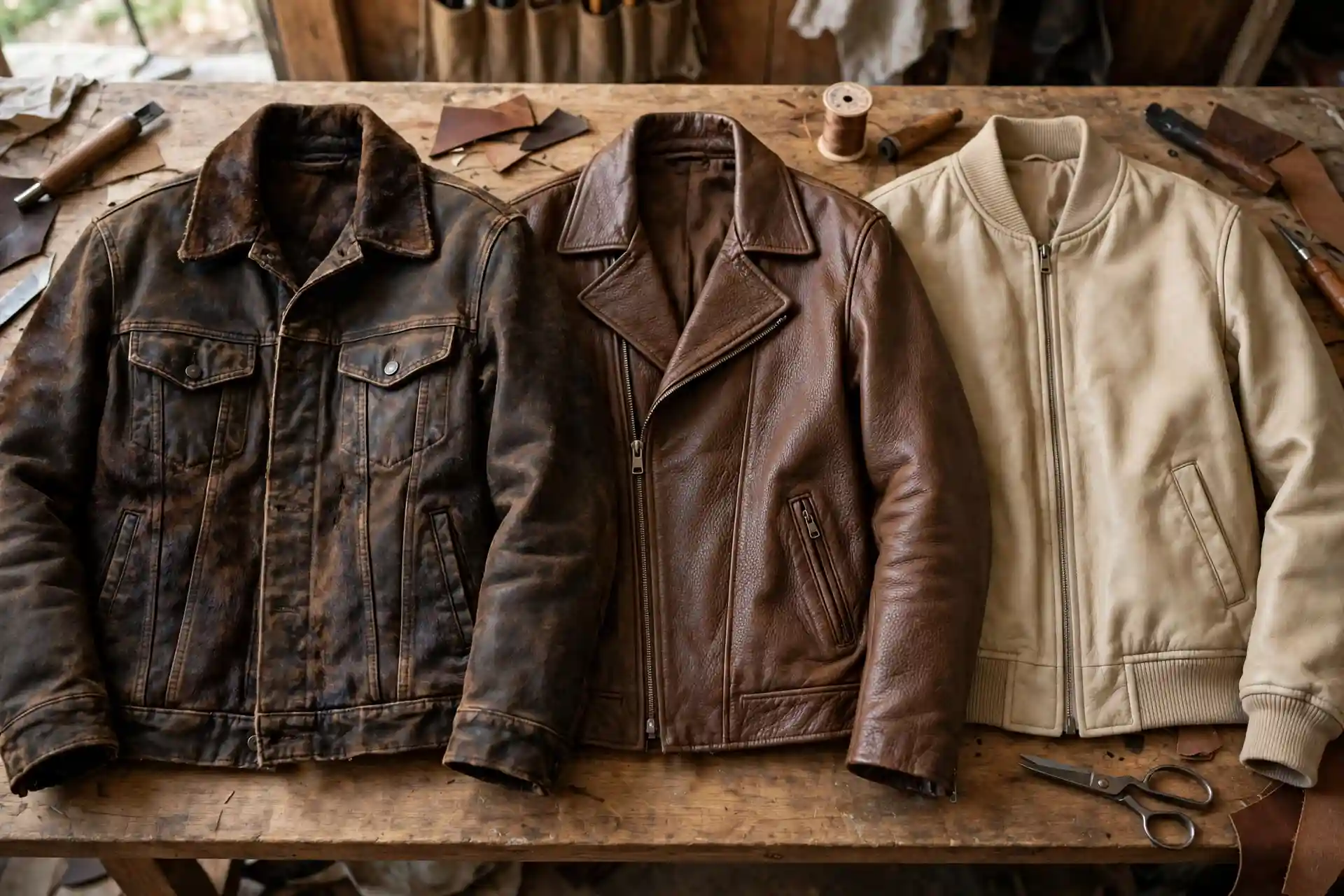
Grain is the layer story of the hide, and it moves the years a lot. The full grain leather jacket lifespan leads the pack. Full grain keeps the whole top skin, fibres packed tight as nature left them. With care, owners report twenty to thirty years, and fine jackets pass forty. The face scuffs, shines, and heals in look with each feed of conditioner.
Top grain has a light sand and a fresh finish coat. The sanding thins the strongest layer a touch. Expect ten to twenty years in regular wear. The finish guards against stains, and the coat itself wears thin at flex points near the end of that span.
Corrected grain gets more surface work and a pressed pattern. The base is real hide, but the face is built up. Seven to fifteen years is the fair band. Split leather and bonded stock sit at the floor. Splits lack the tight top skin, and bonded stock is fibre scraps pressed in glue. Two to seven years covers most of them, with peeling as the usual end. Grade any jacket in the shop with our leather jacket quality checklist so the grain claim on the tag gets tested before money moves.
What wears out first on a real jacket
The hide is rarely the first part to quit. Small parts fail in a set order, and owners who know the order save money. Leather jacket durability over time is a story of parts, not one date.
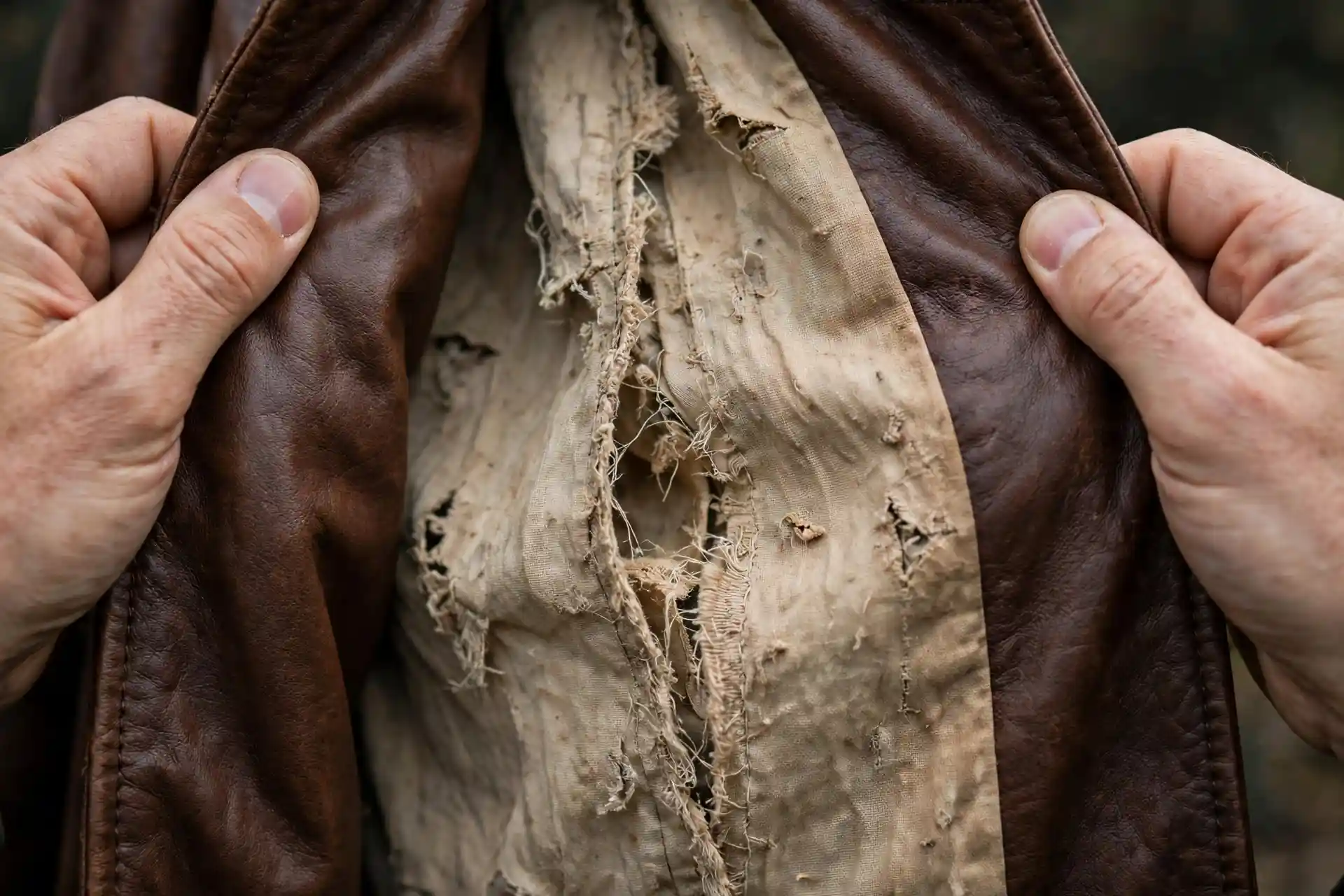
Linings go first. Thin satin and cheap cloth tear at the armpits and pockets in five to ten years. A torn lining looks grim and feels worse. It is also a normal repair. A tailor swaps a lining in a day or two, and the jacket feels new inside.
Zips come next on the list. A strong metal zip lasts the life of the jacket. Its slider wears first, and a slider swap is cheap and fast. Weak zips with thin teeth fail in two to five years. Teeth that snag or split at the base mark the end for that zip, not for the jacket.
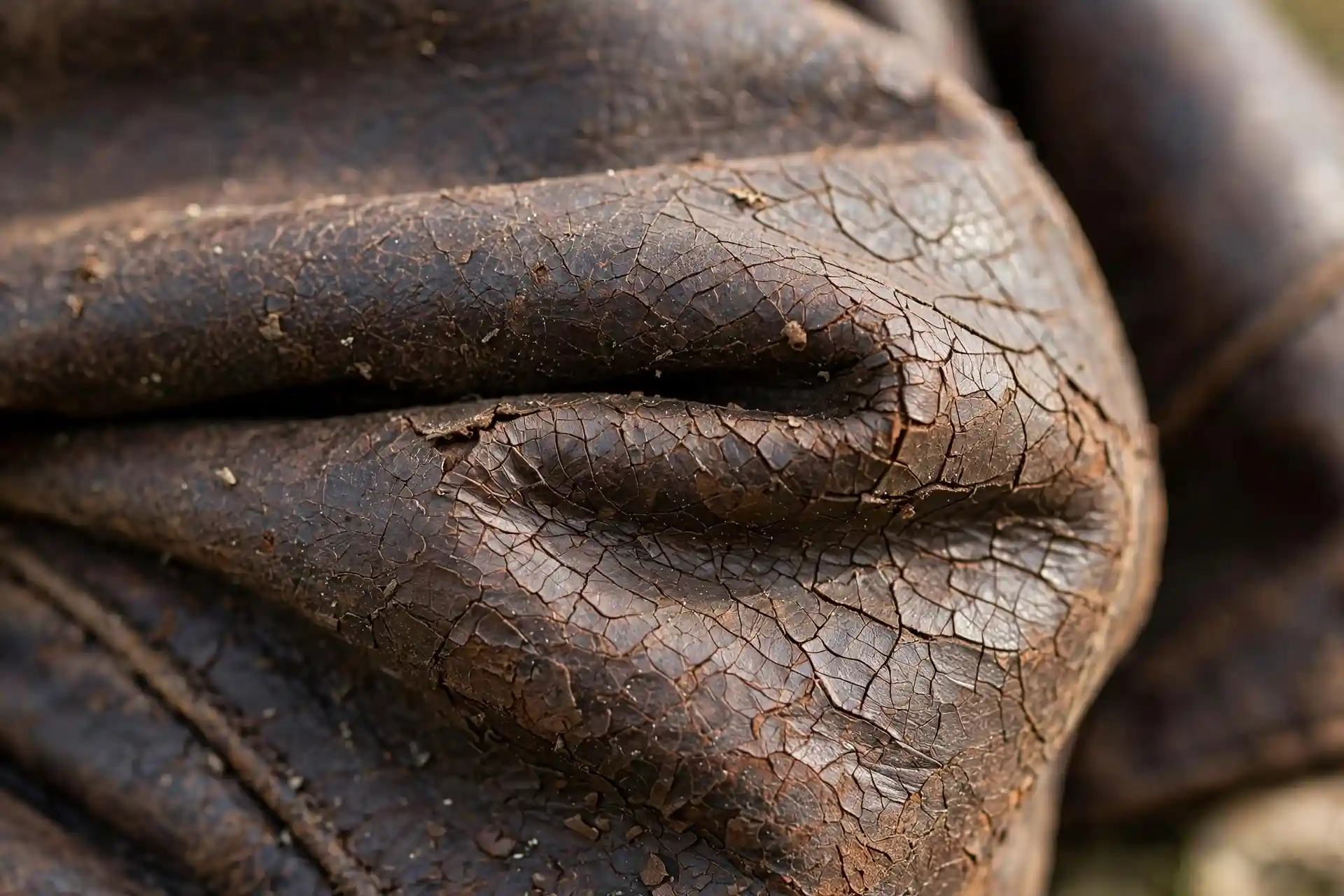
Thread holds for decades on a sound build. Stress points give up first: pocket mouths, cuff edges, and the seat of the back panel on riders. A loose run of thread fixed early costs little. Left alone, the seam opens and the repair bill grows. Collars and elbow folds crack last, and only on dry, unfed leather. Those cracks are a care report card, not a birth date.
Real vs faux: the widest gap on this page
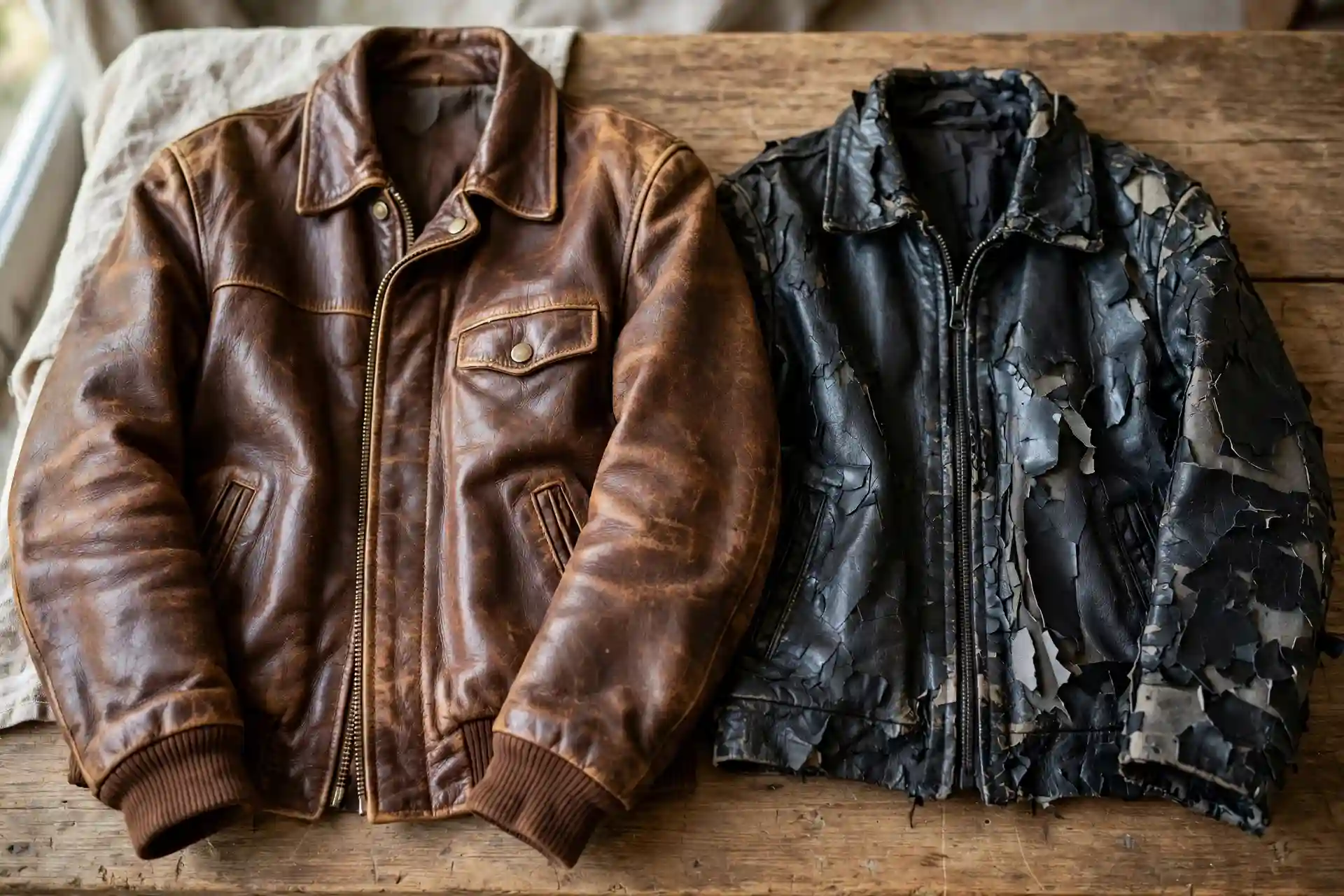
How long do real leather jackets last next to fake ones is the starkest split in this leather jacket longevity guide. A real jacket in the middle band gives ten to twenty years. How long does a faux leather jacket last? One to three years of regular wear, most of the time. Gentle use and cool storage stretch faux to four or five. Daily wear in sun and heat cuts it under a year in bad cases.
Why do real leather jackets last longer than faux? The build tells the story. Real hide is one skin, strong through its full depth. Faux is a thin plastic coat glued to cloth. Each bend works that glue line. Heat and sun dry the coat out. Fine cracks open at the elbows, collar, and seat. The cracks lift in flakes, and no oil or cream feeds plastic back to life.
Our faux leather vs real leather jacket guide shows the two builds layer by layer. And if a tag leaves you in doubt, the real leather tests in our guide settle what the jacket is made of. Know the build, and the lifespan stops being a guess.
Can a leather jacket last 20 years?
Yes, and the terms are plain. Can a leather jacket last 20 years? It can, when the jacket starts as full grain or strong top grain hide. Sound build comes with it: metal hardware and tight seams. Steady care matters too, a feed of conditioner once or twice a year. And the wear has to stay street wear, not daily abuse on a work site.
Plenty of owners clear the mark with room left. Vintage jackets from the sixties and seventies still sell, still get worn, and still hold their shape. Those survivors share a past: good hides, plain cuts, and owners who hung them up right. Twenty years is not a rare feat for real leather. It is the standard a good jacket is built to meet.
Do leather jackets last forever?
No, and any seller who says so is selling fog. Do leather jackets last forever? Nothing worn on a body does. Sun bleaches and dries the fibres year after year. Flex at the same folds works the surface thin in time. A jacket can outlast its first owner and the trend cycle that sold it. It can serve thirty or forty years and still look proud. Forever is not on the table, and it does not need to be. Three decades of wear from one garment is a run few goods in your home will match. The style side of that long run gets its own read in our take on whether leather jackets are still in style.
Habits that add years, habits that cut them
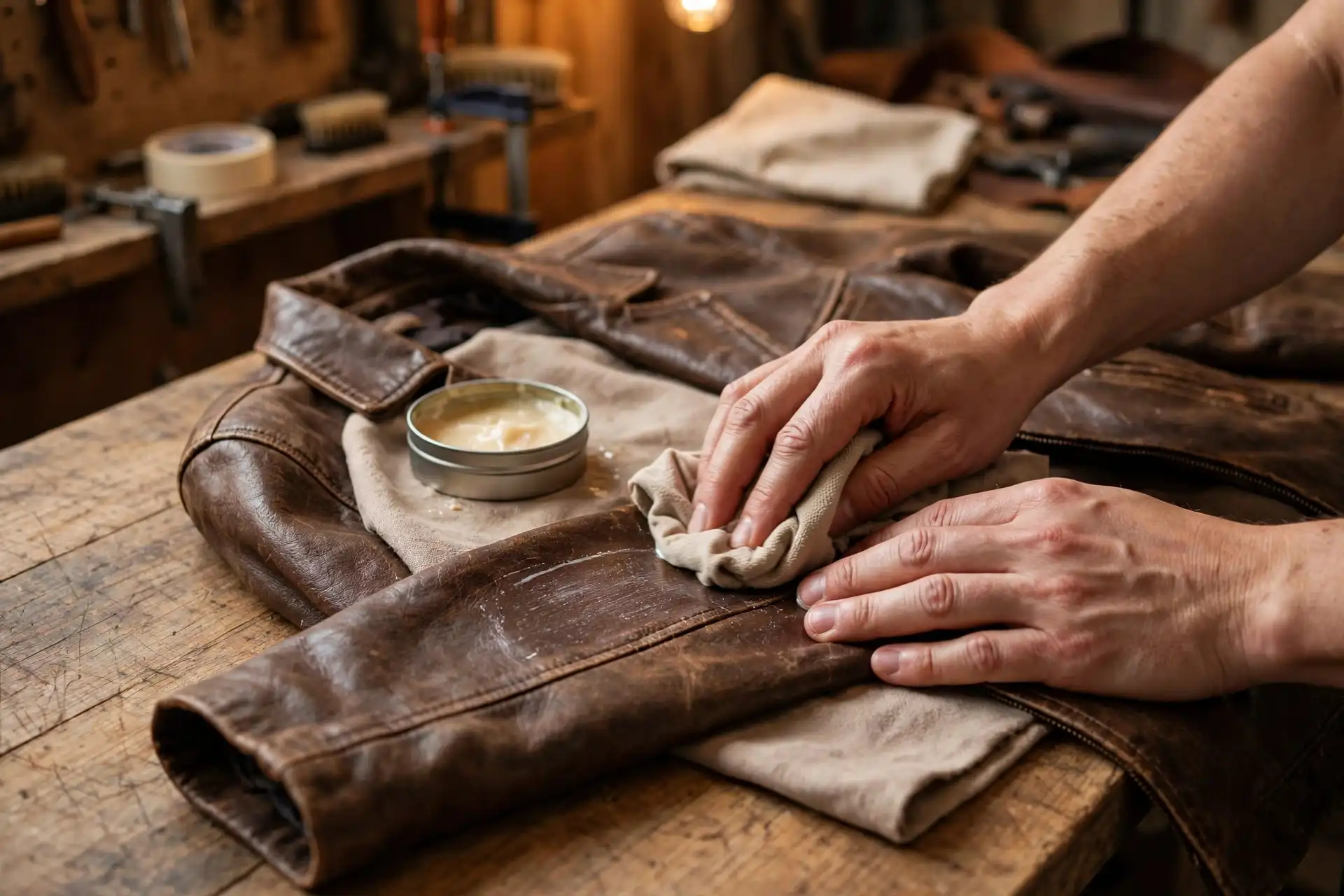
How to make a leather jacket last longer comes down to six plain habits. Feed the hide. Our conditioning guide sets the rhythm: once or twice a year for street wear, more for dry climates. Clean off salt, dust, and city grit before they sit in the grain. The leather jacket cleaning steps cover safe home care with no harsh sprays.
Hang the jacket on a wide hanger that fills the shoulders. Thin wire bends the shoulder line out of shape in a season. Store it in a cloth cover, in a cool room with air flow. Our storage guide gives the full rules. Rest the jacket a day between wears when you can. Fibres recover their shape at rest, the same way good shoes do.
The year cutters are just as plain. Sealed plastic bags trap damp and grow mould on the lining. One hook by a hot vent dries a shoulder to cardboard. Full sun on a car seat bleaches and cracks the back panel. Folding a jacket into a drawer creases the hide at hard lines. Daily wear with no rest and no feed halves the life of even a fine jacket. None of these kill fast. They shave a year here, two years there, and the sum shows at year eight.
Signs your leather jacket is wearing out
Some wear is patina, and some wear is a warning. Learn the signs your leather jacket is wearing out so you act while repairs still pay.
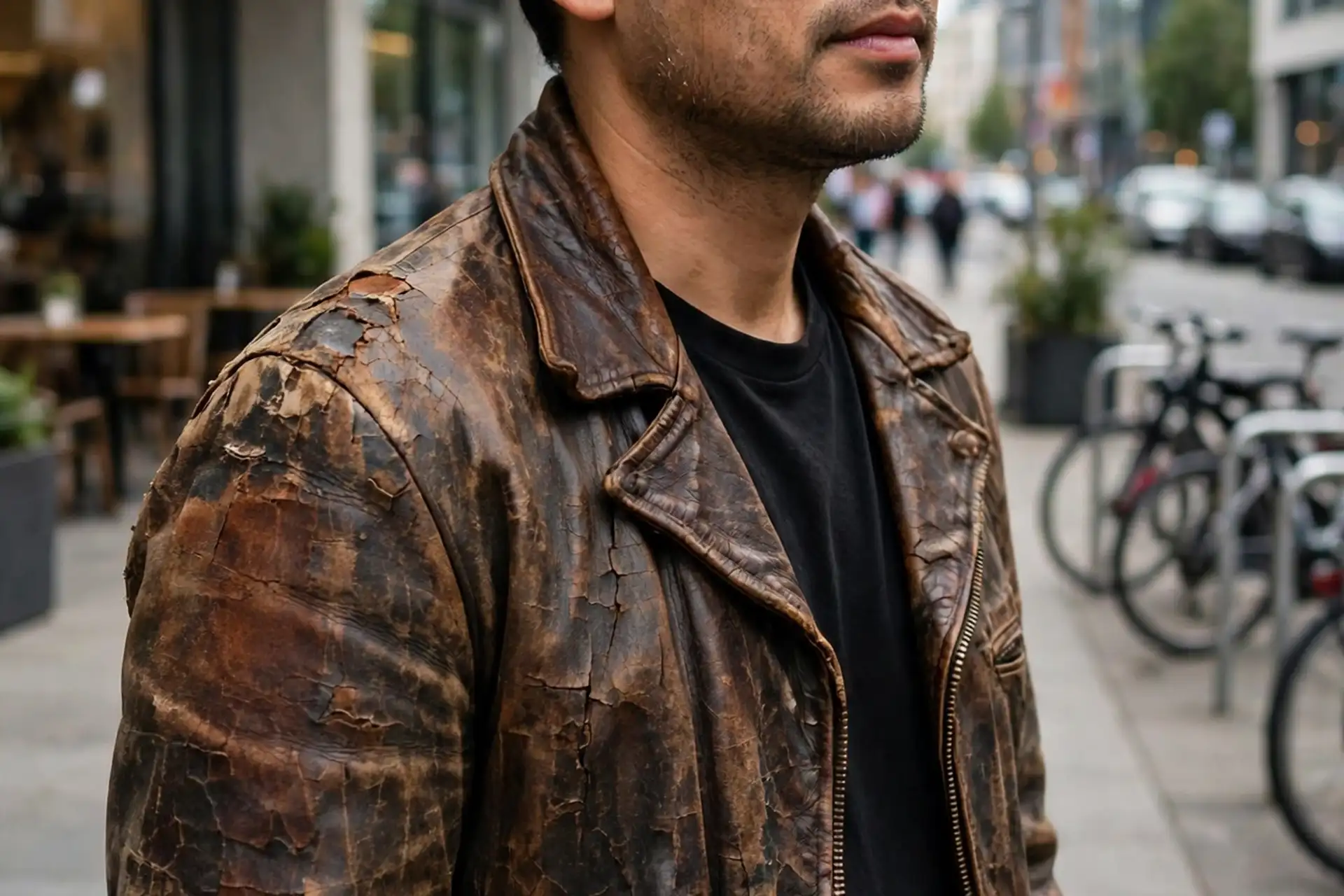
Pale cracks at the elbow and collar folds that stay pale after a feed mean the surface has split. Finish lifting in sheets means the coat has let go of the hide. That sign marks faux and bonded goods most years, and it ends them. A lining torn past one patch job is a reline call, still worth it on a sound shell. Missing zip teeth end the zip, and a good repair shop fits a fresh one.
Two signs close the book. Leather gone stiff and papery through a whole panel has lost its oils past rescue. Tears that run along a seam line and into the panel mean the fibres there have given up. At that point the panel itself is done. Patch the small stuff early, reline when the inside goes, and retire the jacket when the skin itself fails. That order keeps money in your pocket and a good jacket on your back.
Leather vs denim: which one lasts longer?
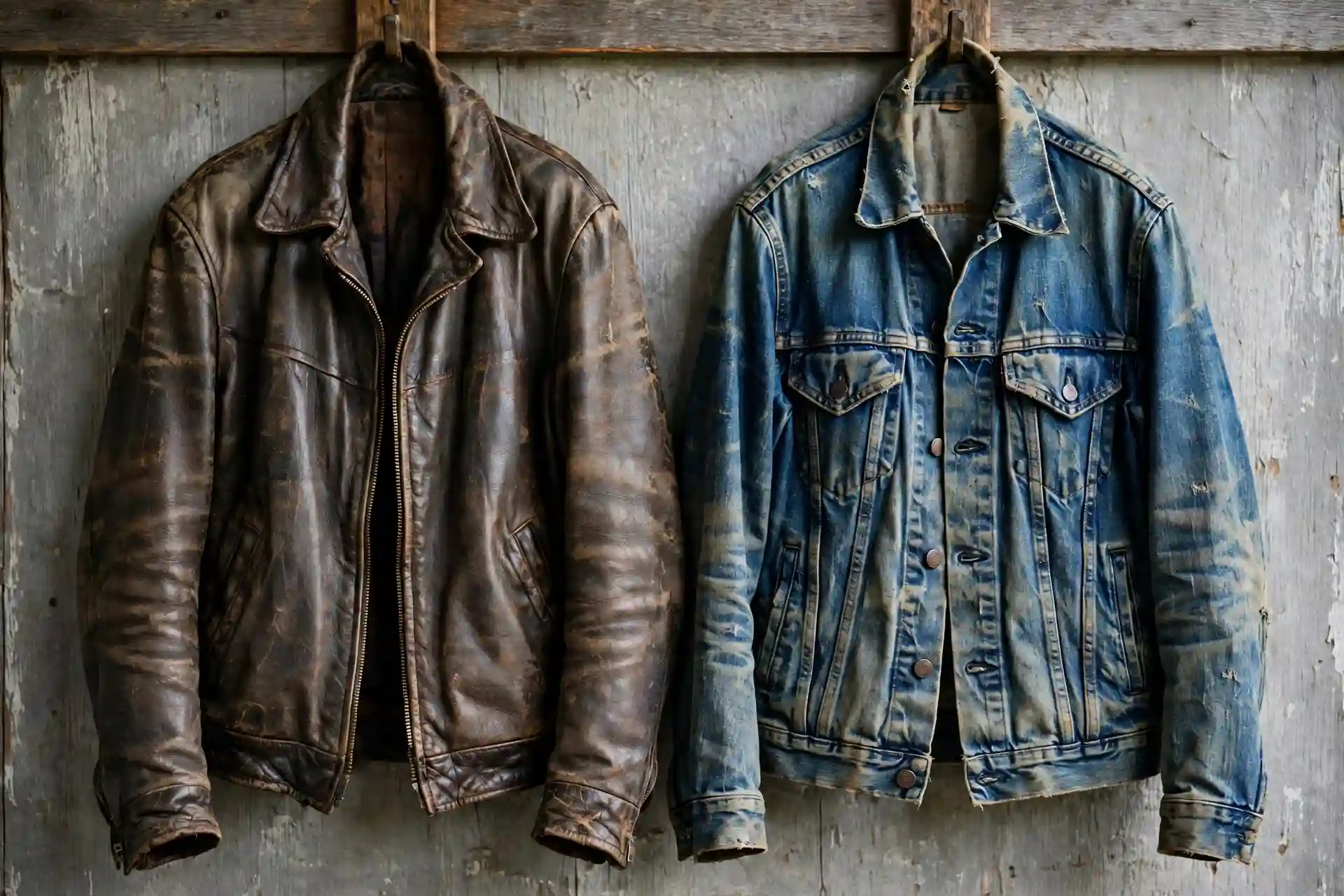
Denim fans ask about leather jacket vs denim jacket longevity with good cause. A strong denim jacket is a long life garment too. Heavy denim gives ten years and more in regular wear. It fades fast at the folds, thins at the elbows, and tears at the cuffs in the end.
Leather wins the long game on two counts. A fed hide keeps its strength as it ages, where denim loses fibre with each wash and wear. And leather takes repair at the panel level for decades. Denim patches well at small holes, yet a thinned seat or elbow has no fix that lasts. Both earn their place in a closet. Given the same years and the same owner, the leather jacket is the one still standing at the end.
The money math: cost per wear
Is a leather jacket a good investment? Run the wears, not the tag. Say you wear a real jacket 100 days a year across ten years. That is 1,000 wears from one garment. Wear it fifteen years and the count hits 1,500. Cost per wear leather jacket math is just the price split by that count. The count is where real leather pulls away.
A faux jacket at 100 days a year for two years gives 200 wears. Then it peels and goes. You buy the next one, and the next, and each restarts the count at zero. Five faux jackets in ten years still trail one real jacket in wears, and the pile in the bin tells its own story. Our price hub on why leather jackets cost what they do breaks down where the money in a real hide goes. Long life is a fair chunk of that answer.
Picking for the long run starts at the buy. Our guide on how to choose a leather jacket puts hide and build first, ahead of color and cut. That order is the whole trick. A jacket picked for its skin outlives a jacket picked for its look, near every time.
What our bench sees come back
A maker reads lifespan in returns, not in claims. At Denver Jackets, our own unit works sheep skin, cow, goat, and lamb. The bench cuts full grain, top grain, and corrected grain hides. Finishes on the bench run matte, natural, polished, pull up, distressed, vintage wash, and embossed. Sizes run S to 4XL, with made to measure work on each design.
Jackets come back to a bench for linings, zips, and loose seams. The hides come back near never. That pattern shapes how the bench builds: strong thread, honest hardware, and skins picked for the long band of the ranges on this page. Buyers who want a build with no off the rack match look at custom jackets and get the same bench standard in their own cut. Long life is not a tag line here. It is the repair log, read plain.
Questions owners ask us
How long does a leather jacket last?
A well made real leather jacket lasts ten to twenty years of regular wear. Thick full grain cowhide with steady care passes twenty and reaches thirty. Thin fashion hides and coated grains run shorter. Faux leather gives one to three years. Your wear pattern and care rhythm pick the spot in the band.
How long does a real leather jacket last vs faux leather?
Real leather gives ten to twenty years in the middle band, with top builds past thirty. Faux gives one to three years before the plastic coat cracks and peels. The gap comes from the build. Real hide is strong through its full depth. Faux is a thin coat on cloth, and the coat fails first.
Can a leather jacket last 20 years?
Yes, with the right start and steady care. Pick full grain or strong top grain hide, metal hardware, and tight seams. Feed the leather once or twice a year. Hang it on a wide hanger in a cool room. Street wear on those terms reaches twenty years as a normal result, not a lucky one.
How do you make a leather jacket last longer?
Feed it, clean it, hang it right, and rest it. Condition the hide once or twice a year. Wipe off salt and grit after wet days. Store it in a cloth cover on a wide hanger, away from heat and sun. Fix loose thread and small tears early, while the repair is still small.
Why do real leather jackets last longer than faux?
Real hide is a dense mat of fibres with strength through the whole skin. It flexes, takes scrapes, drinks oil, and accepts repair. Faux is a plastic coat glued to cloth. Flex and heat crack the coat, the cracks flake, and no feed restores it. The base goods decide the gap, and the gap is wide.
What are the signs a leather jacket is wearing out?
Pale cracks at folds that stay pale after feeding. Finish lifting in sheets. A lining torn past patching. Missing zip teeth. Leather gone stiff and papery across a whole panel. Four of them call for repair. That last sign closes the book on that panel.
Is a leather jacket a good investment piece?
On cost per wear, yes, for owners who wear their jackets. A real jacket worn 100 days a year for ten years gives 1,000 wears. Few garments match that count at any price. The catch is taste: the jacket has to suit your life for years. Pick a plain cut in a core color, and the math holds.
How does the cost per wear of a leather jacket compare to faux?
Count the wears each one gives before it dies. Real leather gives 1,000 to 1,500 wears across its life at 100 days a year. Faux gives about 200 wears in two years, then peels. Split each price by its wear count. The real jacket lands far lower per wear, and it lands there again with each year it serves.

Last word from the rail
A leather jacket is one of the few buys that pays you back in years. Buy the hide right, feed it on a rhythm, and hang it with care. The jacket on your rail at year one is the jacket at year twenty, softer, darker at the touch points, and shaped to your life alone. That is the whole promise of real leather, and it is a promise the material itself keeps.