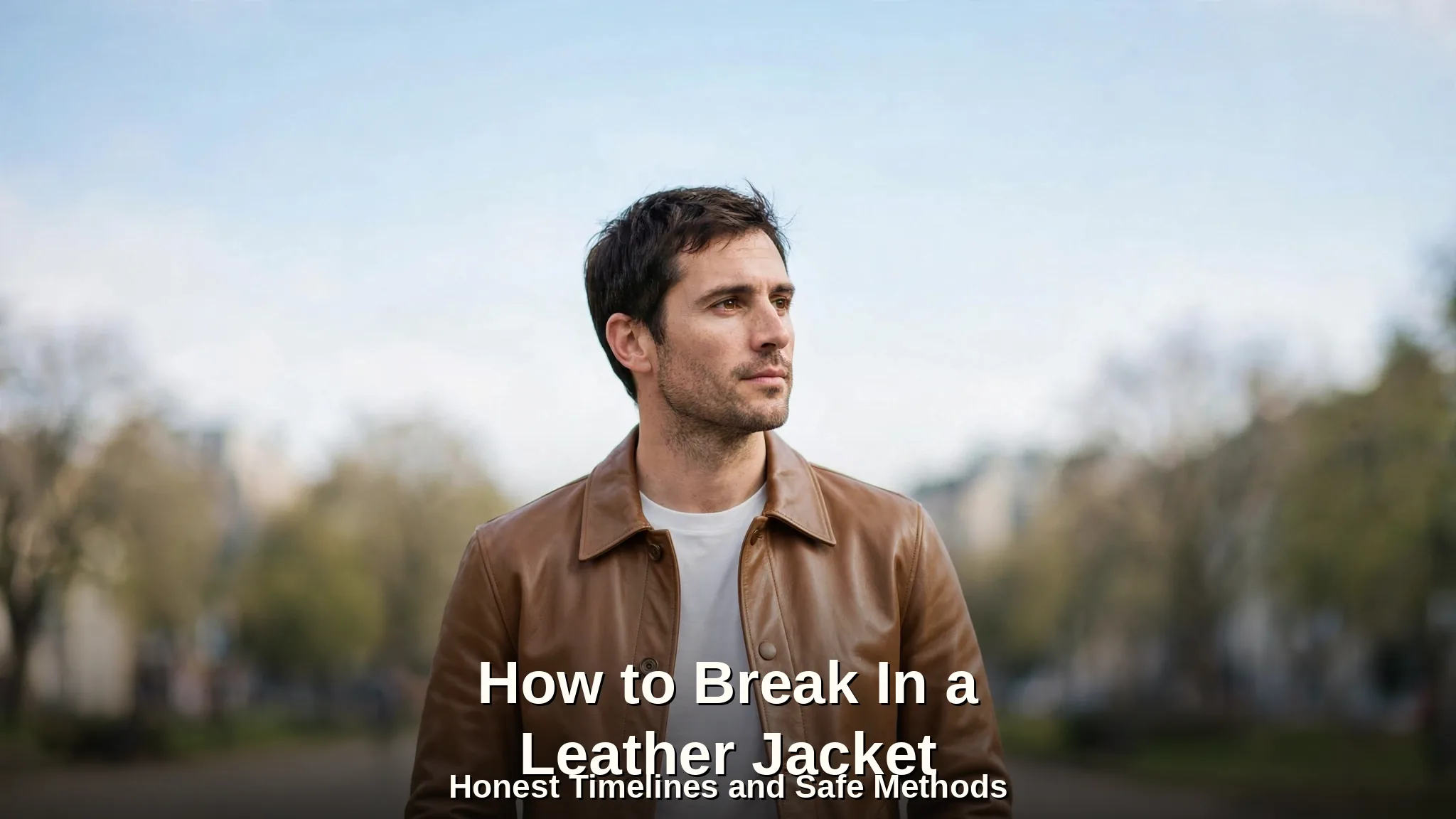
How to Break In a Leather Jacket Without Ruining It
How to Break In a Leather Jacket Without Ruining It
You lift the jacket out of the box and it stands up on its own. Your arms slide in and the elbows refuse to bend. The shoulders sit high and square, like the jacket still belongs to a statue. Learning how to break in a leather jacket starts right there, in that stiff first minute. Nothing is wrong with your jacket. Your body is not the problem either. Real leather starts firm, then learns your shape through honest wear. This page gives you the safe route. You get timelines per hide, a daily wear routine, spot work for the stubborn zones, and straight verdicts on the tricks people swear by online. A few of those tricks help. The rest wreck good leather in a single afternoon.
The break in, in one paragraph
Wear does the work, and nothing swaps in for wear. Lambskin softens in about two weeks of daily use. Thick cowhide takes four to eight weeks of the same steady treatment. Hours on your body flex the fibers at the elbows, shoulders, and waist until the hide keeps your shape. Conditioner feeds dry fibers and speeds the work along. Soaks, rubbing alcohol, and heat only dry the hide and scar the finish. Patience plus hours beats every shortcut named on this page.
Why a new jacket feels like a board
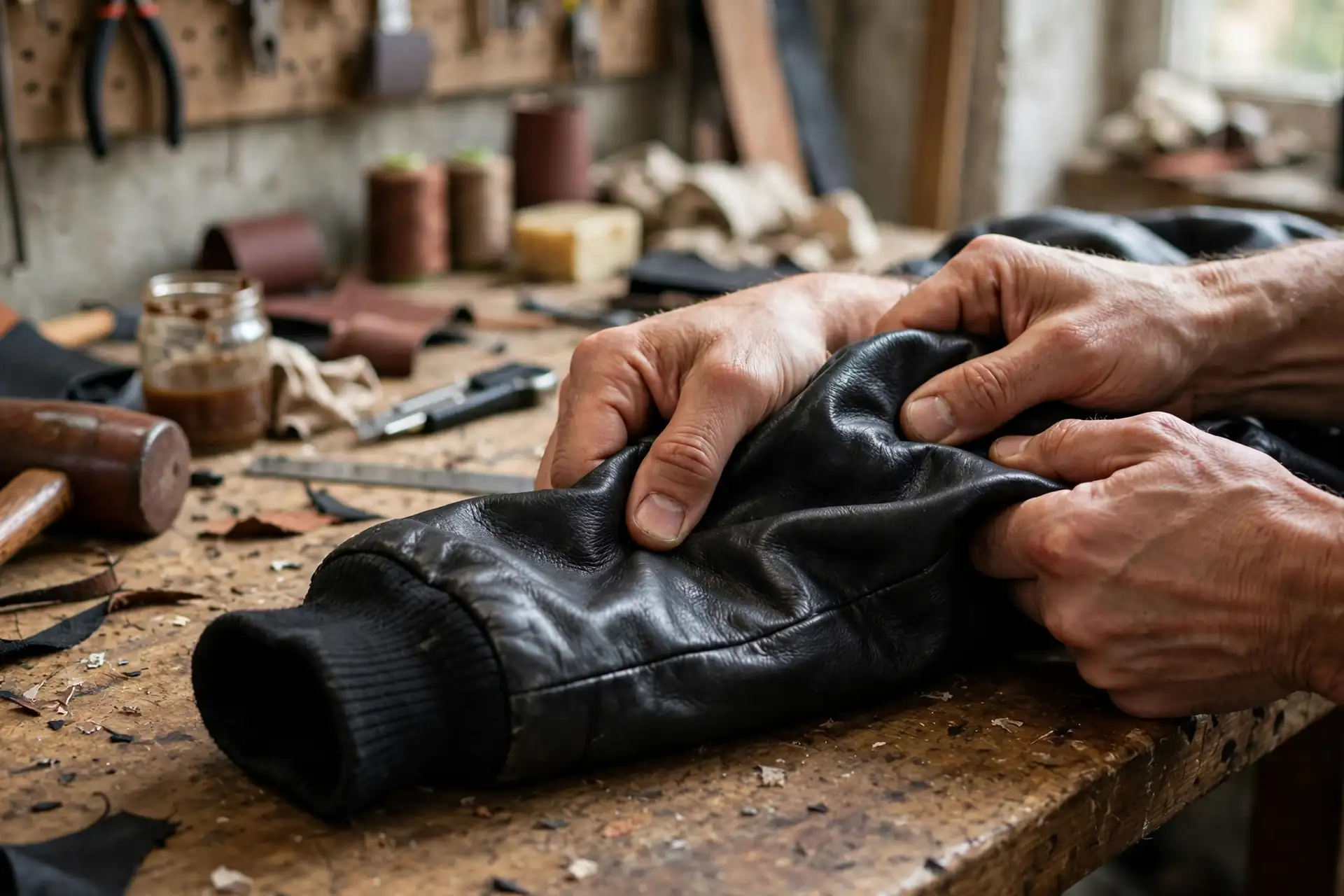
Think about what the hide has done so far. It was cut, sewn, and shipped flat. The fibers inside have never bent around a living arm. A new panel has no memory of elbows, reaches, or steering wheels. Fresh finish adds to the firm feel. Matte and polished coats sit on the surface like a thin shell. Heavy hides add their own vote. A thick cowhide panel resists bending far more than a thin lambskin panel ever will.
The search new leather jacket stiff what to do fills up every autumn for this reason. New owners fear they bought the wrong thing. On the bench at Denver Jackets, panels come off the needle firm and flat every single day. That firm feel is raw material, not a flaw. Tanning leaves the hide stable and dry enough to cut and sew cleanly. Your body heat and movement wake the natural oils back up over time. So how to soften a leather jacket without hurting it? You flex the fibers in small, daily doses. Feed them when they run dry. And skip every trick that shocks the hide. The next sections walk that plan in order.
How long your hide needs
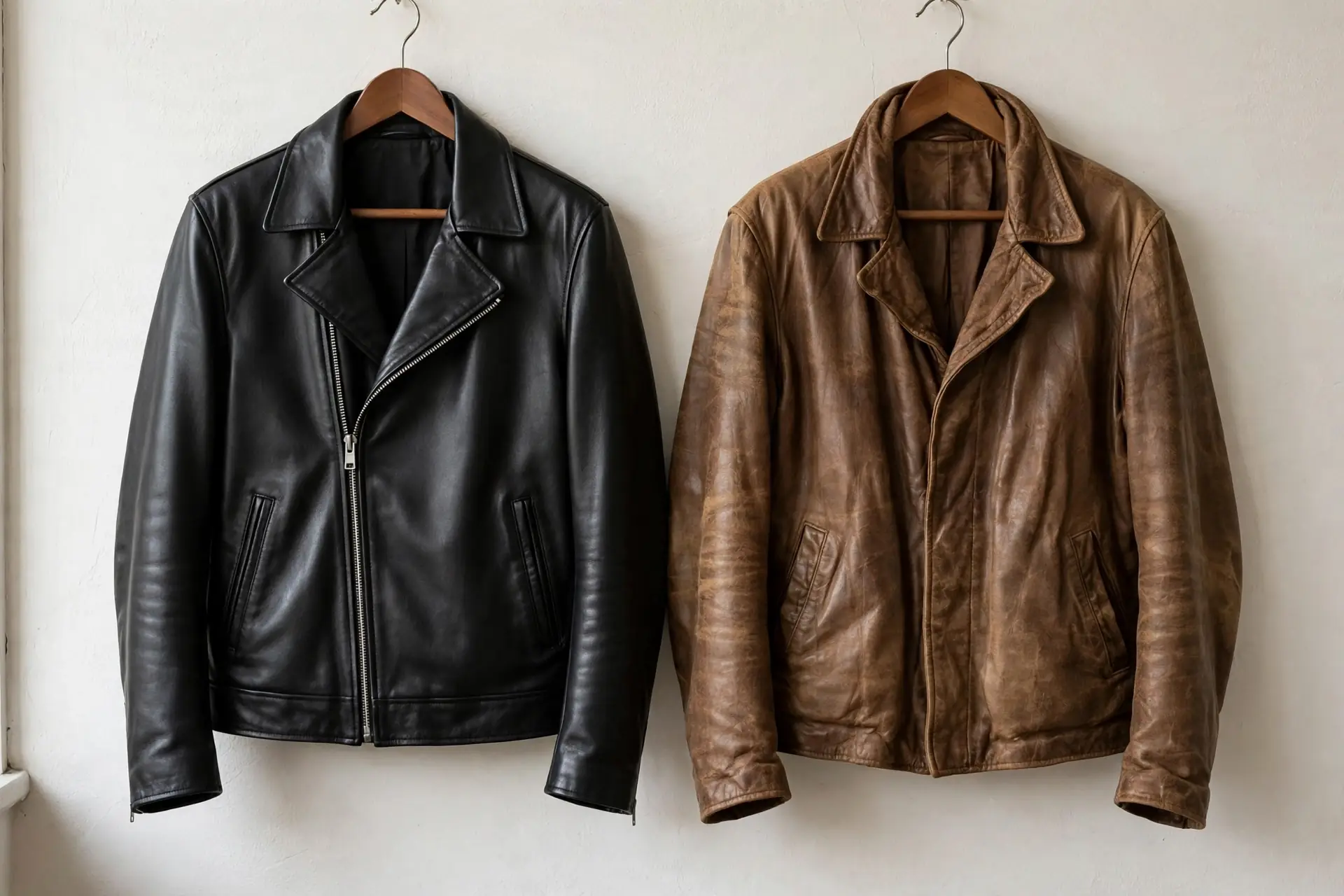
Owners ask about how long to break in a leather jacket more than any other part of this. The honest answer splits by hide, since fiber thickness sets the clock. It also splits by cut, which is why learning how to break in a leather jacket by style matters. A slim cafe racer in lambskin and a heavy biker in cowhide live on different clocks entirely. The lambskin vs cowhide gap is the widest one on this page. Use the ranges below as your map, then judge by feel rather than the calendar.
Lambskin and sheep skin: days, not months
Lambskin fibers are thin and close knit. The hide drapes early and bends with very little fight. Most lambskin jackets feel friendly inside the first week of daily wear. Full ease lands around the two week mark for most owners. One question rides along with this hide. Does lambskin need breaking in at all? A short round, yes. The elbows and collar still start stiff, and the zip track still needs its first runs. Treat lambskin gently while it learns. Thin fibers forgive less force than thick ones do. The shaped cuts in our women’s leather jackets range lean on this hide often, and owners report the same quick settle.
Goatskin: the middle road
Goatskin wears a pebbled grain and a springy feel. The fibers flex well and spring back well. Two to four weeks of daily wear brings most goatskin jackets to full comfort. This hide shrugs off scuffs better than lambskin does. Riders and daily commuters both rate it highly for that reason. Your routine stays the same as any other hide. Wear it, move in it, feed it once the surface looks dry.
Cowhide: the long, worth it road
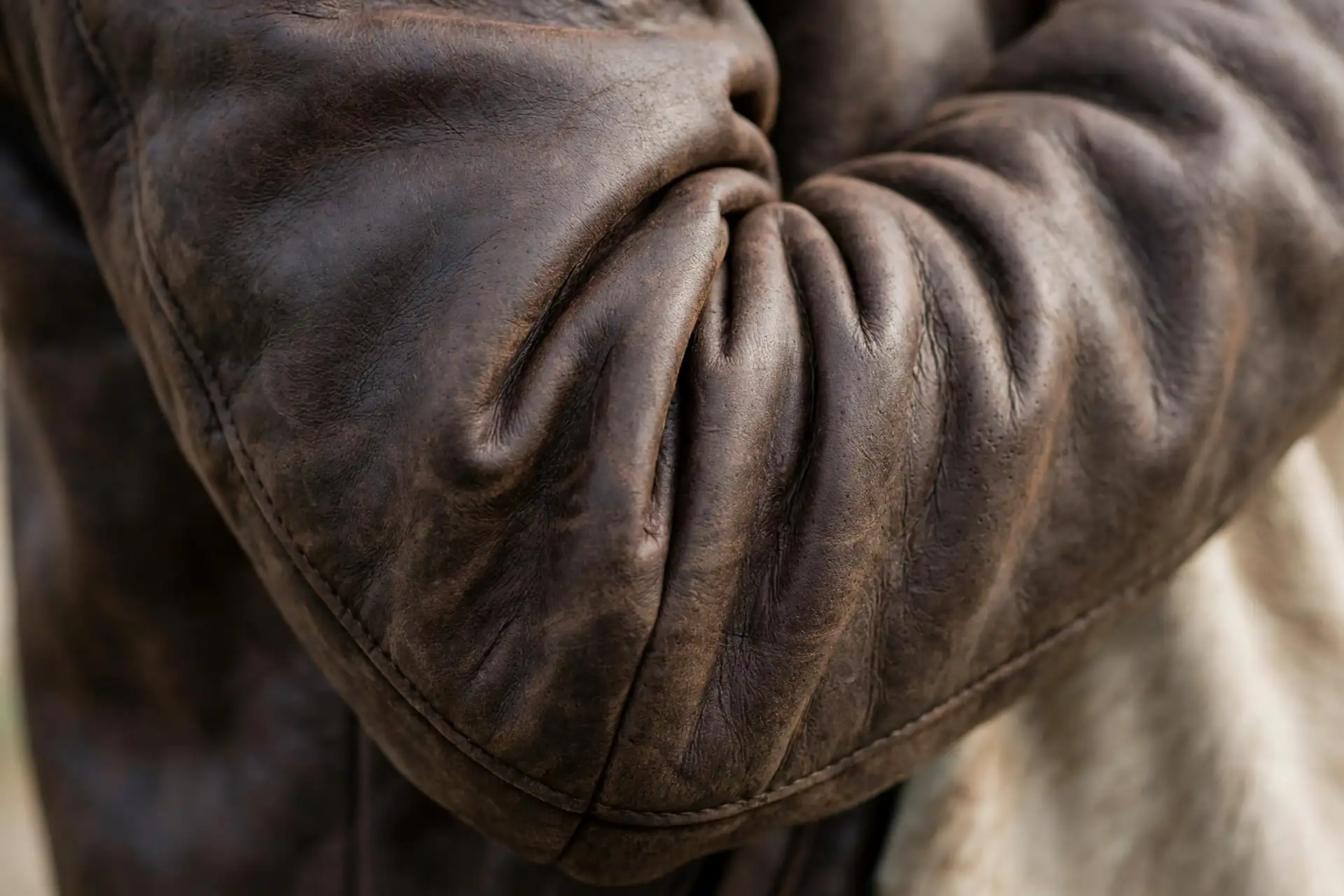
Cowhide is the thick hide most classic jackets are cut from. Panels run heavier, and the fibers pack tight and strong. Expect four to eight weeks of daily wear before the jacket feels like yours. Riders in heavy cowhide sometimes log a full season before the shoulders fully drop. Learning how to break in a stiff cowhide jacket is mostly learning to trust the clock. Wear it on short trips first. Rest your arms between long sessions in the early days. The payoff is a jacket that holds its shape for decades once the work is done. Most of the classic cuts in our men’s leather jackets line use this hide, and the settle follows the same arc.
Wear it like you mean it

Here is the core method, plain and simple. Wear the jacket every day, even on days at home. Two to three hours a day moves the fibers at a kind pace. Short wears beat one marathon session that leaves your arms sore and the creases random. Zip it for part of the day and wear it open for the rest. The panels learn both shapes that way. Owners who chase break in leather jacket fast results should hear this clearly. The fastest safe route is more hours per day, never force.
Movement does the real carving. Bend your elbows while the kettle boils. Reach for the top shelf with both arms, ten slow times. Hug your own shoulders and hold for a slow count of five. Twist at the waist like you are checking a blind spot. Sit down, stand up, and drive the short errand in it. Each move writes a crease where your body truly folds. Random folds from a chair back or a closet crush write creases in the wrong places. Most wearing in a new leather jacket tips agree on this one point. Hours on your body beat hours of tricks, every time.
The spots that give in last
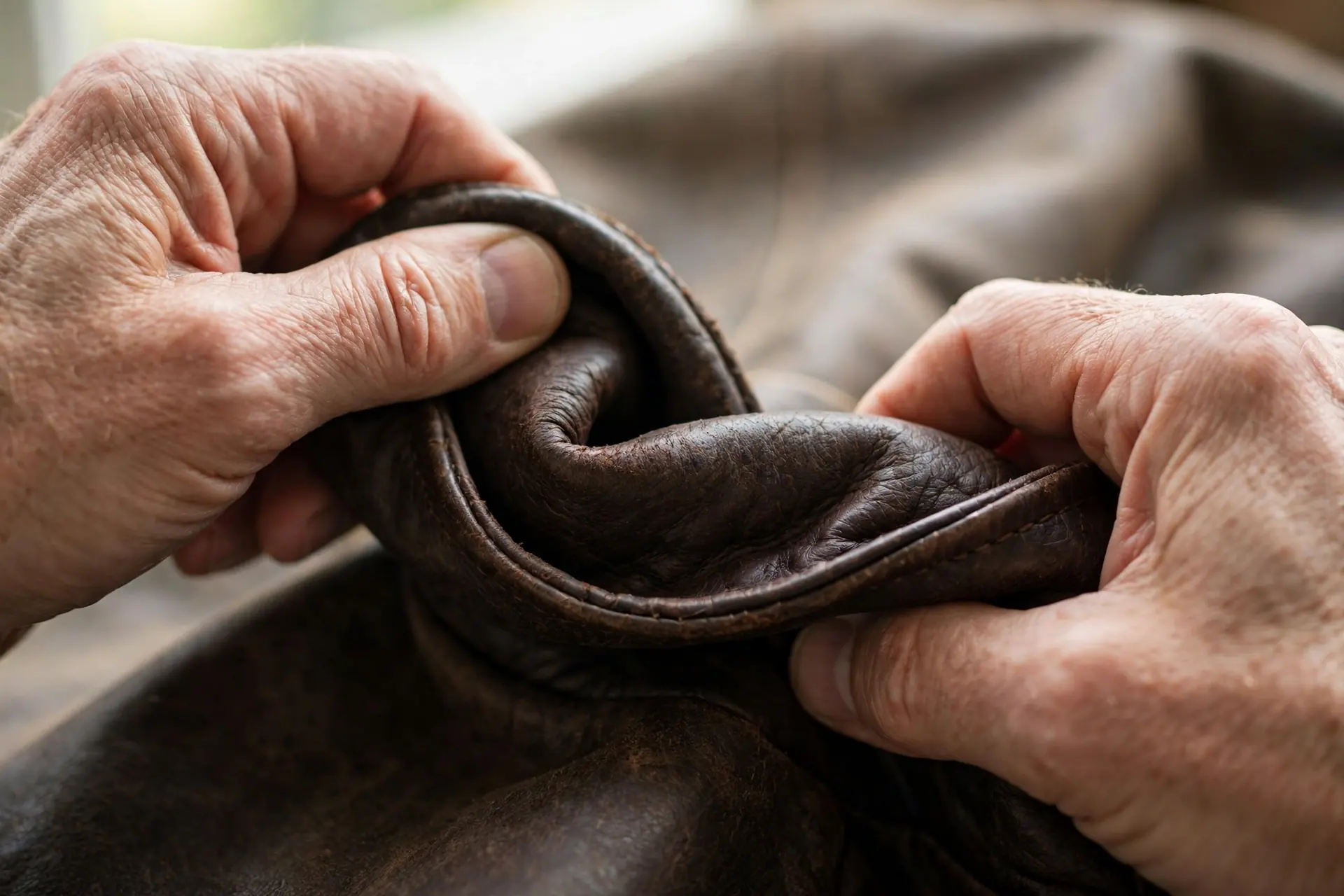
A jacket rarely softens at one even pace. Four zones hold out after the rest feels fine. Work each zone with small, kind moves. Force tears finishes and cracks dry fibers.
Shoulders
Stiff shoulders ride up toward your ears when you lift your arms. Shrug high, hold, and drop, ten times in a row. Reach one arm across your chest and press it in gently with the other hand. Swap sides and repeat the set. Driving helps this zone more than most owners expect. The wheel holds your arms forward at one steady angle for long stretches.
Elbows
Elbow creases carry the clearest record of wear. Bend and straighten your arms while you watch a show or take a call. Rest your forearms on a table and let the fold sit bent. The crease deepens where your arm folds, not where a hand squeezed it. Never fold the sleeve backward against its natural line. A reversed crease scars the finish and stays ugly for good.
Collar
A new collar stands up like it has somewhere to be. Roll it slowly between your fingers each time you hang the jacket up. Wear it up on one day and down on the next. The neck oils from your skin help this zone more than any other. Give it two weeks before you judge the result.
The zip
A stiff new zip often gets blamed on the teeth. Half the time the leather around the track is the stiff part. Run the zip up and down ten times before you wear the jacket out. The track eases as the panels around it learn to fold. A light touch of plain candle wax along the teeth frees a gritty pull. Keep the wax on the teeth only, never smeared on the leather.
Conditioner helps. It does not do the wearing.
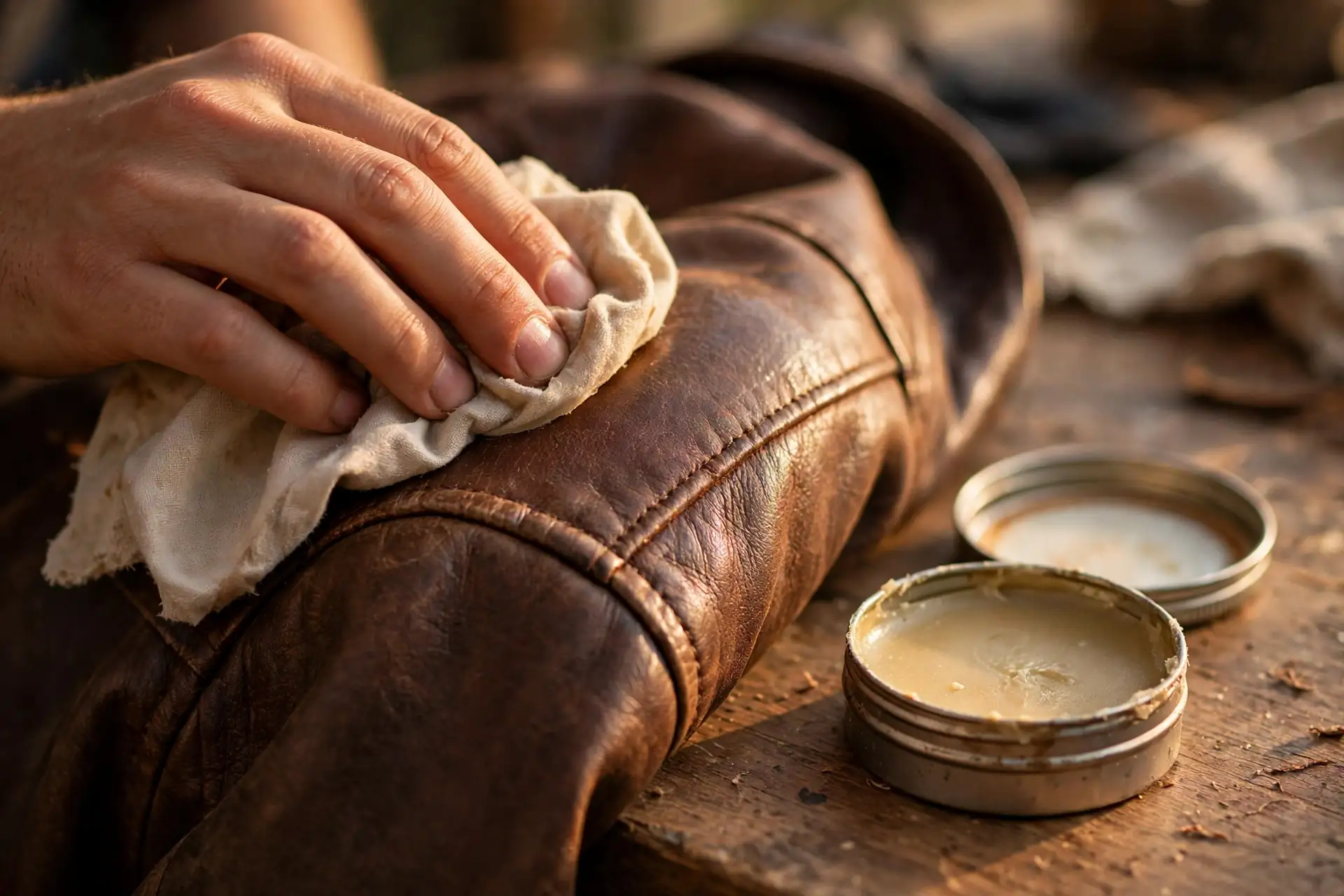
Conditioner feeds the fibers so bending stays safe. Dry fibers snap and crack at the fold. Fed fibers slide past each other and soften. That is the whole job, and it is a real one. Start with a clean surface, since grit ground into softening leather acts like sandpaper. Our post on how to clean a leather jacket covers the safe wash steps first. Then apply a thin coat of balm with a soft cloth. Work in small circles and wipe off every trace of excess.
People hunt for a magic leather conditioner to break in jacket stiffness overnight. No tub holds that trick, whatever the label hints. Used with care, pairing daily wear with balm in a break in leather jacket with conditioner plan cuts real time off the clock. Give the jacket a week of plain wear before the first coat. The fibers open up slightly and drink the balm in more evenly. Repeat the coat only when the surface looks dry and pale again. Too much balm too often turns panels limp and dark. Should you use conditioner at all? Yes, as a helper beside wear, never as a swap for it. Our guide to conditioning a leather jacket walks the full routine, coat by coat.
The internet tricks, judged one by one

Search this topic and the wild advice piles up fast. Part of it borrows from boot care. The rest comes from pure hope. Each big trick gets a straight verdict below.
Water
The boldest claim asks should you wet a leather jacket to break it in, then says soak it and wear it damp. Skip the soak, fully and always. Wet leather gives up its shape fast while it dries. Panels shrink at uneven rates and dry stiffer than they started. Dye moves, spots bloom, and the lining suffers in silence. Normal rain is a different story entirely. A jacket worn through a shower and dried slowly at room heat stays fine. The gap sits between damp life and a bathtub plunge. One is weather. The other is damage with good PR.
Rubbing alcohol
Alcohol strips color and oil out of leather on contact. Boot owners spray it inside thick, plain boots where dye loss hides. Jacket panels are dyed, finished, and fully on show. One wipe leaves a pale scar that no balm fully erases. Verdict: keep alcohol for cuts and scrapes on skin, never on hides.
Heat and steam
Heat feels logical, since warm leather bends more easily. The bend is real, and so is the bill. Hot air dries the fibers while it softens the surface. Repeat blasts crack the finish at the folds within weeks. The steam break in leather jacket idea carries the same trap in a wetter coat. Steam swells the fibers for an hour, then they dry tighter than before. It also loosens lining bonds and warps shaped panels like shoulders. Is steam safe for breaking in a leather jacket? In home hands, no. Park this trick with the soak and the spray bottle.
Boot advice stays with boots
Boot break in lore is loud, and some of it works on boots. One routine bakes boot leather into shape with thick socks and a heat gun. A freezer bag of water stretches a toe box overnight. The bathtub soak molds plain, heavy boot hides around a foot. Jackets are built nothing like boots. A jacket has wide dyed panels, a sewn lining, and a finish that shows every scar. Its leather runs thinner and its weak points sit at seams, not soles. Copy the spirit of boot advice, never the steps. Wear hours, gentle flexing, measured feeding, and patience transfer. Water, heat, and force stay behind with the boots.
Riders break in a different map

A rider wears a jacket in one strong posture. Arms reach forward, elbows hold a bend, and wind presses the chest flat. The goal to break in leather biker jacket panels in that posture sounds smart. Ride only, though, and the jacket learns just the riding crouch. It then feels odd and tight during a plain walk or a meal out. Split your hours between the bike and daily life. The shoulders settle forward for the bars, and the waist stays honest for everything else. Armored cuts among our leather biker jackets follow this same split in testing. Give a heavy riding jacket a full season before you judge the final fit.
When stiff means too small
Break in eases a snug jacket. It never grows a small one. Learn the split now and save yourself weeks of false hope. A snug jacket zips with mild pull and lets you lift both arms overhead. The small one stops the zip at the chest or binds hard across the back. Reach forward with both arms like you are hugging a tree. A strap of pain across the shoulder blades means size, not stiffness. Check where the shoulder seams sit. Seams that rest well inside your shoulder bones point to the wrong size. Our guide on how a leather jacket should fit gives the full set of tests to run at home. One snug zone only, like a waist that pulls a touch? That is a stretch job, not a break in job. Our notes on how to stretch a leather jacket cover the safe version of that fix.
Mistakes that cost you weeks
The leather jacket break in mistakes to avoid list below comes from real jackets brought to benches like ours. Each one sets the clock back or scars the hide.
Quitting at day three. The jacket feels worst right before it starts to turn. Owners quit at day three and miss the shift at day ten. Wear through the awkward week. The fibers are mid lesson at that point.
The conditioner flood. Coat after coat soaks the panels limp and dark. The hide loses its body and the color sinks unevenly. Thin coats, wide gaps, dry checks between rounds. That rhythm wins.
The forced fold. Some owners bend one crease hard, over and over, to rush it. The finish cracks along that single line like ice on a pond. Spread the bending across the whole panel instead.
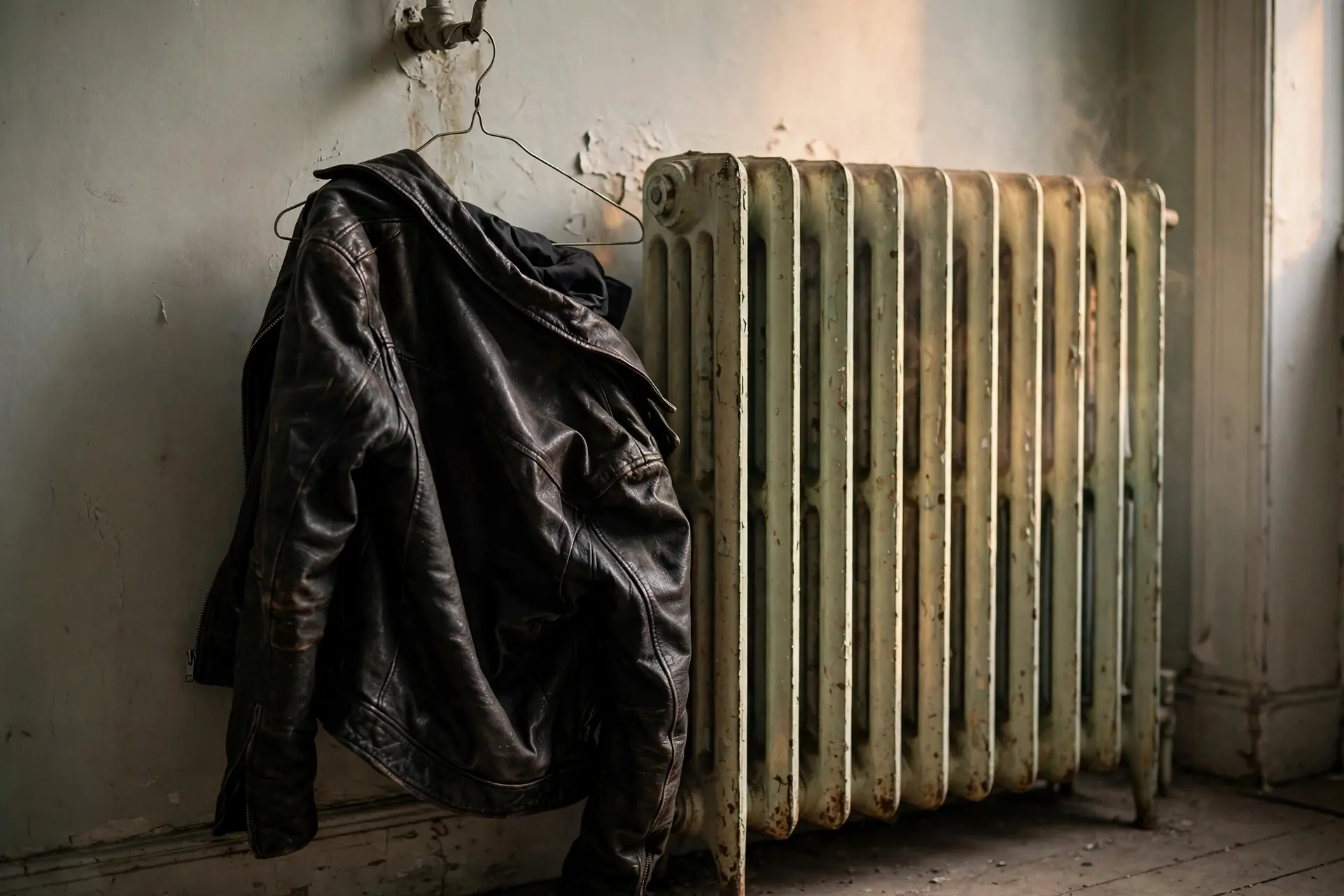
The hot storage. A jacket breaking in still lives somewhere between wears. Heat vents, radiators, and sunny windows dry it back out nightly. Hang it in cool, moving air on a wide hanger. Thin wire hangers dent the shoulder line while the hide is still learning.
The crush. Tossing the jacket in a ball under other clothes writes random folds. Hang it or fold it once, loosely, at the waist. Creases should come from your body, not your closet floor.
When a specialist earns the fee
Studios offer professional leather jacket softening as a paid service. A trained hand flexes each panel in slow passes. The work follows the grain and stops before stress builds. Measured coats of balm go on between passes. This route suits delicate lambskin with a polished finish. It also suits vintage jackets and very thick hides with real value. Most owners with a standard new jacket gain little from the fee. Your own wear does the same work for free, on your own clock. Whichever route you take, pair it with the steady routine in our leather jacket care guide so the softness you earn stays earned.
Questions owners ask our bench
How do you break in a new leather jacket fast?
Wear it more hours per day, and move while you wear it. Bend the elbows, reach, twist, sit, and drive in it. Add one thin coat of conditioner after the first week of wear. That stack is the fastest safe route there is. Force, heat, and soaks only slow you down with repairs.
How long does it take to break in a leather jacket?
Lambskin takes about two weeks of daily wear. Goatskin takes two to four weeks. Cowhide takes four to eight weeks, and heavy riding cuts take a full season at times. Judge by feel, not the calendar. The jacket is done when it folds where you fold.
Should I use conditioner to break in my leather jacket?
Yes, as a helper and never as the whole plan. Conditioner feeds dry fibers so bending stays safe and smooth. Wear does the shaping work itself. One thin coat after the first week, then more only when the surface looks dry.
Can I wet my leather jacket to break it in?
No. A soak shrinks panels at uneven rates and dries them stiffer than before. Dye spots and lining damage ride along free of charge. Normal rain during real wear is fine. Dry the jacket slowly at room heat afterward and it stays sound.
How do you soften a stiff cowhide leather jacket?
Wear it daily in short, kind sessions. Bend the arms and shoulders through normal moves, not forced folds. Feed the hide with a thin coat of balm once the surface looks dry. Trust the four to eight week clock. Cowhide pays patience back with decades of shape.
Is steam safe for breaking in a leather jacket?
No, not in home hands. Steam swells fibers for an hour and leaves them drier after. It also risks the finish, the lining bonds, and shaped panels. Warm room air and body heat give you the same bend with none of the risk.
What mistakes should I avoid when breaking in a leather jacket?
Skip soaks, alcohol wipes, and heat blasts entirely. Keep conditioner coats thin instead of flooding the hide. Never force one crease line over and over. Store the jacket cool, on a wide hanger, away from vents. And do not quit at day three, right before the turn.
Does lambskin need breaking in?
Yes, a short and gentle round of it. The elbows, collar, and zip track start firm on lambskin too. A week or two of daily wear settles the whole jacket. Use a lighter touch than cowhide gets, since thin fibers scar more easily.
Day thirty feels different
One morning the jacket stops announcing itself. Your elbows fold where the creases now live. The collar rests like it knows your neck. One smooth pull runs the zip up, no wrestle at the waist. Shoulders that once rode high now sit where shoulders belong. Nothing about the jacket was fixed, because nothing was ever broken. It was taught, slowly, by the only teacher leather trusts. Time on your body, given daily, at a kind pace. Wear yours well, and let the hide do the rest.